Wrongly accused: Brits face EU travel bans over border computer errors
By Adam Woodward • Published: 13 Nov 2026 • 12:35 • 3 minutes read
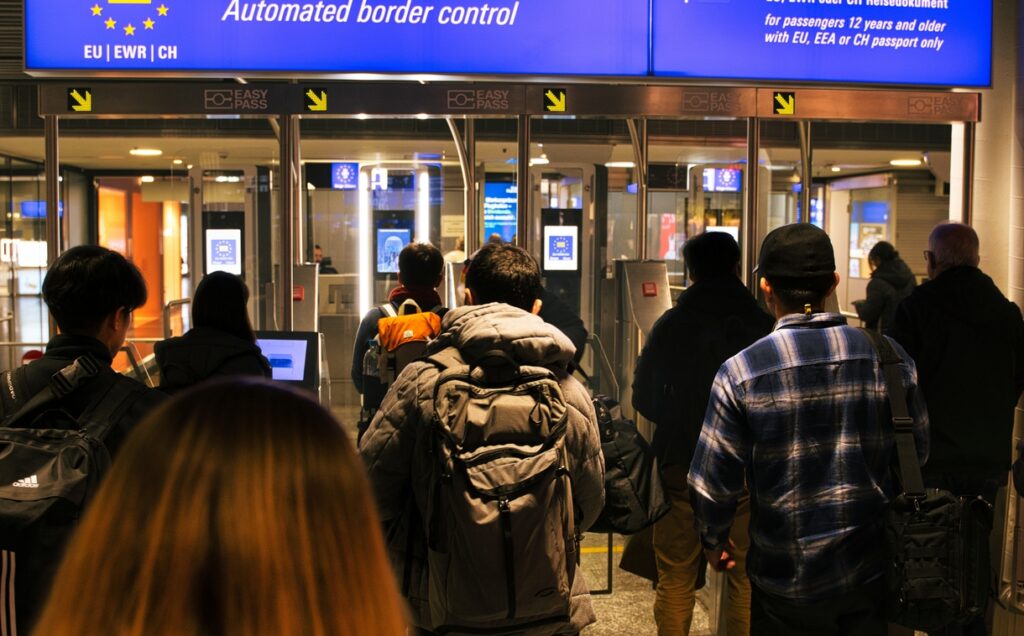
Passengers line up to go through new EES machines. Credit: Hans Elmo - Shutterstock
British travellers are being incorrectly flagged as Schengen overstayers, with some facing deportation, hefty fines and threats of lengthy entry bans.
Holidaymakers from the UK are discovering that a mistake in Europe’s new border-control system can turn a perfectly legal visit into an apparent immigration nightmare, leaving some facing the prospect of being banned from returning to the continent.
Bestselling author Jojo Moyes is among those caught up in the problem after French border officials told her she had overstayed her permitted 90 days in the Schengen Area. Despite having spent just 23 days in Europe during the previous six months, she was warned that returning before the matter was resolved could result in a €10,000 fine and a two-year travel ban. The case was reported by consumer organisation Which? in its investigation into EES errors affecting British travellers.
Missing departure records create false overstays
The problem arose because her departure from Portugal following a visit in May had not been correctly registered in the EU’s Entry/Exit System (EES).
Without an electronic record confirming that she had left, the system continued counting the days from her original arrival, making it appear that she had stayed in Europe far longer than permitted.
Moyes is not alone. British traveller Paula Pugh was deported from Italy in September after border officials accused her of exceeding the 90-day allowance. She had spent only 22 days in the Schengen Area before arriving for a five-day holiday in Calabria. Her family’s holiday was ruined and they faced additional costs of around £2,000.
Consumer organisation Which? says it has received dozens of complaints from British passport holders reporting similar problems. Other cases include elderly travellers whose departures through Bilbao airport were apparently not registered, leaving them worried about future journeys.
British visitors to Spain could also be affected
The EES became fully operational on April 10, 2026, replacing traditional passport stamping with electronic records and biometric information to monitor the movements of non-EU visitors. EWN previously reported on passenger experiences and disruption as the new EU border system went live.
However, technical problems, lengthy queues and temporary suspensions of biometric checks have raised concerns about the accuracy of travel records. Earlier problems at Spanish airports were also covered in EWN’s report on EES machines causing difficulties for UK passengers at Malaga and Alicante airports.
The Dutch Royal Marechaussee, the country’s border police, acknowledges that missing entries or exits, duplicate records and incorrect personal data can lead to an inaccurate calculation of someone’s remaining permitted stay. Its official guidance on incorrect or missing EES registrations explains how travellers can request corrections.
For British visitors to Spain, the consequences could become apparent only when attempting to enter another Schengen country or return after a trip home.
British nationals with valid Spanish residency are generally exempt from the 90-day visitor restriction. EWN has previously explained why British residents holding the correct Spanish TIE card are exempt from EES registration. However, holidaymakers and second-home owners relying on visa-free travel need to be particularly careful.
How to protect yourself against an incorrect record
Travellers can use the European Commission’s online short-stay calculator to check whether their manually entered travel dates comply with the 90/180-day rule.
Anyone who discovers an error in their EES data should contact the relevant national authority and request a correction. The European Commission provides a country-by-country list of EES data protection contacts. Supporting evidence should include a passport copy, boarding passes, flight tickets and other proof of departure. The Dutch border police warn that correcting records may take up to 45 days, depending on the circumstances.
With British travellers potentially facing serious consequences for administrative mistakes they did not make, questions are being raised about how quickly inaccurate records can be corrected and who takes responsibility when the system gets it wrong.
Follow Euro Weekly News on Google News
Get breaking news from Spain, travel updates, and expat stories directly on your Google News feed.
Follow on Google NewsSign up for personalised news
Subscribe to our Euro Weekly News alerts to get the latest stories into your inbox!
By signing up, you will create a Euro Weekly News account if you don't already have one. Review our Privacy Policy for more information about our privacy practices.





Adam Woodward
Adam is a writer who has lived in Spain for over 25 years. With a background in English teaching and a passion for music, food, and the arts, he brings a rich personal perspective to his work at Euro Weekly News. As a father of three with deep roots in Spanish life, Adam writes engaging stories that explore culture, lifestyle, and the everyday experiences that shape communities across Spain.
Comments