So, how much does a survival kit really cost in Spain?
By Farah Mokrani • Updated: 03 May 2025 • 18:11 • 3 minutes read
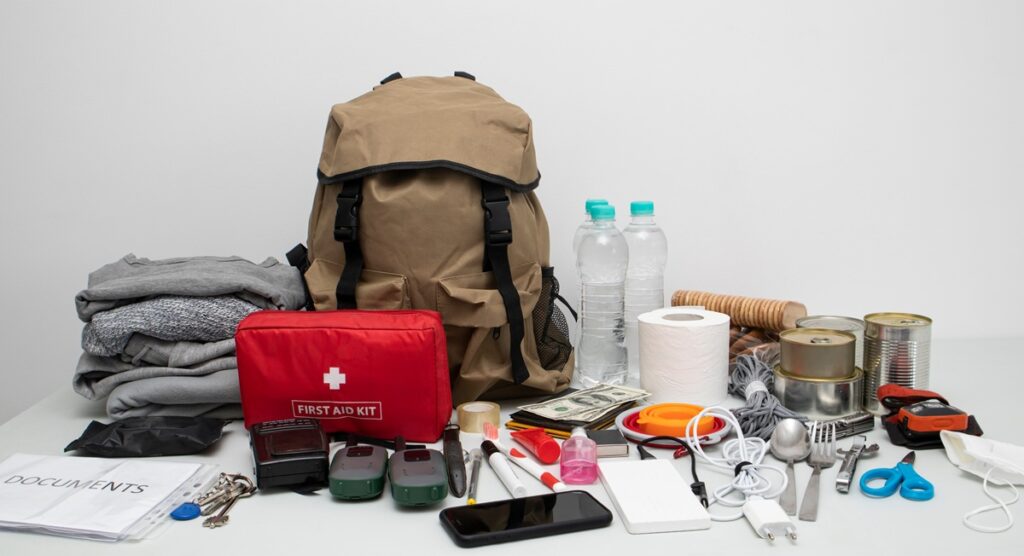
A look at a 72-hour emergency survival kit, as recommended across Europe, with essentials for food, safety and communication. Credit : Skylines, Shutterstock
After the blackout, interest in 72-hour survival kits has surged — and the price tag might surprise you
What started as a somewhat curious recommendation from the European Union is now being taken much more seriously across Spain — especially after this week’s unexpected blackout left homes, shops, and even cash machines in the dark.
Back in late March, the EU asked citizens to prepare a 72-hour survival kit, designed to help families get through emergencies without depending on outside support. It was part of a broader European Preparedness Strategy, and while it raised a few eyebrows at the time, Monday’s power outage — now nicknamed the Iberian blackout — changed the tone completely.
Why survival kits are suddenly in high demand
Until this week, the idea of having a box full of batteries, tinned food and a camping stove sitting at home sounded like something straight out of a doomsday prepper blog. But when the lights went out and bank cards stopped working, many Spaniards quickly realised that they weren’t as prepared as they thought.
With power down and no access to online services, those without cash in hand or alternative ways to cook and get information were left scrambling. Suddenly, the EU’s 72-hour kit suggestion felt a lot more practical.
In the days following the blackout, online retailers saw a spike in orders for survival essentials — everything from radios to water filters and gas stoves. According to estimates from elEconomista, the full cost of putting together the recommended 24-item survival kit is now hovering around €420. That doesn’t even include the suggested stash of small-denomination cash for emergencies — which is entirely up to each household.
What’s in a €420 survival kit?
The list includes all the basics you’d expect: non-perishable food, a first-aid kit, batteries, candles, a flashlight, and a multi-purpose knife (which alone can cost upwards of €34). But one of the most in-demand items is the humble camping stove, or camping gas, which along with its fuel cartridges goes for about €50 online.
During the blackout, supermarkets quickly ran out of ready-to-eat items like bread, cold meats and cereal. Products that needed cooking or reheating — soups, frozen meals, pizza — stayed on the shelves, proving how important no-prep food options really are.
Another big seller? The old-school battery-powered radio. With no Wi-Fi, no streaming, and no electricity, it was the only way many people stayed informed. Prices for portable radios start around €29, but that’s not including the batteries. As journalists pointed out, “the radio switched on when everything else shut down.”
Other essentials, like thermal blankets, power banks (€28.50), and even hand-crank USB chargers (€7), have also become top sellers. These simple tools can keep phones running when the power grid goes down — which, after Monday’s experience, no longer seems like an unrealistic scenario.
Why survival kits are becoming essential in Spain
Of course, a lot of Spanish households already have a few of these things tucked away in drawers — torches, candles, matches, and a basic first aid kit are fairly common. But putting them all together into a ready-to-go box takes forethought — and in many cases, a bit of spending.
Even tinned food, which varies in price depending on how much you’re buying and what kind, can easily add €50 to your shopping list if you want enough to last a few days.
In the end, the message is clear: preparedness isn’t just for worst-case scenarios anymore. As the blackout showed, even a brief disruption can be incredibly disorienting when we rely so heavily on digital tools, electricity, and cashless systems.
Whether or not you’re ready to spend €400 on a full emergency kit, the recent events have definitely made many people think twice — and start getting their homes ready for the unexpected.
Stay tuned with Euro weekly news for the latest news from Spain
Follow Euro Weekly News on Google News
Get breaking news from Spain, travel updates, and expat stories directly on your Google News feed.
Follow on Google NewsSign up for personalised news
Subscribe to our Euro Weekly News alerts to get the latest stories into your inbox!
By signing up, you will create a Euro Weekly News account if you don't already have one. Review our Privacy Policy for more information about our privacy practices.



Farah Mokrani
Farah is a journalist and content writer with over a decade of experience in both digital and print media. Originally from Tunisia and now based in Spain, she has covered current affairs, investigative reports, and long-form features for a range of international publications. At Euro Weekly News, Farah brings a global perspective to her reporting, contributing news and analysis informed by her editorial background and passion for clear, accurate storytelling.
Comments