Can you get fined for pumping your own gas in Spain?
By Tarek Salame • Published: 01 Jun 2025 • 17:35 • 3 minutes read
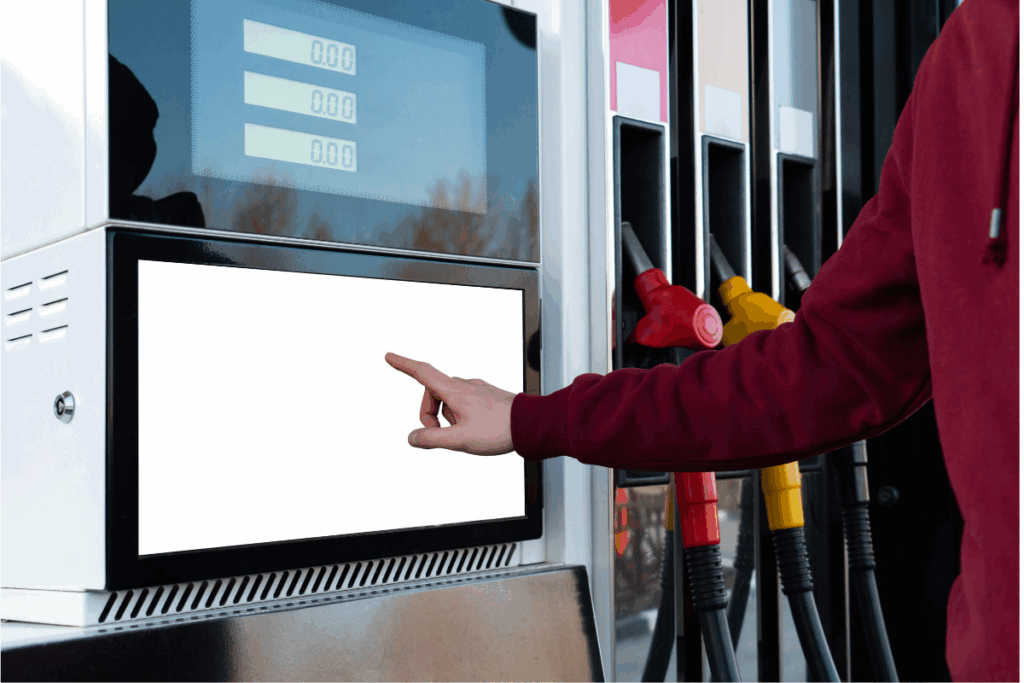
Can you legally pump your own gas? Credit: Scharfsinn86 from Getty Images
The cheapest litre might come with a price surprise. In Spain, drivers are flocking to low-cost, 24/7 uncrewed gas stations, which often offer a savings of 10 to 20 cents per litre. It’s a tempting trade-off: no queues, no small talk, just tap your card and go. In times of a cost-of-living crunch, these stations are a lifeline for many. But here’s a catch that you won’t see on the pump: Under Spanish law, only qualified station staff are technically allowed to refuel a vehicle. Yes, that is correct; doing it yourself at certain stations could, in theory, result in a fine. So what gives? Are millions of drivers unknowingly breaking the rules, or is the law completely outdated? Let us take a closer look at the strange legal reality behind Spain’s petrol pitstops.
What makes a gas station low-cost in Spain?
Not all petrol stations are the same, and in Spain, the “low-cost label” is not about the price; these low-cost stations typically share a couple of features:
- They are unmanned, which means there is no cashier, no mechanic, or anyone handling the squeegee.
- Self-service is mandatory: please fill up your car and pay with a card.
- They operate 24/7, often in industrial zones or off main roads.
- The fuel has the same quality as that sourced from the same suppliers as major brands.
So, how do they charge less per litre? And that is due mainly to cutting overhead costs. No staff means lower cost, and fewer expenses are passed on to the customer. On paper, it appears to be a win-win, but the fine print reveals a different story.
Are you technically breaking the law?
Here is where things get weird and murky. According to Spain’s General Regulations, only qualified personnel are authorised to fuel your tanks. An odd occurrence, but it’s due to petrol being classified as a Hazardous and flammable material, and handling it without proper training is deemed illegal. However, if we take that viewpoint and law into perspective, then why are there thousands of unmanned self-service stations operating all over the country?
It is a contradiction that makes little sense on paper. Millions of Spanish drivers fill their tanks without assistance, which is encouraged as this is a normal practice for low-cost stations. However, technically, if you refuel at a staffed station where an employee is supposed to handle the pump, you may be fined up to €100. So is the law outdated? Selectively enforced? Or has it simply become incompatible with the modern fuel models?. The answer is all three, revealing a peculiar double standard: Self-service is legal when it is cheap, but not when it is convenient. For now, most drivers continue without issue, but this legal grey area still exists, and not many are aware of it.
What is still legal at Spanish gas stations?
Now, if refuelling yourself has become normalised, certain habits remain strongly opposed, no matter where you are: using your mobile phone while filling up is risky, not because it will ignite an explosion.
Running the engine while you fill is surprisingly standard, and the law requires you to refuel while off for both environmental and safety reasons. And the most obvious is smoking, a dangerous no-go. So, if you are caught lighting a cigarette anywhere near the pumps, you can expect steep fines and possibly police intervention.
All of these rules fall under the General Traffic Regulations, and these fines can range from €100 to €200 depending on the severity of the issue. These laws apply to everyone, including low-cost, uncrewed stations.
A contradiction on every corner
Spain loves its bargains, and at 10 to 20 cents cheaper per litre, these low-cost stations are thriving even if the rules are a bit against it. You can legally fill your own tank, but technically, only “qualified” personnel are meant to do so.
The stations are open all night, yet they often do not meet the basic legal requirements for hygiene, signage, and even staff. In short, the system is built on odd contradictions. Still, the trend has not slowed down, with over 12,000 gas stations nationwide, and more than half of them are unmanned.
It is clear as day that convenience and cost-cutting prevail, even if the law has not quite caught up with them yet. So next time you fuel at a station alone at 2 am, do not forget that you might be breaking the law
Follow Euro Weekly News on Google News
Get breaking news from Spain, travel updates, and expat stories directly on your Google News feed.
Follow on Google NewsSign up for personalised news
Subscribe to our Euro Weekly News alerts to get the latest stories into your inbox!
By signing up, you will create a Euro Weekly News account if you don't already have one. Review our Privacy Policy for more information about our privacy practices.



Tarek Salame
Tarek is a writer and digital marketer based in Barcelona, with a passion for turning complex ideas into clear, compelling narratives. With a background in marketing communications, tech, and content strategy, he has worked across industries ranging from cloud computing and fintech to fire safety and science. At Euro Weekly News, he contributes thoughtful, accessible stories that connect readers with topics shaping the modern world.
Comments