The deadly fungus spreading through Europe.
By Tarek Salame • Updated: 15 Jun 2025 • 18:47 • 3 minutes read
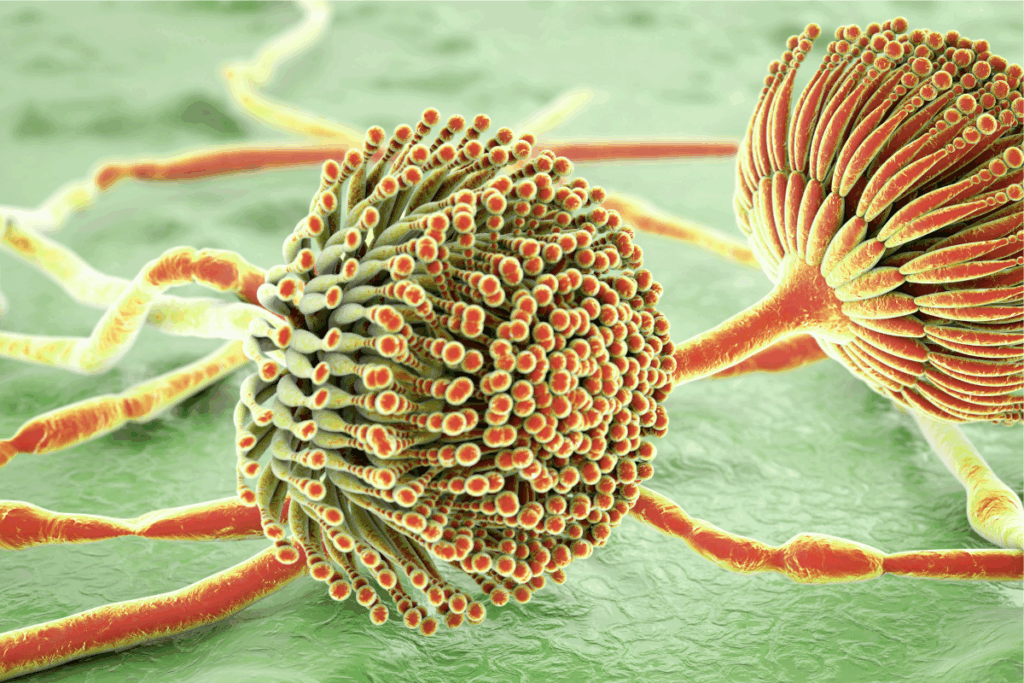
The fungus quietly spreading as Europe warms. Credit: KATERYNA KON/SCIENCE PHOTO LIBRARY from sciencephoto via Canva.com
You won’t see it coming. It drifts through the air,silent, weightless, everywhere. Aspergillus isn’t new, but it’s stepping into a deadlier role. This fungus hides in compost, soil, sometimes even in the vents above your head. Most people breathe it in and carry on. For others, it’s the start of something far more serious.
But not everyone clears it. People recovering from transplants, those on chemo, or anyone with a weakened immune system — they’re the ones who pay attention. For them, what looks like a minor infection can spiral. It’s hard to spot, harder to treat, and sometimes impossible to stop.
Built for this century’s chaos
Aspergillus fumigatus.It’s already in Europe; it’s hiding in compost, construction dust, and Hospital corridors. For most of us, it drifts in and out without consequence, but for the vulnerable population, it spreads, suffocates, and tears through tissue from the inside out.
This is not COVID, this isn’t even the flu, it is an invasive aspergillosis that can kill four of the five people that are infected, especially if the diagnosis comes too late, and it often does.
- Part of what makes Aspergillus dangerous is that it can mimic other infections, it can evade detection, and is increasingly resistant to antifungal drugs.
- In 2022, the World Health Organisation issued its first-ever fungal threat list, which landed in the top critical tier because it has become powerful enough to be noticed.
Europe: The new fungal frontier
According to a 2024 study from the University of Manchester, Aspergillus fumigatus can expand its reach across Europe by 77.5% by the year 2100, under the high emission scenario. This would mean over 9 million additional people would find themselves living in zones where this fungus grows.
There’s also A. flavus, a close relative, but with a different target. Not your lungs, but your food. It’s already making moves across the continent, expected to spread by another 16%. And it brings aflatoxins with it — invisible toxins that cling to crops and slip through harvests.
Europe’s environmental shift is reshaping microbial life. This is the invisible part of climate change — and it’s already underway.
Health systems are not ready.
Fungi don’t make headlines; they don’t crash economies. They would much rather kill patients slowly, quietly, and that is exactly the reason why they’re overlooked. Across Europe, these fungal infections are not actually routinely tracked like viruses or bacteria usually is.
There is no EU-wide surveillance system, and many hospitals still treat them as edge cases, even as the risks continue to rise.
In addition to this, Antifungal resistance is climbing, driven by years of overuse in farming and healthcare. New drugs are slow to develop. Funding is sparse.
- Most of the public couldn’t name a single fungal disease, even though the World Health Organisation has warned since 2022 that this blind spot could prove fatal.
- We built our health systems to fight what we can see. But what about what we breathe?
Crops, climate, and contamination
No, not old fungal threats would live in your chest, some actually grow on your food. While A. fumigatus attacks the body, its cousin Aspergillus flavus infiltrates crops, especially maise, peanuts, and pistachios. It produces aflatoxins, toxic compounds that can cause liver damage and are classified as carcinogenic.
Southern Europe has already become vulnerable to intensifying jobs and rising soil temperatures, which can create conditions favourable for A. flavus. This means more frequent crop failures, despite EU food safety checks and pressure on farmers. The abandoned heat-sensitive harvests are insufficient to mitigate this risk.
Aflatoxin Outbreaks aren’t common in Europe, but they have been rare there. Now that’s changing because of agricultural trade, supply chains, and all those contaminated shipments, which mean wasted produce as well as economic fallout, especially for smaller growers.
While most people still see fungus as a hospital issue, it’s becoming an increasingly climate, food and economic threat as well.
The invisible threat growing from the shadows
Europe has spent the last decade preparing for heatwaves, fires, and floods, all of which are visible and immediate. The next major public health threat will not come from sirens or smoke; it will come from the air, waiting for someone whose defences are already down.
Fungi don’t spread like viruses. They don’t chase hosts or jump from person to person. They just wait — for the right mix of heat, damp, and decay. And right now, Europe is giving them exactly what they like.
The science exists, the tools are there. What is missing currently in Europe is the urgency and attention because while the heat waves this summer of 2025 come and go, Aspergillus will not leave, it will settle, it will adapt, and unless we act, it will only get started from now.
Follow Euro Weekly News on Google News
Get breaking news from Spain, travel updates, and expat stories directly on your Google News feed.
Follow on Google NewsSign up for personalised news
Subscribe to our Euro Weekly News alerts to get the latest stories into your inbox!
By signing up, you will create a Euro Weekly News account if you don't already have one. Review our Privacy Policy for more information about our privacy practices.


Tarek Salame
Tarek is a writer and digital marketer based in Barcelona, with a passion for turning complex ideas into clear, compelling narratives. With a background in marketing communications, tech, and content strategy, he has worked across industries ranging from cloud computing and fintech to fire safety and science. At Euro Weekly News, he contributes thoughtful, accessible stories that connect readers with topics shaping the modern world.
Comments