Survey shows 47% of people in Spain actively avoid mass tourism spots
By Molly Grace • Published: 28 Jun 2026 • 22:45 • 4 minutes read
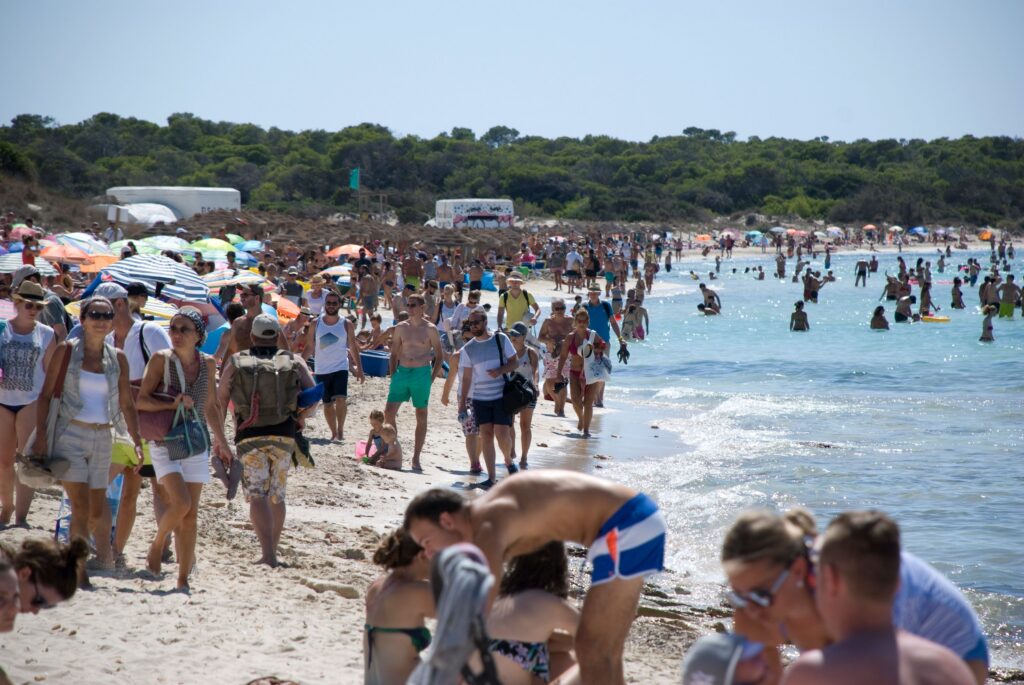
High visitor numbers have contributed to congestion in public spaces. Photo credit: Wirestock Creators/Shutterstock
A recent survey done by Booking has found that 47% of people in Spain avoid overcrowded holiday destinations when planning travel. The responses relate to travel behaviour and attitudes towards tourism pressure and sustainability.
Spain remains one of the most visited countries in the world. Tourist flows are concentrated in coastal regions, major cities and island destinations, particularly during peak summer months and public holiday periods.
These locations continue to attract both domestic and international visitors at scale. The survey focuses on how Spanish residents describe their own travel choices, particularly in relation to destination selection and perceived crowd levels.
Crowding as a factor in destination choice
Many respondents say crowd levels influence where they go on holiday. This includes avoiding well-known destinations at peak times and selecting alternatives with lower visitor density. Some travellers report shifting travel dates to avoid the busiest periods. Others choose inland or rural areas instead of coastal resorts and major urban centres. Smaller towns and less visited regions appear more frequently in responses where travellers describe quieter environments as a preference.
Traditional decision factors such as cost, climate and accessibility remain important. However, crowding is now present alongside these considerations in a significant share of responses. In some cases, respondents describe avoiding destinations that are widely featured on social media or associated with high seasonal congestion. This includes locations that experience short periods of intense visitor pressure compared with more stable year-round tourism flows.
Concentration of tourism pressure in key regions
Tourism remains a major sector in the Spanish economy, supporting employment across hospitality, transport, retail and related services. The structure of demand, however, remains uneven across the country. Barcelona is among the most frequently cited urban destinations in discussions around visitor pressure. The Balearic Islands, including Mallorca, Menorca and Ibiza, also experience high seasonal concentration.
In the Canary Islands, tourism demand is spread more evenly across the year but still reaches high levels in peak periods. These areas experience the most visible effects of visitor density, including congestion in public spaces, strain on transport systems and pressure on housing markets in tourist zones.
Local authorities have introduced or considered a range of measures aimed at managing these pressures. These include tighter regulation of short-term rental accommodation, limits on cruise ship arrivals in specific ports, and campaigns designed to distribute tourism more evenly across regions. Some cities have also focused on regulating visitor flows in specific districts during peak times, particularly in historic or high-footfall areas.
Domestic travel behaviour and regional redistribution
Responses from Spanish residents indicate movement away from heavily visited destinations towards less frequented regions within the country. Smaller towns and inland provinces appear more frequently in travel choices described by respondents. These areas typically experience lower visitor numbers compared with coastal and metropolitan destinations, particularly outside major cultural or seasonal events.
Regional tourism bodies have expanded promotion of inland areas, focusing on heritage sites, natural parks and local cultural routes. These initiatives aim to increase visitor distribution beyond traditional coastal hotspots. In some cases, respondents describe choosing destinations based on perceived space, quieter environments and lower seasonal congestion. These preferences appear across both short domestic breaks and longer holiday periods.
Role of lesser-visited destinations
Areas outside Spain’s main tourist corridors continue to develop tourism infrastructure aimed at attracting domestic visitors. Inland regions promote historic towns, wine routes, hiking areas and protected natural landscapes. These destinations typically receive lower visitor volumes than coastal resorts and major cities but have increased visibility in domestic tourism campaigns.
Local economies in these regions often depend on smaller-scale visitor flows spread across the year rather than concentrated seasonal peaks. Responses in the survey suggest that some travellers are more willing to consider these destinations as alternatives to established holiday locations, particularly during peak summer months when congestion is highest in coastal areas.
Tourism structure and regional imbalance
Spain’s tourism sector continues to be one of the largest in Europe, contributing significantly to employment and regional economic activity. However, visitor distribution remains uneven.
High-demand destinations concentrate large volumes of visitors in relatively small geographical areas. This creates periods of intense pressure on infrastructure, housing and local services in specific locations, while other regions receive comparatively low numbers of tourists.
The imbalance has been a recurring issue in discussions about tourism management in Spain. It affects housing availability in central tourist zones, transport capacity during peak periods and the sustainability of certain local economies reliant on seasonal demand.
Policy response and management measures
Local and regional authorities have introduced a range of measures aimed at addressing pressure in high-traffic destinations. These include restrictions on new short-term holiday rental licences in some cities, enforcement actions against unlicensed tourist accommodation, and limits on cruise ship arrivals in certain ports.
Some municipalities have also introduced measures aimed at regulating access to heavily visited areas during peak hours or seasons. These policies are designed to reduce congestion in specific districts rather than limit overall visitor numbers nationally.
At the same time, tourism boards continue to promote regional diversification, encouraging visitors to explore less visited areas of the country.
Interpretation of survey responses
The survey reflects self-reported behaviour among Spanish residents rather than measured travel outcomes. Respondents describe how they approach destination choice and which factors they consider when planning trips.
Crowding appears alongside price, accessibility and climate as part of that decision-making process. The proportion of respondents who avoid overcrowded destinations indicates that visitor density is a relevant factor for a significant share of those surveyed. The data captures stated preferences at the time of the survey and provides a snapshot of how domestic travellers describe their own behaviour in relation to popular destinations.
What the survey shows
The survey shows that 47% of people in Spain report avoiding overcrowded destinations when planning travel.
Responses describe adjustments in destination choice, timing and location type, including movement towards less visited regions and lower-density areas.
Tourism remains a major part of Spain’s economy, supporting employment across hospitality, transport and related sectors. However, visitor numbers are unevenly distributed across the country.
Follow Euro Weekly News on Google News
Get breaking news from Spain, travel updates, and expat stories directly on your Google News feed.
Follow on Google NewsSign up for personalised news
Subscribe to our Euro Weekly News alerts to get the latest stories into your inbox!
By signing up, you will create a Euro Weekly News account if you don't already have one. Review our Privacy Policy for more information about our privacy practices.


Molly Grace
Molly is a British journalist and author who has lived in Spain for over 25 years. With a background in animal welfare, equestrian science, and veterinary nursing, she brings curiosity, humour, and a sharp investigative eye to her work. At Euro Weekly News, Molly explores the intersections of nature, culture, and community - drawing on her deep local knowledge and passion for stories that reflect life in Spain from the ground up.
Comments