The fiesta’s over? How a tiny country beat mass tourism — and Spain is next
By Ion Axinescu • Published: 24 Jul 2025 • 15:59 • 2 minutes read
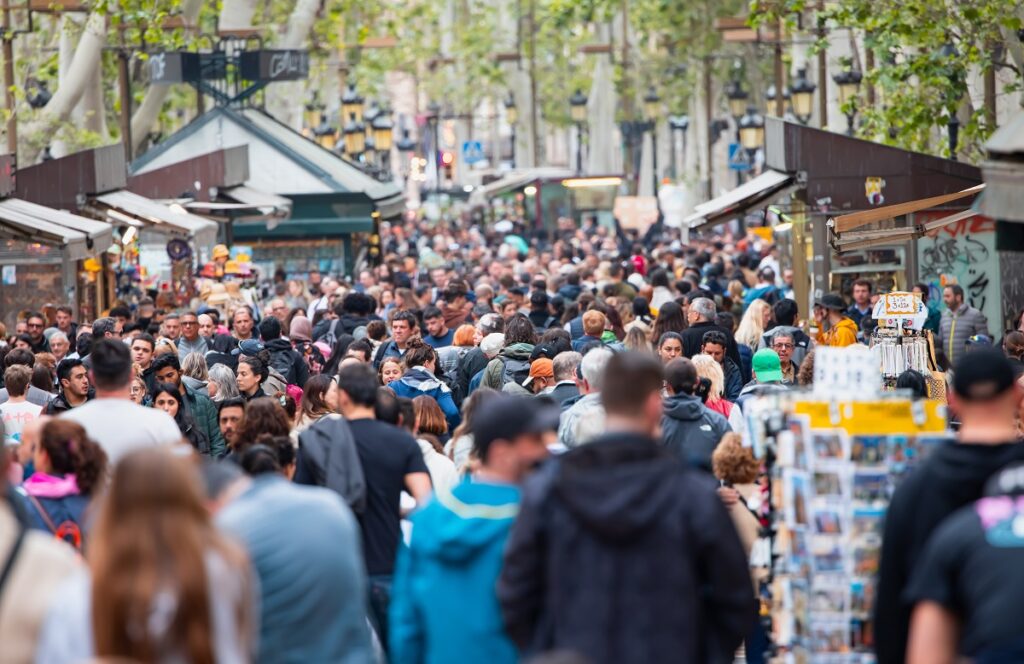
Crowds of tourists walking on La Rambla street in Barcelona. Credit: muratart/Shutterstock
Spain is one of the countries where, in some areas, mass tourism is uncontrolled, and locals struggle to survive in the places where they were born and raised.
While everyone is looking for smooth solutions to solve this complicated issue, Iceland already might have found it.
An island country between the North Atlantic and Arctic Oceans, Iceland has big (and also very surprising) numbers when it comes to tourism. Iceland has just around 390,000 locals (about 140,000 of them living in the capital, Reykjavik) and over 2.4 million visitors expected in 2025 alone!
So Reykjavik’s government is cracking down hard to save its fragile nature and society from being trampled.
Iceland’s bold move: dynamic taxes for tourists
The Nordic country is now rolling out dynamic tourist taxes. They’re now charging €4 per night for hotels, €6.63 on cruise passengers, and also fees on campsites.
The twist? Prices change with the season and how crowded hotspots get. For instance, when a place hits “red” on the environmental alert system, then extra taxes and restrictions kick in immediately.
“We’re not trying to scare tourists away, just spread the load and protect what makes Iceland special,” explained Benediktsson, in an interview with CNBC.
Tourism in Iceland makes up 8.5 per cent of GDP, but rising visitor numbers (from 1.77 million in 2010 to nearly 2.5 million) have worn down nature and strained small towns.
Spain is following Iceland’s path
Spain is also no stranger to tourism headaches, especially in the big cities and coastal regions, and is starting to shake things up too.
Barcelona slapped a tourist tax of up to €5 per night on holiday stays last year. Funds go toward cleaning and infrastructure. In addition, the city banned new hotels in the historic centre and fines illegal holiday rentals up to €600,000.
In the Balearic Islands, there are also some tourist taxes to promote sustainable tourism, but they’re not as dynamic as in Iceland.
But the Canary Islands are next: they’re eyeing similar tourist measures as in Iceland starting 2026.
Is it the end for mass tourism as we know it?
Tourism experts agree with this Iceland approach, but critics warn hiking taxes won’t fix the core problem, which is poor planning.
Meanwhile, Iceland insists that it’s not about charging visitors more, but about spreading tourists more evenly in the country. For example, their new Volcanic Route (a 1,200 km trail) channels tourists away from Reykjavik to less busy spots.
The model is rolling around Europe. Amsterdam will introduce a similar taxation from 2026. Meanwhile, Venice, in Italy, is turning up the heat with a €5 day visitor fee in peak season, also inspired by Iceland’s playbook. It’s already cut crowds by 18 per cent and is keeping the canals from turning into an Instagram park.
As Spain juggles the fact that tourism makes up over 15 per cent of its GDP and supports 3 million jobs, it’s moving cautiously. For now. But it seems that the days of unchecked mass tourism are numbered all over Europe.
What do you think? Are these smart ways to save our planet, or just locking out budget travellers? Let us know in the comments.
Follow Euro Weekly News on Google News
Get breaking news from Spain, travel updates, and expat stories directly on your Google News feed.
Follow on Google NewsSign up for personalised news
Subscribe to our Euro Weekly News alerts to get the latest stories into your inbox!
By signing up, you will create a Euro Weekly News account if you don't already have one. Review our Privacy Policy for more information about our privacy practices.

Ion Axinescu
Ion is a journalist with over a decade of experience, including previous work for Vice Romania. Since relocating to Spain in 2022, he has brought a strong sense of place and curiosity to his work with Euro Weekly News. Passionate about football and enthusiastic about all aspects of Spanish culture, Ion covers local news, lifestyle, and cultural features—delivering engaging, accessible storytelling that connects with readers across communities.
Comments
Pauline Colby
25 July 2025 • 19:43Spain needs to be careful what they wish for as far as tourist numbers go.
Bob
26 July 2025 • 13:43Its not about charging tourists more. Charging tourists more will only worsen the attitude of ‘I’m paying, so I can do anything I want’. The numbers need to be limited and tourists need to learn to show respect.
Al LeFeusch
26 July 2025 • 17:08If €5/night is all it takes to get the number down, it seems like a win for everyone. Someone who can’t afford an extra €5/night probably wasn’t a very valuable visitor in the first place.
Igor
26 July 2025 • 21:14Its a rubbish. Some one would like us to stay at home and not to travel at all.
Pao
26 July 2025 • 22:36As a spaniard, I think to charge a fee can help to take care of our cities, but I don’t junk is enough to solve the problem, how can we solve it? To be honest ,no idea. But the biggest problem is not from the tourists that are visiting country, the greatest problem is on what our economy is based.
Comments are closed.