Navantia: Spain’s State naval power
By Alejandro Martin Gomez • Updated: 17 Jun 2025 • 15:58 • 3 minutes read
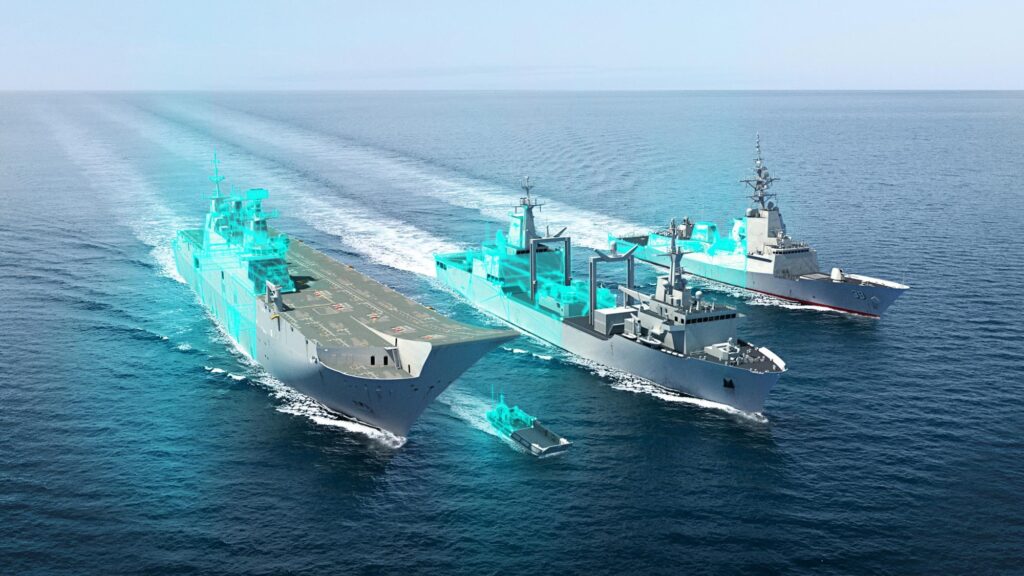
Navantia's engineers are quietly reshaping the global maritime landscape. Photo by Navantia Website
How a state-owned shipbuilder evolved from royal arsenals to become Europe’s most strategic naval diplomatic asset.
In the defence corridors of Brussels and Washington, a quiet revolution is reshaping the global naval landscape. While attention focuses on flashy defence startups and traditional military giants, Spain has methodically built one of the world’s most influential maritime powers, not through conquest or coercion, but through three centuries of patient evolution and strategic state investment.
Navantia, 100% owned by SEPI, the Spanish state-owned industrial holding group, represents something increasingly rare in Western defence: a state-controlled company that has successfully translated national strategic objectives into global commercial dominance. Operating across 20 countries and heir to a naval tradition stretching back to the 18th-century royal arsenals, Navantia has evolved into a sophisticated instrument of soft power diplomacy while simultaneously positioning itself at the forefront of Europe’s green energy transition.
The Architecture of State Power
Navantia’s structure reveals much about Spain’s strategic approach to global influence. As a state-owned company under SEPI, Navantia operates across 20 countries, providing naval technology, systems integration, and life cycle support services. This global footprint isn’t accidental, it’s the result of deliberate state policy that views naval capabilities as both economic opportunity and diplomatic leverage.
Academic research suggests that state-owned enterprises in the 21st century have re-emerged as key players in strategic sectors, showing renewed intention to contribute to relevant economic and societal objectives, including structural economic change, innovation, and internationalization. This theoretical framework appears evident in Navantia’s case, where state ownership enables what economists term “patient capital”, the ability to pursue long-term strategic objectives that align with Spain’s broader geopolitical interests rather than quarterly earnings targets.
The OECD notes that SOEs play important roles in many economies, often providing public goods and services, and are prevalent in strategic sectors such as energy, extractives, infrastructure, precisely the domains where Navantia operates. This patient capital approach appears decisive in securing complex international contracts requiring decades-long commitments and extensive technology transfer agreements, suggesting the state ownership model provides competitive advantages in markets where relationship-building and strategic patience matter more than immediate profitability.
Projecting Soft Power Through Steel and Software
Spain’s use of Navantia as an instrument of soft power represents sophisticated geopolitical understanding. Unlike traditional military aid, naval technology transfer creates enduring relationships through shared operational requirements, training programs, and maintenance contracts.
Navantia doesn’t simply export ships, it exports entire naval ecosystems. When building frigates for Australia or submarines for emerging powers, it creates decades-long relationships encompassing training, logistics, and strategic consultation. These relationships often outlast the governments that negotiated them, creating institutional bonds serving Spanish interests across political cycles.
This approach has proven particularly effective in regions where Spain seeks expanded influence without triggering geopolitical alarm. In the Indo-Pacific, Middle East, and Latin America, Navantia’s naval partnerships provide Spain with access and influence difficult to achieve through conventional diplomatic channels.
Green Energy: The New Frontier
Perhaps the most forward-looking aspect of Navantia’s strategy is its aggressive expansion into green energy technologies. Navantia launched its Seanergies brand to boost offshore wind and hydrogen activities, recognizing that future maritime industries will be defined by energy transition as much as traditional naval capabilities.
The company’s activity spans shipbuilding, systems and services, and green energy, where it’s become an international benchmark in offshore wind. Navantia partnered with Enagás in green hydrogen projects and explored renewable hydrogen generation with Repsol, creating new forms of energy diplomacy.
This diversification serves diplomatic purposes, positioning Spain to offer comprehensive packages combining naval capabilities with renewable energy infrastructure. As European nations struggle for energy independence, companies providing both naval security and energy transition solutions enjoy significant competitive advantages.
The Future of State-Owned Naval Power
Navantia’s success raises important questions about defence industrial policy in an era of great power competition. While Anglo-American culture has favoured private contractors, the Spanish model suggests state ownership provides distinct advantages in global markets where long-term relationships and patient capital matter more than quarterly earnings.
The company’s evolution demonstrates how state-owned enterprises can adapt to changing environments while preserving core strategic functions. As European nations grapple with strategic autonomy questions, Navantia’s model offers valuable lessons about maintaining state capacity in critical technologies.
Looking ahead, Navantia’s combination of traditional naval capabilities and green energy technologies positions the company, and Spain, for success in a world where climate change and great power competition intersect unprecedentedly.
The Quiet Revolution
Navantia’s rise represents one of modern Europe’s most successful examples of strategic state enterprise. Through patient investment, technological innovation, and sophisticated diplomacy, Spain has created a company serving simultaneously as a commercial enterprise, diplomatic instrument, and strategic asset.
As Europe faces uncertainty marked by great power competition, energy transition, and technological disruption, Navantia offers a model for how medium powers can punch above their weight through strategic thinking and long-term investment. In the shipyards of Ferrol and design offices of Madrid, Navantia’s engineers are quietly reshaping the global maritime landscape, embodying Spain’s transformation from post-imperial decline to strategic renaissance, one ship at a time.
Follow Euro Weekly News on Google News
Get breaking news from Spain, travel updates, and expat stories directly on your Google News feed.
Follow on Google NewsSign up for personalised news
Subscribe to our Euro Weekly News alerts to get the latest stories into your inbox!
By signing up, you will create a Euro Weekly News account if you don't already have one. Review our Privacy Policy for more information about our privacy practices.





Alejandro Martin Gomez
Alejandro is a passionate writer from Almería with a background in Energy Engineering from the University of Exeter. He has worked across climate-tech startups, renewable energy consultancies, and multinational corporations. He brings valuable local insight into Almería’s culture, people, and changing landscape. With a keen interest in sustainability and the stories shaping modern life, he offers a thoughtful perspective in every piece.
Comments
Peter Gonzales
17 June 2025 • 13:15Why do so many articles appear to be AI generated lately?
The article above repeats the same basic story about 5 times
Comments are closed.