7 Local tips for surviving August heat in Spain
By Marc Menendez-Roche • Published: 31 Jul 2025 • 11:11 • 2 minutes read
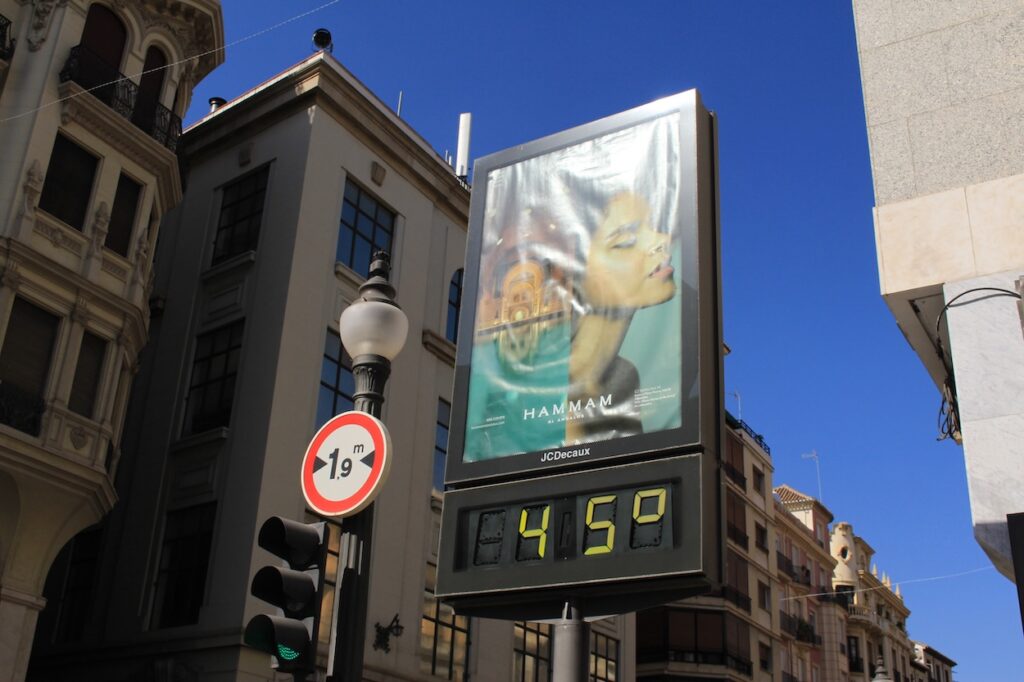
How to stay cool in Spain. Stock image of city billboard with a digital thermometer displaying 45 degrees celsius at the intersection of Calle Reyes Catolicos and Calle Padre Suarez streets in Granada, Spain. Credit: RukiMedia, Shutterstock.
Spain in August can be unforgiving, with temperatures regularly exceeding 35°C across much of the country. For those visiting or living here, it’s essential to know how to cope with the intense summer heat. These tried-and-tested Spanish strategies offer practical ways to stay safe and comfortable during a heatwave.
1. Close the shutters, open the windows
To keep homes cool in the Spanish summer heat, locals rely on persianas – external shutters designed to block direct sunlight. Keep them closed during the day to stop rooms overheating, but leave windows slightly open to allow air to circulate.
2. Avoid activity during peak heat hours
Between 2 PM and 6 PM, the heat is at its most intense. Most Spanish towns slow down during these hours in July and August, with shops closing and locals staying indoors. This traditional rhythm isn’t just cultural – it’s an effective strategy for avoiding heat exhaustion.
3. Eat light, cold meals
Spaniards often switch to cold, hydrating meals during summer. Dishes like gazpacho, salmorejo, and fresh salads are rich in water and easy to digest – ideal for keeping energy up without overheating. Salted foods also help the body retain fluids during prolonged heat.
4. Choose breathable clothing
Light, loose-fitting clothes made from cotton or linen are best for hot weather in Spain. These materials allow the skin to breathe and help regulate body temperature. Avoid synthetic fabrics, which can trap heat and cause discomfort. Also, avoid tight clothes at all costs.
5. Take lukewarm showers
Although a freezing cold shower may seem tempting, it can actually raise your core temperature once your body tries to compensate. A lukewarm shower cools the body more gradually and is far more effective during a heatwave.
6. Stay in the shade
Spaniards instinctively seek out shaded areas in parks, streets, and terraces during hot afternoons. Whether you’re on holiday in Spain or living here, avoid standing or walking in direct sunlight for long periods, especially during midday hours. You’re going to be in the sun more than enough, so when you do have a chance to go in the shade jump at it.
7. Hydrate steadily with local drinks
Hydration is vital, but it’s better to sip fluids throughout the day than drink large amounts all at once. Popular local choices include water, tinto de verano (red wine with lemon soda), horchata (a chilled drink made from tiger nuts), limon granizado (amazing iced lemonade), and Aquarius if you need quick rehydration . All help cool the body without overstimulating it.
In a country where summer heat can turn deadly, Spain’s everyday wisdom offers more than comfort – it offers survival. From shuttered windows to chilled gazpacho, these habits aren’t just traditions; they’re finely tuned responses to a harsh climate. Whether you’re a tourist or a resident, adapting to these local rhythms isn’t optional – it’s essential.
More Spanish living news.
Follow Euro Weekly News on Google News
Get breaking news from Spain, travel updates, and expat stories directly on your Google News feed.
Follow on Google NewsSign up for personalised news
Subscribe to our Euro Weekly News alerts to get the latest stories into your inbox!
By signing up, you will create a Euro Weekly News account if you don't already have one. Review our Privacy Policy for more information about our privacy practices.
Marc Menendez-Roche
Marc is a writer, educator, and language enthusiast with a background in business and legal communication. With over a decade of experience in writing and teaching, he brings a clear, engaging voice to complex topics—guided by a keen interest in educational neuroscience and how people learn. At Euro Weekly News, Marc contributes lifestyle features and community-focused stories that highlight everyday life across Spain. His ability to connect language, learning, and lived experience helps bring depth and relatability to the topics he covers.
Comments