Face-scanning cameras set for UK streets: Could your passport photo soon be checked by police?
By Farah Mokrani • Published: 04 Dec 2025 • 19:42 • 3 minutes read
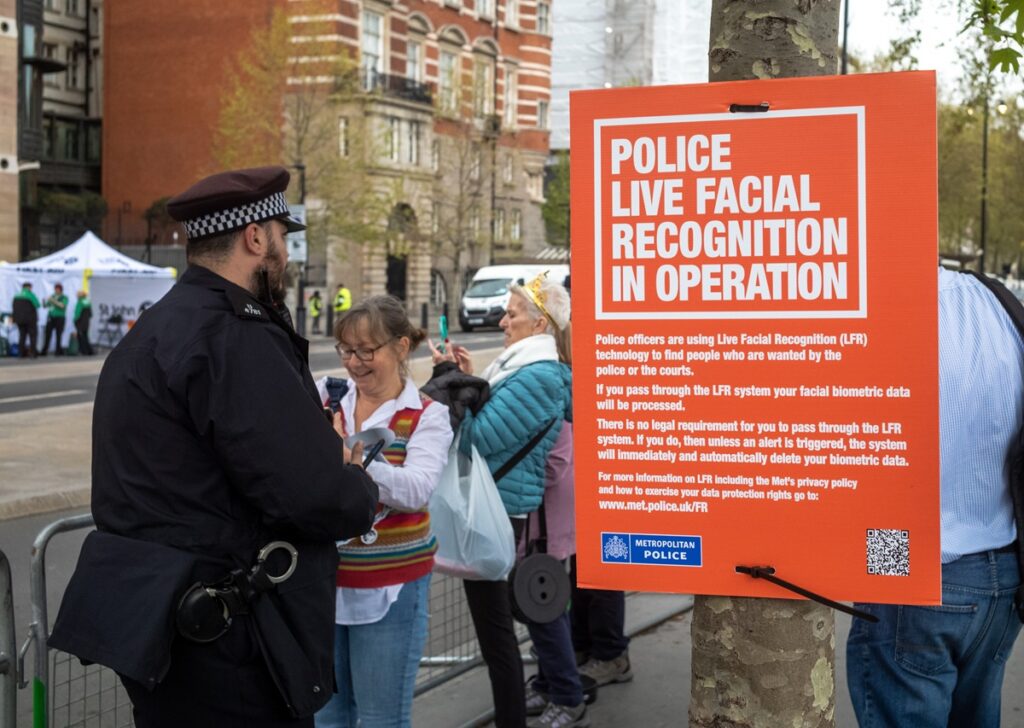
Live facial recognition technology being deployed during a police operation in a busy town centre. Credit : Andy Soloman, Shutterstock
The idea sounds like something out of a dystopian TV drama, yet it could soon become everyday reality in towns and cities across the UK. Police may be given expanded powers to use live facial recognition cameras, with the ability to check images of suspected criminals against government databases – including the passport photos of roughly 45 million Britons.
These proposals are part of a new Home Office consultation that aims to create one clear legal framework for facial recognition technology. If approved, every police force in England and Wales could deploy the cameras more widely, marking one of the biggest changes to everyday policing in decades.
How facial recognition would work on UK high streets
Facial recognition is already in limited use, but only by nine police forces, including the Met. The new plans would take things much further, allowing cameras to become a routine feature in busy areas such as town centres, transport hubs and known crime hotspots.
Police currently use three methods. The first involves live cameras, mounted on vans or fixed points, scanning crowds and comparing faces to watchlists of up to 1,500 wanted or high-risk suspects. The second relies on mobile phone apps, enabling officers to identify a person in the street. The third comes after a crime, when images from CCTV, doorbell cameras or mobile phones are matched against databases to identify suspects.
So far, searches have mainly relied on the Police National Database, which only includes images of people who have previously been arrested. Under the new proposals, officers could potentially extend those searches to passport and immigration databases, bringing millions of ordinary citizens into the scope of the system, even if they have never had any contact with police.
At the same time, the Home Office is developing a new national custody image database that could contain up to 20 million booking photos, powered by updated software designed to improve accuracy and speed.
Government: a crime-fighting breakthrough – critics: a step too far
Policing minister Sarah Jones has said facial recognition represents the “biggest breakthrough since DNA matching”, claiming the technology has already helped take thousands of dangerous criminals off the streets. She argues that expanding its use will give officers another effective tool to detect serious offenders, track repeat criminals and support investigations faster than traditional methods allow.
Police are also using the technology to help monitor the movements of registered sex offenders, aiming to ensure they do not enter areas from which they are banned. In addition, some retailers already use facial recognition systems to detect and exclude prolific shoplifters, something the government has described as another “tool in the armoury” against rising theft.
However, the reaction from privacy groups has been fierce. Campaign organisation Big Brother Watch warns that the plans could turn the UK into an “open prison”. Its director, Silkie Carlo, says turning passport images into searchable police material effectively makes every citizen part of a continuous police line-up, often without knowledge or consent. She also raises concerns over the possibility of errors leading to wrongful stops or misidentifications, which could have life-changing consequences for innocent individuals.
Civil liberties campaigners say the extension of facial recognition beyond police, potentially to other public services or private companies, would push the technology even deeper into everyday life – far beyond its original crime-fighting promise.
Trials already happening – and expansion on the horizon
Live facial recognition trials are already quietly underway. In Holyhead, Wales, cameras have been tested to spot deported foreign criminals attempting to re-enter the country. Similar technology may also be used to help locate absconded immigration offenders.
The consultation aims to determine exactly when and how police can access government image databases, establish clearer limits on the technology’s use and define what safeguards must be in place. Ministers insist facial recognition will be targeted strictly at wanted suspects and serious criminals, not the wider public.
Yet even with proposed safeguards, the scale of the potential expansion has sparked unease. For supporters, the cameras represent smart policing that can respond quickly to serious crime and protect the public more effectively. For critics, they symbolise creeping surveillance that risks normalising constant monitoring.
Whether welcomed or feared, one thing is clear: the future of policing on Britain’s streets is on the brink of a major transformation. If the proposals move forward, seeing face-scanning cameras in town centres may soon be as normal as seeing CCTV – raising an unavoidable question for the public: where does security end and privacy begin?
Stay tuned with Euro Weekly News for more UK News
Follow Euro Weekly News on Google News
Get breaking news from Spain, travel updates, and expat stories directly on your Google News feed.
Follow on Google NewsSign up for personalised news
Subscribe to our Euro Weekly News alerts to get the latest stories into your inbox!
By signing up, you will create a Euro Weekly News account if you don't already have one. Review our Privacy Policy for more information about our privacy practices.




Farah Mokrani
Farah is a journalist and content writer with over a decade of experience in both digital and print media. Originally from Tunisia and now based in Spain, she has covered current affairs, investigative reports, and long-form features for a range of international publications. At Euro Weekly News, Farah brings a global perspective to her reporting, contributing news and analysis informed by her editorial background and passion for clear, accurate storytelling.
Comments