Major arthritis breakthrough: Stanford scientists REGROW cartilage
By Letara Draghia • Published: 23 Jan 2026 • 22:05 • 2 minutes read
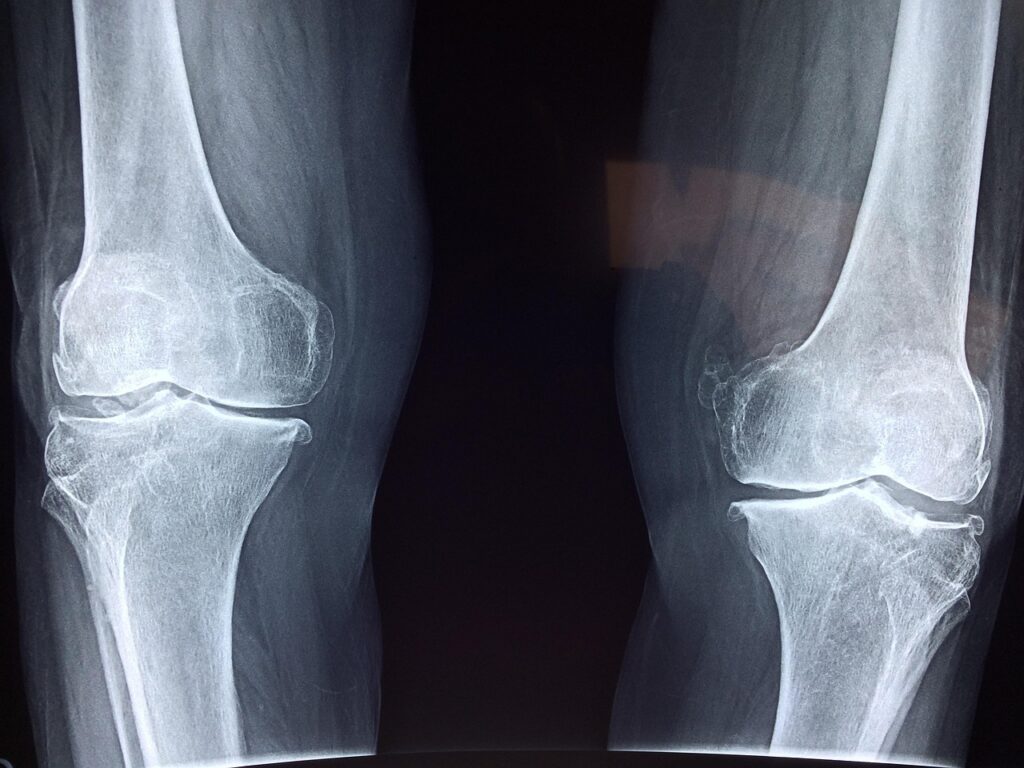
Knee X-ray. Credit: Taokinesis. Pixabay.
Scientists at Stanford Medicine have discovered a way to regenerate ageing joint cartilage and prevent arthritis after injury, a finding that could eventually reduce or even eliminate the need for joint replacement surgery.
The study, published on January 20, shows that blocking a protein linked to ageing restored healthy cartilage in old mice, protected injured joints from developing osteoarthritis, and triggered regeneration in human cartilage samples taken from knee replacement operations, according to a report published by ScienceDaily on Stanford Medicine’s cartilage regeneration research.
What is osteoarthritis?
Osteoarthritis is a degenerative joint disease that affects hundreds of millions of adults in the world, and cases are projected to reach nearly 1 billion by 2050. Current treatments focus on pain relief or surgically replacing damaged joints. There are no approved drugs that can slow or reverse cartilage loss.
The Stanford approach targets the root cause of the disease rather than its symptoms.
“This is a new way of regenerating adult tissue, and it has significant clinical promise for treating arthritis due to ageing or injury,” said Helen Blau, professor of microbiology and immunology at Stanford.
At the centre of the study is a protein called 15-PGDH, which the researchers describe as a “gerozyme” – an enzyme whose levels rise as the body ages and drive tissue decline.
Earlier work from the same team showed that high levels of 15-PGDH weaken ageing muscles, while blocking it improves strength and endurance in older mice. The protein has also been linked to regeneration in bone, nerve, blood and liver tissue.
When the researchers compared knee cartilage from young and old mice, they found that 15-PGDH levels roughly doubled with age, suggesting it could be a key driver of cartilage degeneration.
Regrowing cartilage
The team injected older mice with a small-molecule drug that blocks 15-PGDH, first systemically and later directly into the knee joint. In both cases, cartilage that had become thin and dysfunctional with age thickened across the joint surface.
Crucially, tests confirmed the regenerated tissue was hyaline cartilage – the smooth, shock-absorbing cartilage found in healthy joints – rather than the weaker fibrocartilage that often forms after injury.
“Cartilage regeneration to such an extent in aged mice took us by surprise,” said Nidhi Bhutani, associate professor of orthopaedic surgery at Stanford. “The effect was remarkable.”
Similar results were seen in mice with knee injuries resembling ACL tears. Animals treated twice weekly for four weeks were far less likely to develop osteoarthritis and moved more normally than untreated mice, which developed the disease within weeks.
Regeneration without stem cells
Unlike many forms of tissue repair, cartilage regeneration in this study did not rely on stem cells. Instead, existing cartilage cells – called chondrocytes – changed how their genes behaved and reverted to a more youthful state.
The team also tested cartilage taken from patients undergoing total knee replacement for osteoarthritis. After one week of treatment with the 15-PGDHsDH inhibitor, the tissue showed:
- Fewer 15-PGDH-producing cells
- Reduced expression of cartilage-degrading genes
- Early signs of articular cartilage regeneration
“The mechanism is quite striking and really shifted our perspective about how tissue regeneration can occur,” Bhutani said.
“Imagine regrowing existing cartilage and avoiding joint replacement,” Blau said. “We are very excited about this potential breakthrough.”
View all health news.
Sign up for personalised news
Subscribe to our Euro Weekly News alerts to get the latest stories into your inbox!
By signing up, you will create a Euro Weekly News account if you don't already have one. Review our Privacy Policy for more information about our privacy practices.





Letara Draghia
Letara is a seasoned lifestyle journalist and copywriter with over a decade of experience writing for leading UK brands including Harrods, John Lewis, and Dreams. She specialises in lifestyle, property, wellness, fashion, and consumer tech—helping brands connect with their audiences through compelling, on-brand storytelling. Since relocating to Spain in 2022, Letara has been a regular contributor to Euro Weekly News, covering local culture, expat life, community events, and family-focused stories. Her deep understanding of both British and Spanish lifestyles allows her to craft content that resonates strongly with the expat community.
Comments