Record year for Spain: 97 million tourists with UK leading growth
By Molly Grace • Published: 03 Feb 2026 • 16:54 • 3 minutes read
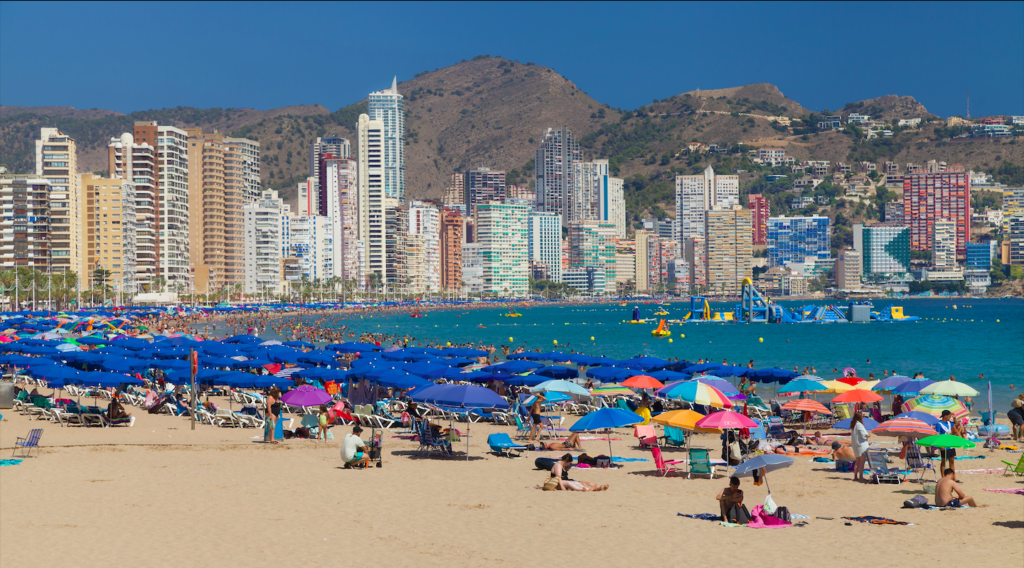
Approximately 19.1 million British residents visited Spain in 2025. Photo credit: Santi Rodriguez/Shutterstock
Spain’s tourism sector marked yet another historic milestone in 2025 by attracting nearly 96.8 million foreign visitors and generating €134.7 billion in spending, both figures representing new records for the country’s vital travel industry. While the pace of visitor growth has moderated compared with the explosive rebound after the pandemic, the economic contribution of international tourists continued to accelerate at a faster rate.
Strong Visitor Growth Despite Global Headwinds
According to the Insituto Nacional de Estadisticas (INE), last year’s total of approximately 96.77 million tourists represented a 3.2 % increase over the 94 million who visited in 2024, underscoring Spain’s enduring appeal as one of the world’s premier travel destinations. Last year’s figure set a new all‑time high for arrivals, marking the third consecutive year in which the country has broken its own tourism record.
Spain’s strong performance comes amid a complex global tourism landscape, where economic uncertainty and currency fluctuations have influenced travel patterns. Despite this, demand for Spanish destinations remained robust, particularly from long‑haul markets.
Spending Growth Outpaces Arrivals
Crucially, tourist spending surged by 6.8 % in 2025 compared with the previous year, reaching €134.712 billion, a new historical peak. This increase in expenditure outpaced the growth in visitor numbers, reflecting a broader shift toward higher‑value tourism. Tourists from non‑European markets, such as the United States and Asia, tend to stay longer and spend more per trip, contributing to the stronger revenue performance.
The expansion in spending was observed across a range of tourism services, from accommodation and dining to cultural attractions and local transportation. Spending growth nearly doubled the rate of arrival increases, indicating that Spain’s tourism industry is becoming less reliant on sheer volume and more focused on economic value.
Regional Winners and Sector Dynamics
Among Spain’s regions, Cataluña continued to lead in foreign visitor numbers, setting its own record with more than 20 million international tourists in 2025, the highest ever registered in the autonomous community. The Mediterranean islands and the Canary Islands also remained top destinations, attracting significant tourism flows throughout the year.
Destinations such as the Canary Islands and Balearic Islands recorded substantial tourist spending, reflecting their enduring popularity and strong performance in attracting high‑spending visitors.
Shifts in Source Markets: UK and U.S. leading
Tourism analysts point to notable shifts in the origin of visitors. While traditional European markets like France and Germany experienced slower growth or stagnation, the United Kingdom was Spain’s largest source of tourists, with approximately 19.1 million British visitors. They contributed around €23.65 billion in spending, showing a strong preference for coastal resorts, island destinations, and city experiences such as Barcelona, Madrid, and Sevilla.
The United States emerged as the fastest-growing long-haul market, with more than 4 million visitors. American tourists tended to stay longer and spent more per trip on premium services including guided tours, leisure activities, and dining compensating for weaker European demand and bolstering overall numbers. This diversification of source markets has become an important pillar of Spain’s tourism strategy, reducing dependence on any single region and enhancing resilience to economic fluctuations.
Policy Focus on Sustainability and Quality
Spanish authorities have emphasised that the 2025 results align with broader policy goals aimed at transforming the country’s tourism model. Rather than pursuing raw figures alone, the government aims to promote sustainability, de‑seasonalisation, and higher quality tourism that delivers greater economic benefit while alleviating pressure on local infrastructure and communities.
Part of this approach includes tighter regulation of short‑term rental properties, particularly in popular urban destinations where over-tourism and housing affordability have become pressing issues. By limiting the expansion of tourist‑oriented apartments and holiday rentals, officials hope to strike a balance between welcoming visitors and preserving residential communities.
Outlook for 2026
Looking ahead, forecasters and policymakers are cautiously optimistic. Spain is expected to continue attracting growing numbers of international tourists in 2026, with early‑year indicators suggesting that the sector may be on track to approach the 100 million visitor mark within the next two years. However, officials stress that managing growth responsibly and focusing on economic quality will remain central priorities.
Spain’s 2025 tourism figures illustrate both the sheer scale of the country’s appeal and a strategic shift toward value‑added travel, reinforcing its status as a global tourism powerhouse while seeking to mitigate the social and environmental impacts of high visitor volumes.
Follow Euro Weekly News on Google News
Get breaking news from Spain, travel updates, and expat stories directly on your Google News feed.
Follow on Google NewsSign up for personalised news
Subscribe to our Euro Weekly News alerts to get the latest stories into your inbox!
By signing up, you will create a Euro Weekly News account if you don't already have one. Review our Privacy Policy for more information about our privacy practices.





Molly Grace
Molly is a British journalist and author who has lived in Spain for over 25 years. With a background in animal welfare, equestrian science, and veterinary nursing, she brings curiosity, humour, and a sharp investigative eye to her work. At Euro Weekly News, Molly explores the intersections of nature, culture, and community - drawing on her deep local knowledge and passion for stories that reflect life in Spain from the ground up.
Comments