How Schengen’s new Border Entry System could cause summer airport delays for travellers in Spain and across Europe
By Farah Mokrani • Updated: 16 Feb 2026 • 16:14 • 3 minutes read
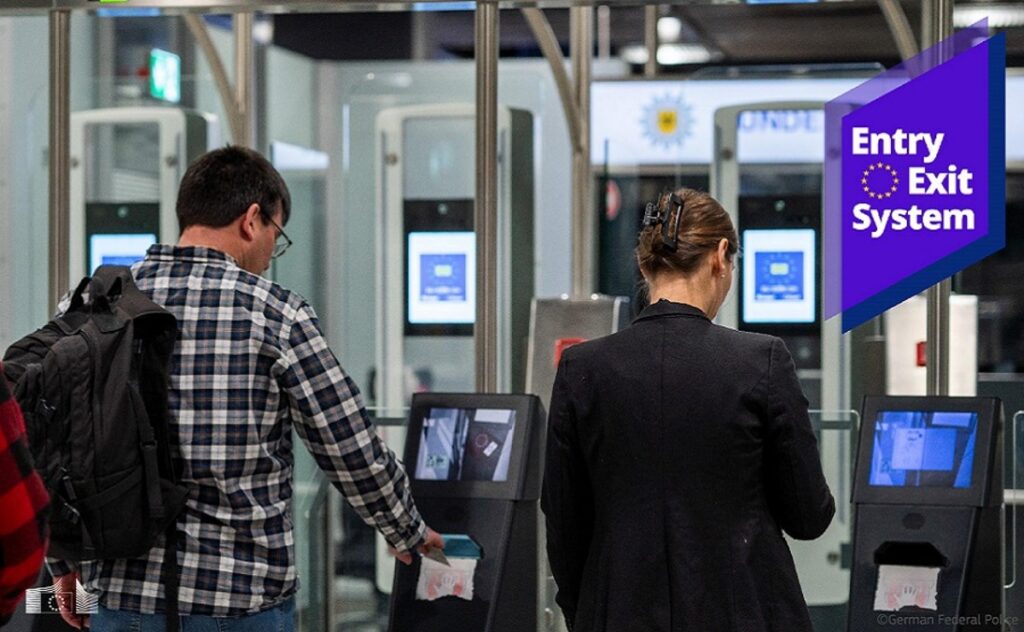
Passengers registering at automated kiosks under the EU’s new Entry/Exit border control system. Credit : home-affairs.ec.europa.eu
If you are flying into Spain or anywhere in the Schengen area this summer from outside the EU, you may face longer queues at passport control. Europe’s main airport and airline organisations are warning that the new Entry/Exit System (EES) could lead to serious delays during peak travel months unless changes are made urgently.
In a joint statement, ACI Europe, Airlines for Europe (A4E) and the International Air Transport Association (IATA) said they fear “serious disruption” if the rollout continues without more flexibility. According to the industry bodies, waiting times of up to two hours have already been observed during the current deployment phase. They warn that queues could stretch even further during the height of summer.
The concern is simple: the system is expanding just as Europe heads into its busiest tourist period. From 10 April, the plan is for 100 per cent of eligible non-EU travellers to be registered under the new system. This article explains what the system does, who it affects in Spain and across Europe, why airlines are worried, and what travellers should expect.
What the new Schengen Entry/Exit System means at Spanish airports
The Entry/Exit System is replacing traditional passport stamping for non-EU visitors entering the Schengen area. Instead of a simple stamp, border authorities now record personal data, biometric information and the dates of entry and exit.
The purpose is to better monitor overstays and refusals of entry across Schengen countries.
For example, a British tourist landing in Alicante or Málaga for the first time since full implementation may be required to provide biometric data at passport control. That additional step can increase processing time, particularly at busy airports.
Currently, around 35 per cent of third-country nationals are registered under the system. That coverage is scheduled to reach 100 per cent in April – just weeks before summer traffic peaks.
Why airlines and airports are calling for immediate review
The aviation sector is not opposing the system itself. Their concern lies in operational reality.
In a letter to European Commissioner for Home Affairs and Migration Magnus Brunner, the three organisations cited what they describe as chronic understaffing at border control and unresolved technological issues linked to automation.
They argue that without flexibility, airports could face long queues – potentially up to four hours in peak periods. That would not only affect travellers but also airline schedules and airport operations.
The industry is asking the European Commission to confirm that Schengen states will retain the option to partially or fully suspend the system until the end of October 2026 if necessary. In other words, they want a safety valve during high season.
How the impact could differ between travellers
Not everyone will be affected in the same way.
A Spanish resident flying from Valencia to Paris will notice no change. But a UK expat returning to Spain from London could face longer checks on arrival.
Similarly, someone entering through a smaller regional airport outside peak hours may experience minimal delay, while a family arriving at Barcelona in August could face significantly longer queues.
The key factors are airport size, staffing levels and passenger volume at the time of arrival.
What to do if you are travelling this summer
If you are flying into Spain or another Schengen country from outside the EU, it makes sense to plan for extra time.
Arrive at the airport early when departing. On arrival, expect that passport control may take longer than before. Ensure your travel documents are valid and easily accessible.
For example, if you are scheduled to land in Palma in July at 6pm – traditionally a busy arrival window – allow for the possibility of extended waiting time before onward travel or transfers.
Keep an eye on updates from your airline and official announcements from border authorities as summer approaches.
Rollout timeline at a glance
12 October – Progressive rollout of the Entry/Exit System begins at EU land, sea and air borders.
Current stage – Around 35 per cent of non-EU travellers registered.
10 April – Target date for full implementation.
Summer 2026 – First full peak season under expanded system.
This timing is at the heart of the aviation sector’s concerns.
A necessary reform facing real-world pressure
Digitising border management across Schengen is widely seen as a necessary step. Manual passport stamps are outdated and provide limited oversight of overstays.
However, the transition from paper to biometric processing must match airport capacity. Introducing full implementation immediately before peak travel carries operational risk if staffing and systems are not fully ready.
Airports are effectively asking for breathing space, not abandonment of the reform.
What this means for travellers entering Spain and Schengen
If you are travelling into Spain from outside the EU this summer, the key takeaway is preparation, not panic.
The system is designed to improve border management in the long term. In the short term, travellers should expect possible delays and allow extra time.
Whether flexibility is granted before peak season may determine how smooth Europe’s summer travel experience turns out to be.
Follow Euro Weekly News on Google News
Get breaking news from Spain, travel updates, and expat stories directly on your Google News feed.
Follow on Google NewsSign up for personalised news
Subscribe to our Euro Weekly News alerts to get the latest stories into your inbox!
By signing up, you will create a Euro Weekly News account if you don't already have one. Review our Privacy Policy for more information about our privacy practices.




Farah Mokrani
Farah is a journalist and content writer with over a decade of experience in both digital and print media. Originally from Tunisia and now based in Spain, she has covered current affairs, investigative reports, and long-form features for a range of international publications. At Euro Weekly News, Farah brings a global perspective to her reporting, contributing news and analysis informed by her editorial background and passion for clear, accurate storytelling.
Comments
Andrew
15 February 2026 • 20:40The airlines are right to raise this concern. It’s a disaster waiting to happen, and you can almost guarantee it WILL happen, because a) it’s happened before ie when it first launched and b) managers learn nothing and just hope for the best rather than planning for reality. So yes, there will be huge queues, people will miss their flights, and there will be chaos at airports. And the managers will point fingers and apportion blame but not wonder why they, like everyone else, did not predict this would happen. If it all goes smoothly, as it absolutely should if it was managed properly, I will eat someone’s hat.
Miguel
16 February 2026 • 07:08No point on commenting on a story when Farah is the content writer
Comments are closed.