This dinosaur was only supposed to exist in North America — so why is it in Spain?
By Molly Grace • Published: 15 Sep 2026 • 23:34 • 3 minutes read
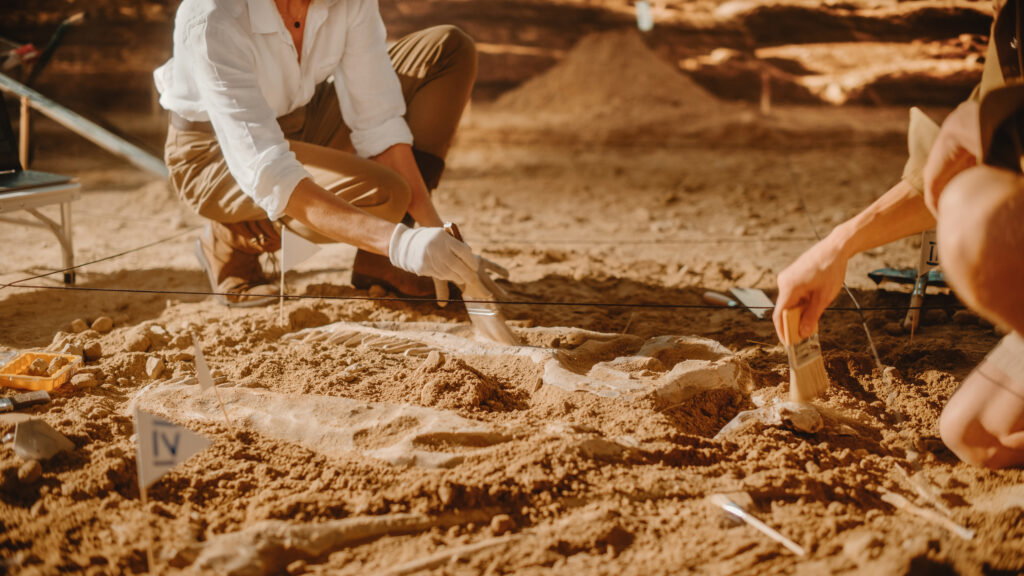
The fossils were discovered at the La Tejería site in El Castellar, Teruel. Photo credit: Gorodenkoff/Shutterstock
For millions of years, scientists have pieced together the movements of dinosaurs from fossils scattered across the planet. But every so often, a discovery turns up that makes them rethink where an animal could actually have lived, and one such find in Spain has raised a particularly intriguing question.
Because this time, the fossils don’t belong to an obscure creature that few people have heard of. They belong to one of the most recognisable dinosaurs ever to walk the Earth, and its presence here is forcing scientists to reconsider the prehistoric connection between two continents. So how did it get here? That question takes us back around 150 million years, when today’s continents looked very different and the Atlantic was still taking shape.
Meet Teruel’s 150-million-year-old giant
The fossils were discovered at the La Tejería site in El Castellar, Teruel, by researchers from the Fundación Conjunto Paleontológico de Teruel-Dinópolis. They include 14 remarkably well-preserved tail vertebrae and several chevrons, the small bones attached to the underside of the tail vertebrae. The remains date back around 150 million years, to the Late Jurassic. This was a very different Spain, long before humans, modern cities or anything resembling today’s landscape existed.
The animal represented by the fossils could have reached around 25 metres in length, making it roughly the length of two-and-a-half buses. Until now, Diplodocus fossils had only been identified in North America, particularly in the famous Morrison Formation in the western United States. Detailed comparisons and evolutionary analysis have now established that the Teruel fossils belong to the same genus.
So how did a Diplodocus end up in Spain?
This is where the discovery becomes considerably more interesting than simply finding another dinosaur fossil. There was no modern Atlantic Ocean separating Europe and North America in the way there is today. Around 150 million years ago, the continents were still shifting, and the geography of the planet was dramatically different. North America and Europe were gradually pulling apart as the Atlantic opened, but the two landmasses were not yet as isolated as they are now.
Changing sea levels and temporary land connections or island chains may have allowed animals to move between areas that would eventually become separated by a vast ocean. The Teruel discovery provides evidence supporting the idea that Diplodocus was able to reach Europe during this period. In other words, this wasn’t a dinosaur somehow making an extraordinary modern-style transatlantic journey. It was living in a world where the route between North America and Europe was very different from the one we know today.
Why is the discovery so important?
Diplodocus has been one of the easiest dinosaurs to recognise since its fossils were first discovered in the United States in the 19th century. Its extraordinarily long neck and tail have made it a fixture of museums, books and dinosaur documentaries for generations. But scientists had always had a rather significant hole in its geographical story: every known Diplodocus fossil came from North America. The Teruel remains extend the known range of the genus into Europe and provide new evidence about how dinosaurs moved between continents during the Late Jurassic.
They also add to scientists’ understanding of the prehistoric ecosystems that existed across the Iberian Peninsula. Teruel was already an important area for dinosaur research, with numerous remains of giant sauropods discovered there. This latest find adds another enormous herbivore to the region’s prehistoric cast and gives researchers fresh evidence about how its ancient animal populations were connected to those elsewhere in the world.
What does Diplodocus actually mean?
The dinosaur’s name sounds suitably grand, but its meaning is surprisingly straightforward. Diplodocus means “double beam”, referring to the unusual double-beamed structures found on the underside of its tail vertebrae. The name comes from Greek and was chosen when the genus was described in the late 19th century.
Those distinctive bones were one of the features that helped scientists recognise what they were looking at when Diplodocus fossils were first studied in North America. The name has since become almost as famous as the animal itself, although the dinosaur that inspired it was rather more complicated than the museum models might suggest.
A very different map of the world
The discovery is a reminder that prehistoric geography cannot be read using today’s map. Around 150 million years ago, the continents were moving, seas were opening and closing, and animals could occupy areas that would eventually find themselves thousands of kilometres apart. What is now Teruel was part of that constantly changing world.
The Diplodocus fossils have survived all that geological upheaval, leaving researchers with a small but remarkably important piece of its enormous tail. And that is the real surprise from Teruel: a dinosaur that scientists had spent generations thinking of as a North American giant has now turned up in Spain, giving its prehistoric travels a much bigger map.
Follow Euro Weekly News on Google News
Get breaking news from Spain, travel updates, and expat stories directly on your Google News feed.
Follow on Google NewsSign up for personalised news
Subscribe to our Euro Weekly News alerts to get the latest stories into your inbox!
By signing up, you will create a Euro Weekly News account if you don't already have one. Review our Privacy Policy for more information about our privacy practices.





Molly Grace
Molly is a British journalist and author who has lived in Spain for over 25 years. With a background in animal welfare, equestrian science, and veterinary nursing, she brings curiosity, humour, and a sharp investigative eye to her work. At Euro Weekly News, Molly explores the intersections of nature, culture, and community - drawing on her deep local knowledge and passion for stories that reflect life in Spain from the ground up.
Comments