Europe divided as France advances nuclear deterrence and Spain rejects rearmament
By Molly Grace • Published: 03 Mar 2026 • 15:38 • 3 minutes read
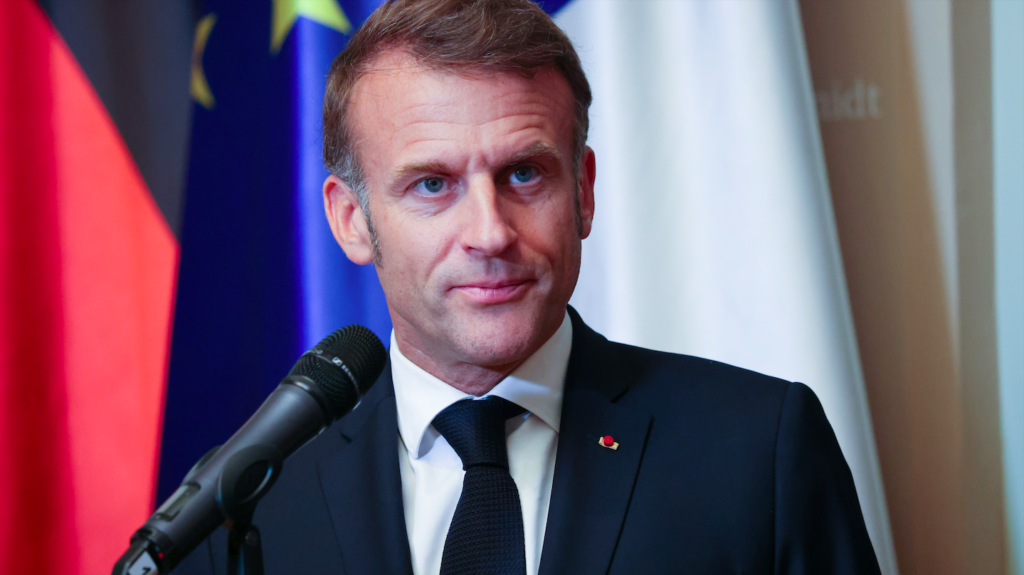
Emmanuel Macron has announced an expansion of France’s nuclear deterrent. Photo credit: EUS-Nachrichten/Shutterstock
In a significant reorientation of European defence policy, French President Emmanuel Macron has announced an expansion of France’s nuclear deterrent and outlined a framework for closer cooperation with a group of European partners, a move that has attracted both support and resistance across the continent.
Speaking on March 2, at the Île Longue naval base in Brittany, home to France’s submarine-launched ballistic missile force, Macron unveiled what he termed a new doctrine of “advanced deterrence”. Under this doctrine, France will increase the number of nuclear warheads in its arsenal and seek deeper strategic collaboration with eight European countries, including joint exercises and the potential temporary deployment of strategic forces beyond French territory.
France currently possesses an estimated 290 nuclear warheads, the most of any European Union member state and the fourth largest stockpile globally. Macron said he has ordered an increase in that stockpile, while indicating that Paris will cease publicly disclosing the exact number of warheads held.
Eight Countries Express Interest in Cooperation
Macron identified eight European countries, the United Kingdom, Germany, Poland, the Netherlands, Belgium, Greece, Sweden and Denmark, as having signalled interest in France’s proposed advanced deterrence initiative. These countries are to be involved in joint exercises and may, under specific circumstances, host elements of French strategic forces such as aircraft equipped with nuclear weapons.
According to French officials, the aim is not to station French nuclear weapons permanently on allied soil, but to broaden the strategic footprint of the deterrent by enabling temporary dispersal and participation in coordinated activities. Paris and Berlin, for example, have agreed to establish a high-level nuclear steering group to facilitate closer collaboration, including German conventional participation in nuclear exercises.
Danish Prime Minister Mette Frederiksen confirmed Denmark’s cooperation with the initiative, describing it as a response to growing threats from Russia and a means of reinforcing Europe’s collective deterrence capabilities. She stressed that Denmark will not host nuclear weapons on its territory.
In Belgium, Prime Minister Bart De Wever welcomed the plan, framing closer nuclear cooperation with France as an important step towards stronger European defence policy, while underlining that decision-making on nuclear use remains exclusively French.
Polish leaders have similarly emphasised their willingness to engage in discussions with France and its closest allies on the advanced deterrence programme, with Poland’s prime minister stating the partnership is intended “so that our enemies will never dare to attack us.”
France Frames Policy as Complementary to NATO
Macron emphasised that the advanced deterrence approach is intended to complement, not replace, NATO’s existing nuclear umbrella. He said that the dispersal of strategic assets across European territory would complicate potential adversaries’ calculations and reinforce continental security amid what he characterised as a volatile global environment.
While the doctrinal shift was presented as a necessary response to evolving threats, from Russia’s invasion of Ukraine to China’s expanding military capabilities and concerns over the reliability of U.S. defence commitments, the announcement has reignited debates over nuclear strategy in Europe.
French officials have stressed that sovereignty over nuclear decision-making remains firmly with Paris, and there is no intention to cede control over the use or deployment of nuclear weapons to partner nations.
Spanish Government Rejects Nuclear Path
In contrast to the positions of France and several of its European partners, the Government of Spain has been vocal in its rejection of nuclear rearmament and extended deterrence strategies. Prime Minister Pedro Sánchez has repeatedly characterised nuclear expansion as risky and counterproductive, advocating instead for multilateral diplomacy and a renewed emphasis on arms control treaties.
At the Munich Security Conference in February, Sánchez described nuclear rearmament as a “dangerous gamble” and urged world powers to pursue negotiations on a new arms control framework rather than deepen investment in nuclear arsenals. He has argued that Europe’s security should be strengthened through conventional capabilities and political cooperation, and that the pursuit of a true European army would be a more effective path to collective defence.
Spain’s stance reflects a broader hesitation among certain European states traditionally opposed to nuclear proliferation. Madrid’s government has stated that it will not participate in France’s advanced deterrence framework, emphasising that nuclear weapons should not form the basis of Europe’s security strategy.
International Reaction and Broader Implications
The French initiative has attracted attention beyond Europe’s capitals. Advocates of the policy argue that it addresses a security void left by perceived uncertainties in the U.S. commitment to NATO’s nuclear umbrella and rising geopolitical instability. Critics, including disarmament advocates and some political leaders in Europe, have warned that expanding nuclear roles and arsenals could spark an arms race and complicate long-standing non-proliferation norms.
The shift in France’s nuclear posture marks one of the most substantial updates to its defence doctrine in decades and may have lasting implications for European strategic autonomy, alliance cohesion and transatlantic defence architecture.
As discussions continue among Paris and its European partners, and with clear opposition from Madrid, the debate over nuclear deterrence in Europe is poised to shape the continent’s security environment well into the next decade.
Follow Euro Weekly News on Google News
Get breaking news from Spain, travel updates, and expat stories directly on your Google News feed.
Follow on Google NewsSign up for personalised news
Subscribe to our Euro Weekly News alerts to get the latest stories into your inbox!
By signing up, you will create a Euro Weekly News account if you don't already have one. Review our Privacy Policy for more information about our privacy practices.


Molly Grace
Molly is a British journalist and author who has lived in Spain for over 25 years. With a background in animal welfare, equestrian science, and veterinary nursing, she brings curiosity, humour, and a sharp investigative eye to her work. At Euro Weekly News, Molly explores the intersections of nature, culture, and community - drawing on her deep local knowledge and passion for stories that reflect life in Spain from the ground up.
Comments