Using your hazard lights like this in Spain could cost you a €200 fine
By Farah Mokrani • Published: 17 Jul 2026 • 22:40 • 4 minutes read
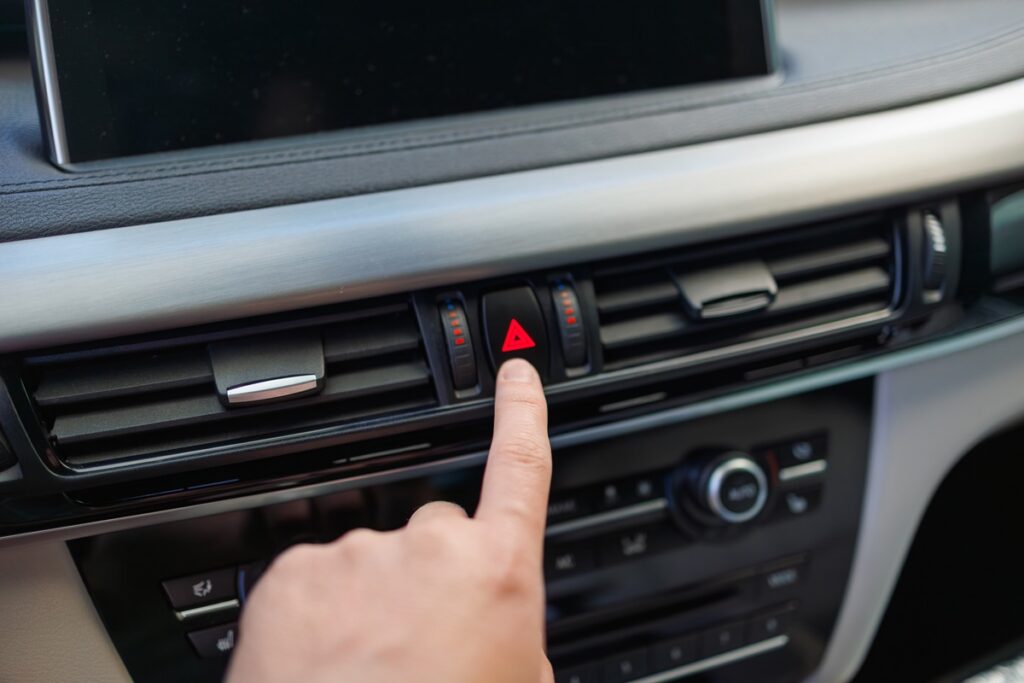
Spain's DGT reminds drivers that hazard lights are only for genuine emergencies, not illegal stops. Credit : Andriiii, Shutterstock
It happens every day on streets across Spain. A driver pulls up outside a shop, stops in a bus lane or double parks for ‘just a minute’, switches on the hazard lights and assumes that’s enough to avoid getting into trouble. According to Spain’s Directorate General of Traffic (DGT), it isn’t.
The traffic authority is reminding motorists that hazard lights, often called warning lights or ‘four way flashers’, do not give drivers permission to stop wherever they like. If your vehicle is parked or stopped somewhere it shouldn’t be, turning on the hazard lights won’t make it legal and, in some situations, you could still face a €200 fine.
The reminder comes as many drivers continue to misuse the lights, often believing they act as a temporary pass for quick stops, collections or deliveries. The DGT says that’s one of the most common misunderstandings on Spanish roads.
Why your hazard lights don’t make an illegal stop legal
For many drivers, switching on the hazard lights has become almost automatic. Someone jumps out to collect a takeaway, drop off a parcel or pick up a passenger, and the warning lights start flashing before the engine is even switched off.
The problem is that the law doesn’t work that way.
Under Article 109 of Spain’s General Traffic Regulations, hazard lights are intended to warn other road users about an exceptional situation that could present a danger, not to excuse an illegal stop.
That includes situations such as a mechanical breakdown, a road traffic accident or any other incident that forces a vehicle to stop unexpectedly in a place where it could create a hazard.
A voluntary stop is something entirely different. If you choose to stop in a prohibited area, on double yellow lines, in a bus lane or in double parking simply because you expect to be there briefly, activating the hazard lights does not change the nature of the offence.
In other words, the flashing lights may warn other drivers that your vehicle is there, but they do not give you permission to leave it there.
The DGT also points out another common mistake.
Some motorists use their hazard lights when pulling over to the side of the road. The correct signal while carrying out that manoeuvre is the appropriate indicator, not the hazard lights. Even then, using the indicator does not make it lawful to stop somewhere where stopping is prohibited.
The mistake that could leave you with a €200 penalty
One of the biggest myths among drivers is that staying inside the car somehow changes the rules.
It doesn’t. Whether you’re waiting for someone, answering a phone call or expecting to drive away after a few seconds, an illegal stop remains an illegal stop. If your vehicle blocks part of the carriageway or makes it more difficult for traffic to pass, the offence becomes more serious.
According to the DGT, that can result in a €200 fine.
The authority also reminds drivers that hazard lights are compulsory in some situations.
If your vehicle breaks down or has to stop in circumstances that could endanger other road users, failing to warn approaching traffic correctly may also lead to a penalty.
In those cases, the fine can start at €80. The purpose of the system is simple. Drivers approaching from behind should immediately understand that something unexpected has happened ahead.
Using hazard lights for everyday parking or convenience weakens that message and can create confusion for other motorists.
Another common habit the DGT wants drivers to avoid
Incorrect use of hazard lights isn’t limited to parking. Many drivers also switch them on the moment they see slow moving traffic or a queue forming ahead, even while their own vehicle is still moving.
The DGT says that’s not the recommended way to warn other road users.
If traffic begins to slow, drivers should brake progressively so that their brake lights clearly show vehicles behind that speed is being reduced.
Hazard lights should only be activated once the vehicle has come to a complete stop and there is a genuine risk of being hit from behind by approaching traffic.
Although many motorists have seen different habits on Spanish roads over the years, that remains the guidance set out by the traffic authority.
What hazard lights are actually for
Hazard lights are one of the simplest safety systems fitted to every vehicle. Their purpose is to communicate that something unusual has happened.
Perhaps the car has broken down. Perhaps there has been an accident. Perhaps the driver has been forced to stop because continuing would be unsafe.
Those are the situations where the flashing lights help other drivers understand they may need to slow down or change lane. Using them simply because it’s easier than finding a legal parking space sends the wrong message and reduces the value of a warning system designed to prevent collisions.
For motorists, the safest approach is also the simplest. If you’re stopping because of an emergency or an unexpected problem, use your hazard lights.
If you’re stopping because you’re collecting someone, making a quick delivery or popping into a shop, the flashing lights won’t protect you from a parking ticket or a traffic fine.
As the DGT continues to remind drivers, hazard lights are a safety warning, not a free pass to ignore the parking rules.
Follow Euro Weekly News on Google News
Get breaking news from Spain, travel updates, and expat stories directly on your Google News feed.
Follow on Google NewsSign up for personalised news
Subscribe to our Euro Weekly News alerts to get the latest stories into your inbox!
By signing up, you will create a Euro Weekly News account if you don't already have one. Review our Privacy Policy for more information about our privacy practices.





Farah Mokrani
Farah is a journalist and content writer with over a decade of experience in both digital and print media. Originally from Tunisia and now based in Spain, she has covered current affairs, investigative reports, and long-form features for a range of international publications. At Euro Weekly News, Farah brings a global perspective to her reporting, contributing news and analysis informed by her editorial background and passion for clear, accurate storytelling.
Comments