Ryanair flight takes off without 24 travellers delayed at airport security
By Molly Grace • Published: 13 Mar 2026 • 23:11 • 3 minutes read
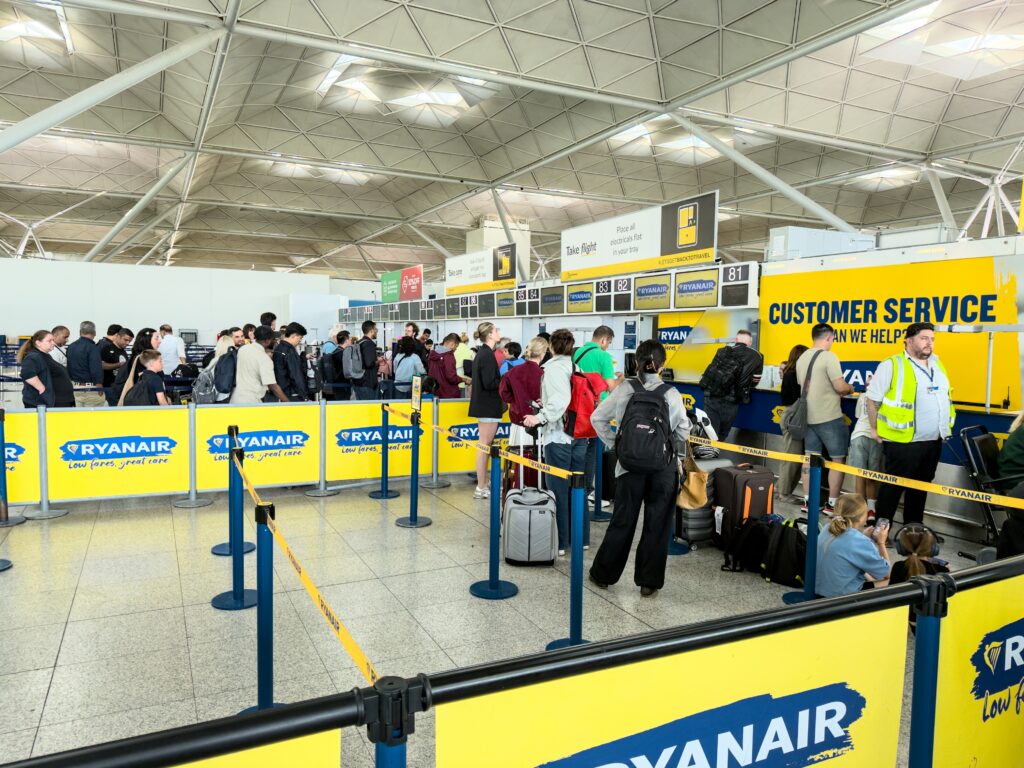
Passengers described the situation as frustrating, arguing that they had followed the recommended arrival times yet still missed the flight. Photo credit: 4K Clips/Shutterstock
Twenty-four passengers were left behind when a flight operated by Ryanair departed from Tours Val de Loire Airport despite them having already checked in, with the airline attributing the situation to delays at airport security controls. The incident occurred on March 11 on a scheduled service bound for Marrakech. The aircraft had been due to depart at 12:15 pm local time but eventually took off at 12:57 pm. By the time the delayed passengers reached the boarding gate, the flight had already left the airport.
According to reports from affected travellers, many had arrived at the airport more than two hours before departure but became stuck in unusually long queues at the security and border control checkpoints. As a result, they were unable to reach the boarding area before the aircraft closed its doors. Passengers described the situation as frustrating, arguing that they had followed the recommended arrival times yet still missed the flight because of circumstances beyond their control.
Airline blames airport security procedures for the delays
Ryanair stated that the delays were caused by issues at the airport’s security and border control procedures rather than by the airline itself.
When passengers fail to board a flight but their checked luggage has already been loaded, aviation safety rules require that their bags be removed from the aircraft before departure. This process reportedly took place before the plane left the airport, contributing to the delay to the scheduled take-off time. Despite the departure being pushed back by more than 40 minutes, the travellers affected were unable to reach the gate in time. The aircraft eventually departed with the remaining passengers on board.
Some travellers criticised the decision to depart without them, particularly given the security delays that had slowed the passenger flow through the airport. One passenger reportedly described the situation as “absurd”, saying the queue at the controls had lasted more than an hour and a half.
Surprise inspection and biometric controls
Officials at Tours Val de Loire Airport confirmed that unusual circumstances had contributed to the congestion at the security and border control checkpoints on the day of the flight. Louis Chaumont, the airport’s director, explained that a surprise inspection carried out by the French National Gendarmerie had coincided with the departure process.
At the same time, passengers travelling outside the European Union were also required to undergo additional checks using new biometric systems introduced for border control procedures. According to the airport director, each biometric verification can take between three and four minutes per passenger. When applied to a large group of travellers at once, the process can significantly slow down the movement of passengers through the checkpoints. These combined factors created a backlog in the security area that prevented some passengers from reaching their gate before boarding closed.
Authorities reviewing what happened
Airport officials said they are investigating the events surrounding the incident to determine how the delays unfolded and whether improvements could be made to avoid similar situations in the future.
The review is expected to examine the timing of the security inspection, the functioning of the biometric control system and the flow of passengers through the airport’s screening area. Such incidents can raise questions about the coordination between airport security operations and airline boarding schedules, particularly at smaller regional airports where resources and staff may be limited. Tours Val de Loire Airport handles a relatively modest number of commercial flights compared with major European hubs, but security procedures must still comply with national and international aviation regulations.
Growing pressure on airport border systems
The incident also draws attention to the operational challenges associated with the introduction of new border management technologies across European airports. Biometric verification systems are increasingly used to strengthen border security and improve passenger identification. However, during early stages of implementation they can sometimes lead to longer processing times if travellers are unfamiliar with the procedures or if staffing levels are limited.
For passengers travelling on international routes, these checks may include passport verification, biometric identification and additional security screening. When several of these processes take place simultaneously, bottlenecks can develop, particularly during busy departure periods.
Impact on affected travellers
For the passengers who missed the Ryanair flight to Marrakech, the situation meant rearranging their travel plans and finding alternative transport options.
Airlines and airports often advise travellers to arrive at least two hours before departure for short-haul international flights, though longer times may be recommended during periods of heavy passenger traffic or enhanced security measures.
In this case, several passengers said they had followed those recommendations but still missed the departure because of the prolonged wait at the controls. As the airport continues to examine the circumstances behind the incident, the case has drawn attention to the delicate balance between strict security procedures and the need to maintain smooth passenger flow at departure terminals.
Sign up for personalised news
Subscribe to our Euro Weekly News alerts to get the latest stories into your inbox!
By signing up, you will create a Euro Weekly News account if you don't already have one. Review our Privacy Policy for more information about our privacy practices.




Molly Grace
Molly is a British journalist and author who has lived in Spain for over 25 years. With a background in animal welfare, equestrian science, and veterinary nursing, she brings curiosity, humour, and a sharp investigative eye to her work. At Euro Weekly News, Molly explores the intersections of nature, culture, and community - drawing on her deep local knowledge and passion for stories that reflect life in Spain from the ground up.
Comments