Italy’s nuclear revival: Meloni’s move to cut energy dependency
By Adam Woodward • Published: 15 Mar 2026 • 17:06 • 1 minute read
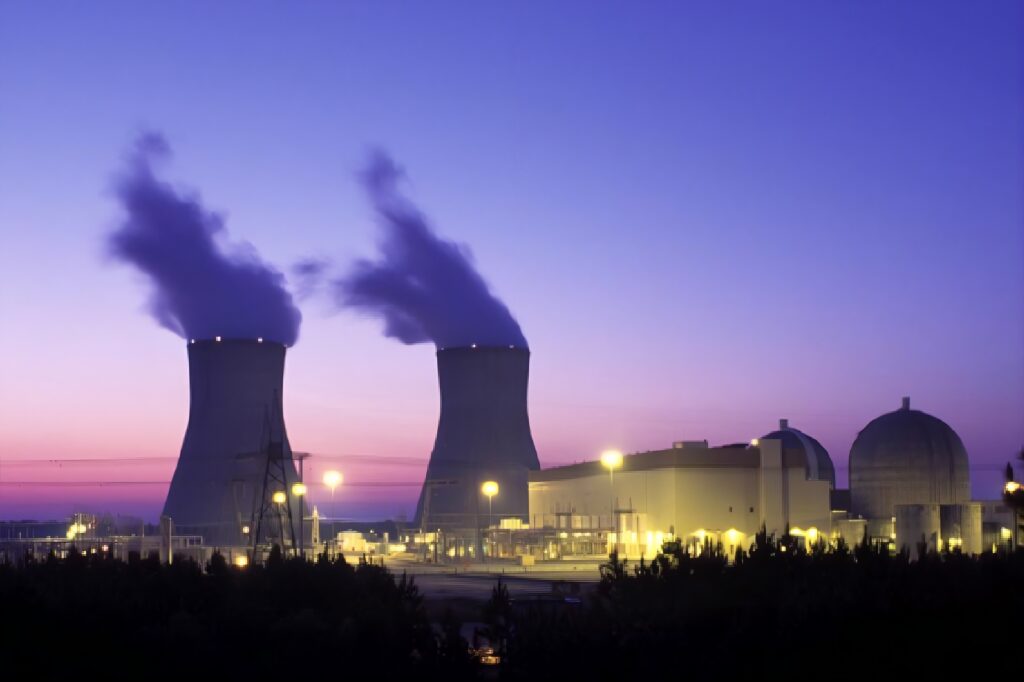
Alvin Ward Vogtle Nuclear Power Plant Credit: NRC wiki CC
Italian Prime Minister Giorgia Meloni is leading an intrepid plan to resurrect nuclear power after decades of prohibition in a bid to drive down rocketing electricity prices.
Consultations with international experts and partners are beginning to shape the government’s strategy. Recent visits to Canada have revealed interest in cutting-edge reactor designs together with talks involving France, the United States and South Korea. Bloomberg reports have confirmed that Italian officials are exploring technologies suited to a national restart nearly 40 years after the last reactor closed down.
Energy independence motivates an urgent need for action
Vulnerability to global volatile energy markets has provoked these decisive steps. Italy depends heavily on imported natural gas supplies in ongoing international crises from 2022 onwards and continuous Middle Eastern instability. Diversification now ranks as a top priority for economic stability.
Legal foundations already laid for future reactors
Passage of updated legislation last year opened doors to a comprehensive national nuclear programme targeted for completion by 2027, although the construction of the reactors themselves could many years. Dedicated research body Nuclitalia has been assessing economic prospects for new builds while energy firms are currently evaluating feasibility in detail.
Europe begins to embrace nuclear energy expansion
Neighbouring nations have also decided to pursue similar paths with more determination than previous times. Poland has advanced construction of Europe’s first small modular reactor in Włocławek, while Czech authorities have signed major contracts for additional large-scale plants. Sweden is proposing eased regulations for fresh constructions, and Britain is targeting substantial capacity growth through innovative small reactors up to 24 gigawatts by 2050. Belgium has recently endorsed global commitments to triple nuclear output, suggesting its own phase-out reversal.
Obstacles still in the way of nuclear path
Past public referendums against atomic energy have created political headwinds requiring massive funding and extended timelines for implementation. Concerns over reactor safety, waste disposal and local opposition in earthquake-prone areas necessitate thorough mitigation strategies before any reactors connect to the grid.
Sign up for personalised news
Subscribe to our Euro Weekly News alerts to get the latest stories into your inbox!
By signing up, you will create a Euro Weekly News account if you don't already have one. Review our Privacy Policy for more information about our privacy practices.



Adam Woodward
Adam is a writer who has lived in Spain for over 25 years. With a background in English teaching and a passion for music, food, and the arts, he brings a rich personal perspective to his work at Euro Weekly News. As a father of three with deep roots in Spanish life, Adam writes engaging stories that explore culture, lifestyle, and the everyday experiences that shape communities across Spain.
Comments