Protected Iberian lynx at centre of debate over feral cats deaths in Spanish village
By Molly Grace • Updated: 25 Apr 2026 • 1:33 • 3 minutes read
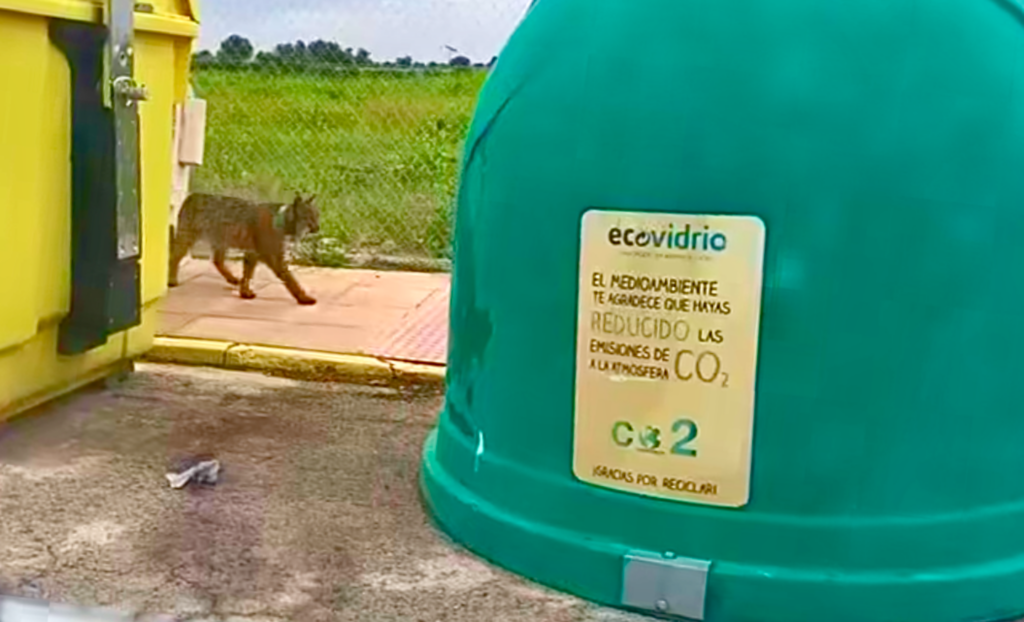
Residents first reported sightings of the lynx moving through streets. Photo credit : Screenshot from footage of SOS Felina Felinae Aranjuez/Facebook
The appearance of an Iberian lynx known as ‘Veneno’ in the Toledo village of Cabañas de Yepes has triggered a dispute between cat rescue groups, local authorities and conservationists after reports that all the free-roaming colony cats have been killed. The case has drawn attention due to it placing two sensitive issues in direct conflict: the protection of one of Spain’s rarest native predators and the management of feral/abandoned cats living outdoors.
Residents first reported sightings of the lynx moving through streets and open land around the municipality. According to local media, neighbours say the animal has been seen attacking and killing street cats. The town council later sought to reassure residents, stating that the lynx was not considered a danger to people and that the relevant authorities had been informed. Monitoring measures were also discussed with environmental services and SEPRONA, the Guardia Civil’s nature protection unit.
Complaints from cat rescuers
The deaths of the colony cats has caused anger among some animal rescue volunteers and cat welfare supporters, who argue that managed colonies exist because of years of pet abandonment and a lack of responsible ownership. Campaigners say the cats should not be blamed for a problem created by humans and have called for stronger intervention to protect sterilised colonies already being fed and monitored.
Supporters of colony management often point to CSR programmes, capture, sterilise and release, as a humane way to reduce uncontrolled breeding while caring for animals already living on the streets. Across Spain, many municipalities have introduced schemes based on that model following reforms under animal welfare law.
Why ecologists disagree
Wildlife specialists and ecologists have responded that the central issue is not the presence of the lynx, but the continued presence of domestic cats in natural and semi-natural environments. The Iberian lynx is a native species once pushed close to extinction and remains strictly protected in Spain. Its recovery has been one of Europe’s most notable conservation successes, supported by habitat restoration, breeding programmes and legal protection.
Experts quoted in recent coverage said lynx preying on cats is natural predator behaviour. As an apex hunter, the lynx may view smaller carnivores, including feral cats, as competitors for food and territory. Scientists also note that outdoor cats can have a far wider ecological impact than a single lynx because, unlike the lynx, they are surplus killers. In the US alone they kill over one billion birds, reptiles, mammals and insects each year, across urban edges, farmland and scrubland.
Several report citing researchers said free-roaming cats kill hundreds of millions of wild animals each year in Spain, many of these endangered species, far exceeding mortality linked to traffic or hunting in some categories. Conservation groups also warn that unmanaged cats can spread disease to wildlife and interbreed or compete with native species. At the current moment in time the main concern is what diseases the feral cats can spread to the lynx.
The legal and practical challenge
The lynx and the cat are treated very differently under Spanish law. The Iberian lynx is an endangered, protected wild species, meaning harming or harassing it can lead to severe penalties. Domestic cats, by contrast, are not native wildlife. While protected from cruelty, they are a human-introduced species whose outdoor populations must be managed responsibly.
That legal distinction is why councils cannot simply remove a protected lynx because it is hunting cats. Instead, authorities usually focus on public guidance, monitoring and coordination with environmental agencies.
A different model for cat colonies
Some conservationists argue the longer-term solution is to move away from open colonies altogether and towards enclosed managed spaces, often known as ‘catios’ or secure outdoor compounds. In that model, unowned or abandoned cats can still receive food, shelter and veterinary care, but without roaming freely or hunting native wildlife.
Supporters say enclosed colonies would reduce conflict between animal welfare goals and biodiversity protection. Birds, small mammals and reptiles would face less predation, while cats themselves would be safer from vehicles, disease and attacks by dogs or wild predators such as the lynx.
Wider significance
The dispute in Cabañas de Yepes shows a problem faced in many parts of Spain. The country is investing heavily in the recovery of endangered species while also trying to respond to concerns over abandoned pets and urban animal welfare. Veneno’s arrival has forced those priorities into the same space.
For now, the lynx remains a symbol of ecological recovery. But the controversy surrounding the village’s cat colonies suggests that future wildlife policy may depend not only on saving rare species, but on deciding where domestic animals should and should not live.
Sign up for personalised news
Subscribe to our Euro Weekly News alerts to get the latest stories into your inbox!
By signing up, you will create a Euro Weekly News account if you don't already have one. Review our Privacy Policy for more information about our privacy practices.





Molly Grace
Molly is a British journalist and author who has lived in Spain for over 25 years. With a background in animal welfare, equestrian science, and veterinary nursing, she brings curiosity, humour, and a sharp investigative eye to her work. At Euro Weekly News, Molly explores the intersections of nature, culture, and community - drawing on her deep local knowledge and passion for stories that reflect life in Spain from the ground up.
Comments