Spain’s crackdown on ‘ghost diners’ draws attention in the UK
By Molly Grace • Published: 19 Mar 2026 • 22:44 • 3 minutes read
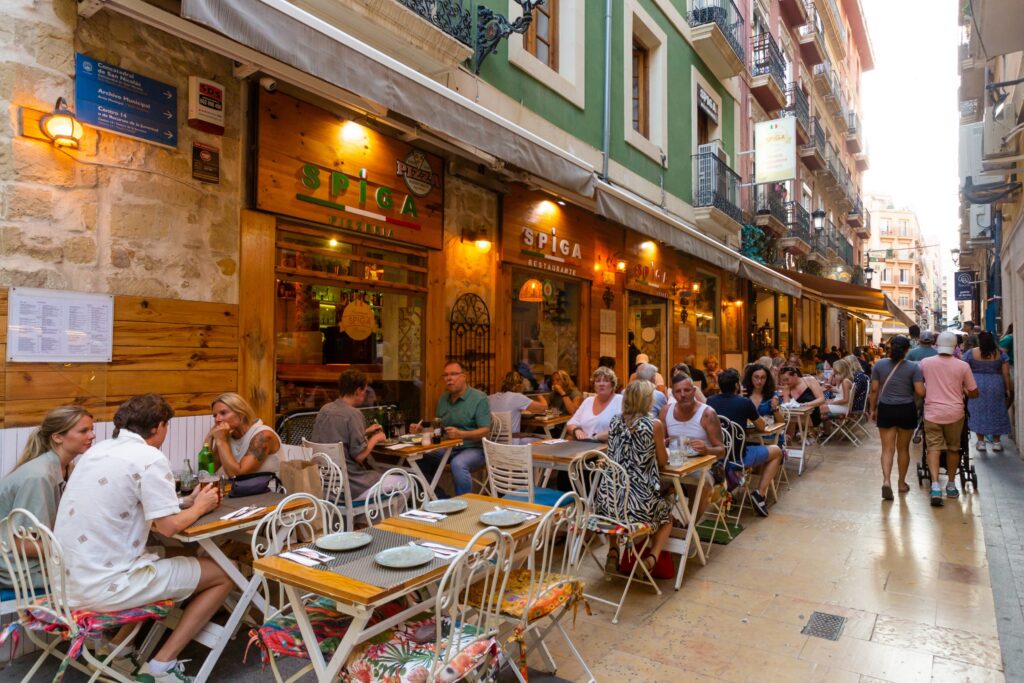
Despite the stricter stance, restaurateurs are conscious of maintaining a positive customer experience. Photo credit: Olga Evans/Shutterstock
The United Kingdom has drawn attention to Spain’s latest measures against “ghost diners,” or ‘no shows’ as restaurants across the country introduce stricter reservation policies to combat the ongoing issue of customers who book tables but fail to turn up. These measures, including card guarantees and prepayments, aim to protect revenue and reduce financial losses caused by no-shows, a problem that has long affected the hospitality sector. UK media reports have highlighted these developments, pointing out the contrast with more relaxed reservation practices elsewhere.
The issue of no-shows continues to challenge restaurants, with current estimates indicating that approximately 3.3 per cent of bookings in Spain go unhonoured. While this represents a modest improvement from previous years, the figure still translates into thousands of empty tables nationwide, particularly in busy urban areas and high-demand venues where each table carries significant value.
Economic pressure drives policy changes
Empty tables affect more than just immediate revenue. Costs incurred in preparation, staffing, and stock management are wasted when customers fail to attend. For businesses operating on narrow margins, even small percentages of non-attendance can disrupt financial planning and service efficiency.
To counteract this, a growing number of restaurants are adopting stricter reservation policies. Approximately 21 per cent of establishments now require customers to provide card details when booking, serving as a guarantee that a fee may be applied if diners fail to appear or cancel too late for the table to be reassigned.
Around 7 per cent have introduced mandatory prepayment systems. Under these arrangements, diners pay in advance to secure their table, reducing uncertainty for the restaurant and encouraging greater commitment from customers. Though previously associated mainly with fine dining, these practices are increasingly common across mid-range venues.
Digital platforms reinforce accountability
Technology platforms are playing a key role in enforcing these rules. Services such as TheFork now monitor patterns of repeated non-attendance, imposing penalties on users who miss multiple reservations. This can include temporary suspension from booking through the platform.
By tracking behaviour across participating restaurants, digital systems allow businesses to apply consistent consequences to habitual offenders. The approach reflects a broader shift towards data-driven management in the hospitality sector, where technology helps reduce operational inefficiencies and protect income.
UK attention reflects wider interest
The stricter measures have captured attention in the United Kingdom, where reservation practices outside high-end establishments tend to be more lenient. UK coverage has highlighted how Spain’s approach differs, particularly its wider application of guarantees and prepayments across the restaurant sector.
For British readers, the story offers both insight into changing practices abroad and a possible indicator of trends that could influence the domestic hospitality industry. In Spain, the high demand for dining tables and the social importance of eating out have made it essential to ensure that bookings are honoured, prompting restaurants to adopt policies that encourage reliability.
Balancing deterrence with customer experience
Despite the stricter stance, restaurateurs are conscious of maintaining a positive customer experience. Clear communication at the point of booking ensures that diners understand any conditions attached to their reservation, while reasonable cancellation windows accommodate genuine unforeseen circumstances.
The aim is not to penalise occasional changes of plan but to address repeated or last-minute no-shows that leave tables unoccupied. By introducing financial accountability, restaurants hope to encourage responsible booking while preserving the quality and accessibility of the dining experience.
A shift in expectations
The adoption of guarantees and prepayments signals a broader change in how reservations are perceived in Spain. Bookings are now treated as binding commitments, with potential consequences for non-attendance.
As the approach continues to develop, UK attention highlights the story’s wider interest, while Spanish restaurateurs emphasise that securing a table now carries both responsibility and expectation. In a sector facing ongoing economic and operational pressures, these measures aim to protect revenue, streamline operations, and create a more reliable experience for both businesses and diners.
Sign up for personalised news
Subscribe to our Euro Weekly News alerts to get the latest stories into your inbox!
By signing up, you will create a Euro Weekly News account if you don't already have one. Review our Privacy Policy for more information about our privacy practices.




Molly Grace
Molly is a British journalist and author who has lived in Spain for over 25 years. With a background in animal welfare, equestrian science, and veterinary nursing, she brings curiosity, humour, and a sharp investigative eye to her work. At Euro Weekly News, Molly explores the intersections of nature, culture, and community - drawing on her deep local knowledge and passion for stories that reflect life in Spain from the ground up.
Comments