The centuries-old Elche tradition most people only see at Easter
By Dora Urbancsek • Published: 23 Mar 2026 • 13:49 • 2 minutes read
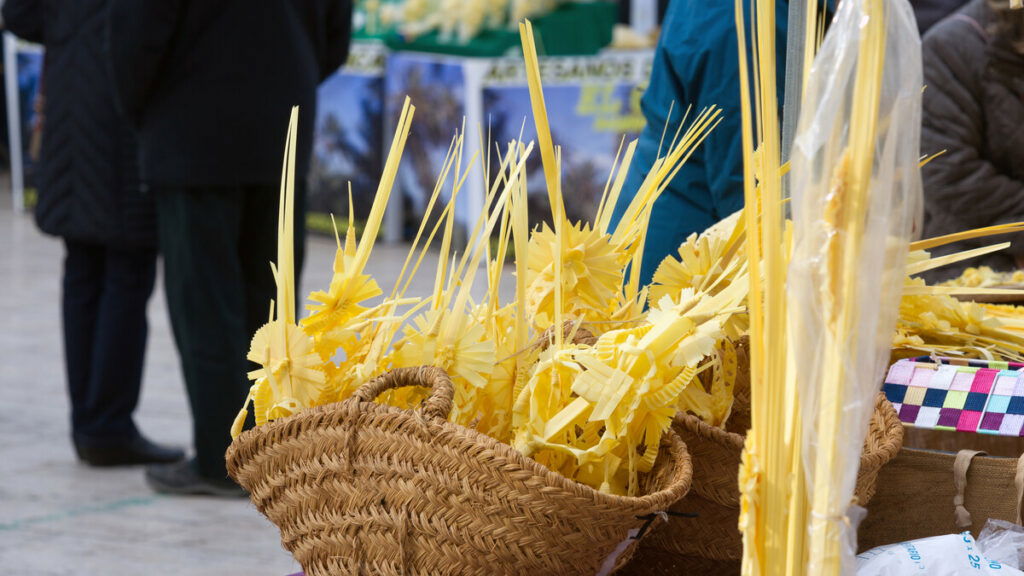
Workshops in Elche have opened to the public ahead of Semana Santa, teaching the traditional palma blanca craft Credit: Shutterstock/Bayaalta
In Elche, one of Spain’s most distinctive Easter traditions is being passed from hand to hand. In the days leading up to Semana Santa, residents are being invited to step inside a process that usually remains behind the scenes: the making of palma blanca. A series of workshops running from March 21 to March 28 is opening up this centuries-old craft to the public, giving participants the chance to learn how the iconic white palm leaves used in Palm Sunday processions are created.
What makes Elche’s white palms unique
Elche is internationally known for its palm grove, a UNESCO-listed landscape that shapes much of the city’s identity. But the palma blanca tradition goes beyond the trees themselves.
Unlike natural green palm leaves, these are carefully cultivated and treated to achieve their distinctive pale colour. The process involves protecting the leaves from sunlight while they grow, a technique that has been passed down through generations of local artisans.
The final result is not just symbolic, but highly decorative. Many of the palms are intricately woven into complex shapes, making them a central visual element of Palm Sunday celebrations across Spain.
Opening a closed tradition to the public
For many years, this craft remained largely within specialist circles. The current workshops aim to change that by making the tradition more accessible, particularly to younger generations and newcomers to the city.
Held at locations such as Hort de Pontos and the Museo de Puçol, the sessions allow participants to see each stage of the process up close, from the preparation of the leaves to the basic weaving techniques. Organisers say the goal is not only to preserve the tradition, but to ensure it continues to evolve through wider participation.
The timing is closely linked to the Easter calendar, when demand for white palms increases significantly. However, the initiative also reflects a broader concern: how to maintain traditional crafts in a rapidly changing social and economic environment.
By bringing the process into public spaces, the workshops aim to reinforce the connection between Elche’s heritage and its present-day community. This comes as towns across the Costa Blanca prepare for a busy Easter period, with cultural events and seasonal traditions playing a central role in local identity.
A living part of Semana Santa
While Semana Santa processions often draw attention for their scale and spectacle, the palma blanca offers a quieter but equally important dimension of the celebration.
For those taking part in the workshops, the experience goes beyond observation. It becomes a way of engaging directly with a tradition that continues to define Elche’s cultural landscape.
As the city moves closer to Easter, these small, hands-on moments help ensure that the craft behind one of its most recognisable symbols remains alive.
Sign up for personalised news
Subscribe to our Euro Weekly News alerts to get the latest stories into your inbox!
By signing up, you will create a Euro Weekly News account if you don't already have one. Review our Privacy Policy for more information about our privacy practices.

Dora Urbancsek
Dora Urbancsek is an SEO writer with over eight years of experience producing high-quality, search-optimised journalism and digital content. Based in Spain for more than five years, she covers a wide range of topics concerning Spain and Europe, including current affairs, community stories, culture, and lifestyle. Dora is known for accurate, well-researched reporting that keeps readers informed and engaged.
Comments