“I’m your moon guy” – Velez-Malaga engineer Carlos García-Galán to lead NASA’s ambitious permanent lunar base
By Adam Woodward • Published: 26 Mar 2026 • 19:03 • 2 minutes read
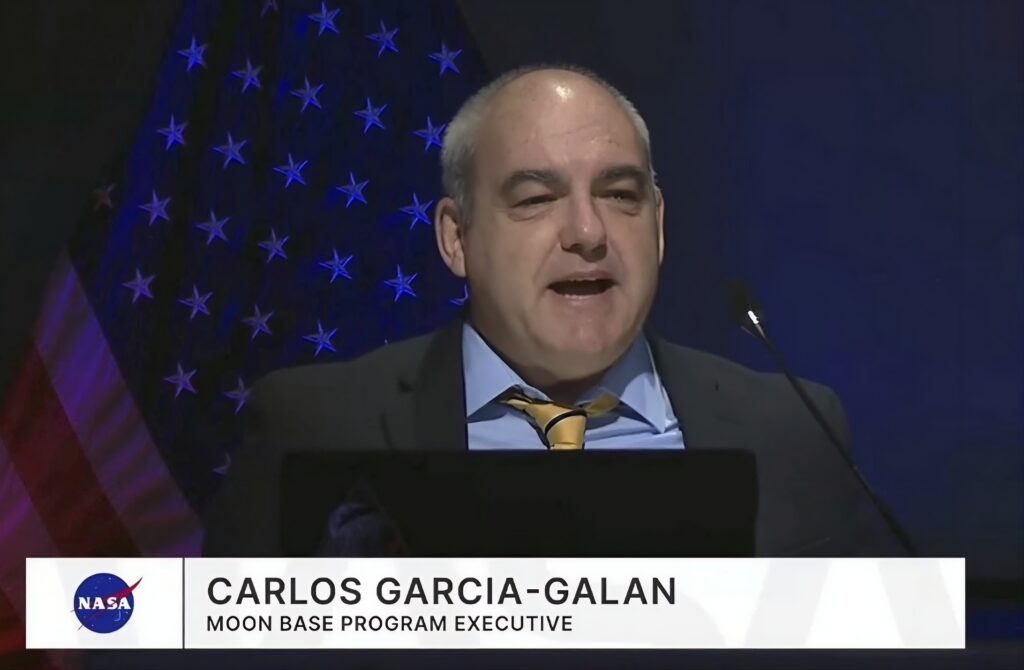
Carlos García-Galán from Velez-Malaga Credit: NASA
Carlos García-Galán, the talented engineer from Velez-Malaga, has stepped into a groundbreaking role at NASA. With 27 years of dedicated service, this Spanish professional now is to coordinate the development of a permanent lunar base scheduled to become operational from 2032. Experts view the initiative as a bold leap towards sustained human presence beyond Earth. At the presentation of the NASA project, he simply introduced himself as “I’m your Moon guy.”
From Malaga student to NASA visionary
García-Galán first arrived in the United States as an exchange student in New Jersey. Soon afterwards he enrolled at the Florida Institute of Technology, graduating in space sciences and electrical engineering. His NASA journey began at the Johnson Space Center in Houston, where he served as a flight controller managing electrical power systems for the International Space Station.
Over the years, achievements accumulated for the Malaga-born specialist. Internal NASA awards include the prestigious Silver Snoopy, a medal for exceptional merit, and the Director’s Commendation from Johnson Space Center. García-Galán rose through the ranks without connections, coming from a Spanish town with limited aerospace heritage, eventually becoming the public face of one of the agency’s most expensive and forward-looking programmes.
Key contributions to Artemis and Gateway programmes
Before this latest appointment, García-Galán played pivotal roles in the Gateway programme, an orbital lunar station designed to support crewed missions. He also contributed significantly to the European Service Module for NASA’s Orion spacecraft, delivering essential power, water, and life support for Artemis astronauts.
Details of the permanent lunar base project
The groundbreaking project plans to establish an advanced outpost for humanity in deep space. Planners intend the base to enable extended astronaut stays while acting as a vital platform for future Mars expeditions. Initial phases during the second half of this decade focus on enhancing lunar landing safety through advanced technologies.
Subsequent stages involve constructing basic surface infrastructure, including reliable communication systems, power generation, and life support facilities. Around 2032, sustained human operations should begin, featuring longer-duration crewed missions alongside expanded scientific and logistical capabilities. The initiative carries a substantial $20 billion budget and aligns with US national space policy. International partners contribute key elements, with Japan’s JAXA providing support, Italy supplying multi-purpose habitats, and Canada delivering utility vehicles.
A proud moment for Malaga and Spain
García-Galán’s appointment highlights exceptional talent emerging from Malaga and underscores Spain’s growing influence in global space exploration. His leadership promises to shape humanity’s next giant leap on the Moon and beyond.
Sign up for personalised news
Subscribe to our Euro Weekly News alerts to get the latest stories into your inbox!
By signing up, you will create a Euro Weekly News account if you don't already have one. Review our Privacy Policy for more information about our privacy practices.




Adam Woodward
Adam is a writer who has lived in Spain for over 25 years. With a background in English teaching and a passion for music, food, and the arts, he brings a rich personal perspective to his work at Euro Weekly News. As a father of three with deep roots in Spanish life, Adam writes engaging stories that explore culture, lifestyle, and the everyday experiences that shape communities across Spain.
Comments