Estepona brings back the bats and owls as bug hunters into parks and gardens
By Adam Woodward • Updated: 26 Mar 2026 • 20:05 • 1 minute read
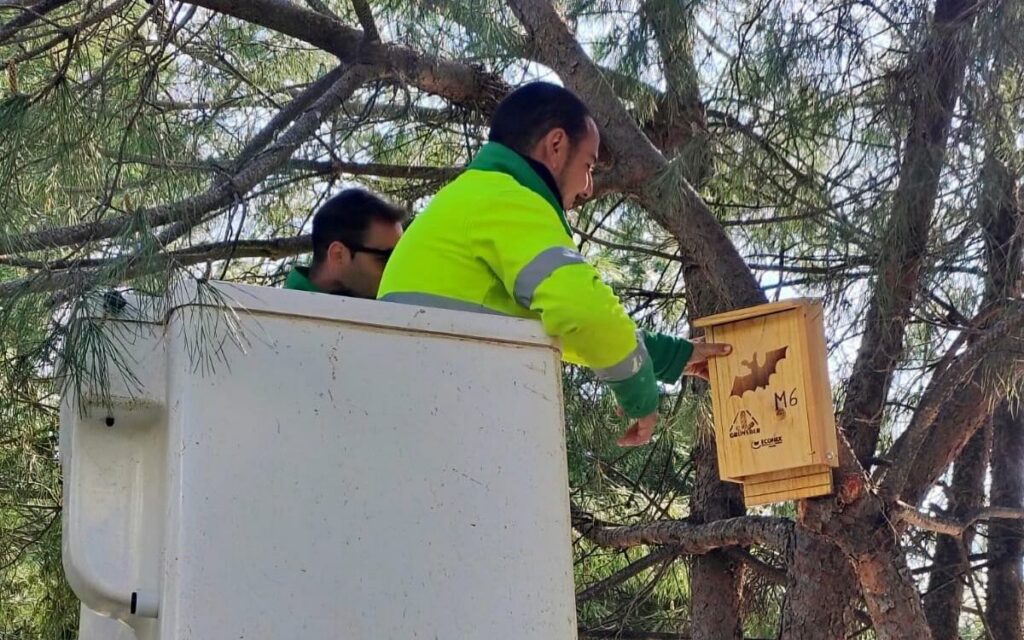
Estepona Council brigades installing nesting boxes. Credit: Ayunatamiento de Estepona
Estepona’s council teams have installed specialist nest boxes to encourage vulnerable bats and European owls back into two public parks.
Collaborative conservation effort
Local naturalists from Grupo Naturalista Sierra Bermeja ‘Grunsber’ prompted the initiative by requesting artificial refuges for these beneficial species. Council brigades responded quickly, placing six purpose-built boxes across Parque de Los Abuelos and Parque Seghers. Planners designed the structures specifically for small raptors and bats, creating safe urban habitats in the growing coastal town.
Legal protection and vulnerability status
Spanish and European laws fully safeguard all bat species, with several facing vulnerability or even extinction risks within the country. European scops owls rank as the smallest nocturnal raptor in Spain and appear as vulnerable in the 2021 Red Book of Spanish Birds.
Both animals readily accept artificial shelters, making nest boxes an effective and practical tool for encouraging their presence amid human development.
Natural pest control benefits
Bats deliver powerful ecological services through their insatiable appetite for insects, especially mosquitoes. Voracious feeders, they help suppress populations before outbreaks occur, proving especially valuable against invasive threats like tiger mosquitoes or yellow fever mosquitoes.
European scops owls contribute similarly by targeting larger invertebrates. Their diet centres on moths, crickets, grasshoppers and cockroaches, delivering natural control that reduces reliance on chemical interventions in residential areas.
Forward-looking urban ecology
This project shows a commitment by Estepona Council to harmonious city-nature integration. By installing these refuges, authorities and volunteers encourage biodiversity while delivering practical advantages to residents through enhanced pest management.
Future expansions could see similar measures rolled out across more green spaces, strengthening local ecosystems against climate pressures and urban expansion. The people of Estepona can now enjoy parks that actively support threatened wildlife, blending recreation with conservation in this progressive Andalusian destination. It is hoped that blue tits will be next on the list to increase numbers as they are said to be voracious eaters of pine processionary caterpillars.
Sign up for personalised news
Subscribe to our Euro Weekly News alerts to get the latest stories into your inbox!
By signing up, you will create a Euro Weekly News account if you don't already have one. Review our Privacy Policy for more information about our privacy practices.




Adam Woodward
Adam is a writer who has lived in Spain for over 25 years. With a background in English teaching and a passion for music, food, and the arts, he brings a rich personal perspective to his work at Euro Weekly News. As a father of three with deep roots in Spanish life, Adam writes engaging stories that explore culture, lifestyle, and the everyday experiences that shape communities across Spain.
Comments