International Olympic Committee announces women only for female categories from 2028
By Adam Woodward • Updated: 26 Mar 2026 • 17:18 • 3 minutes read
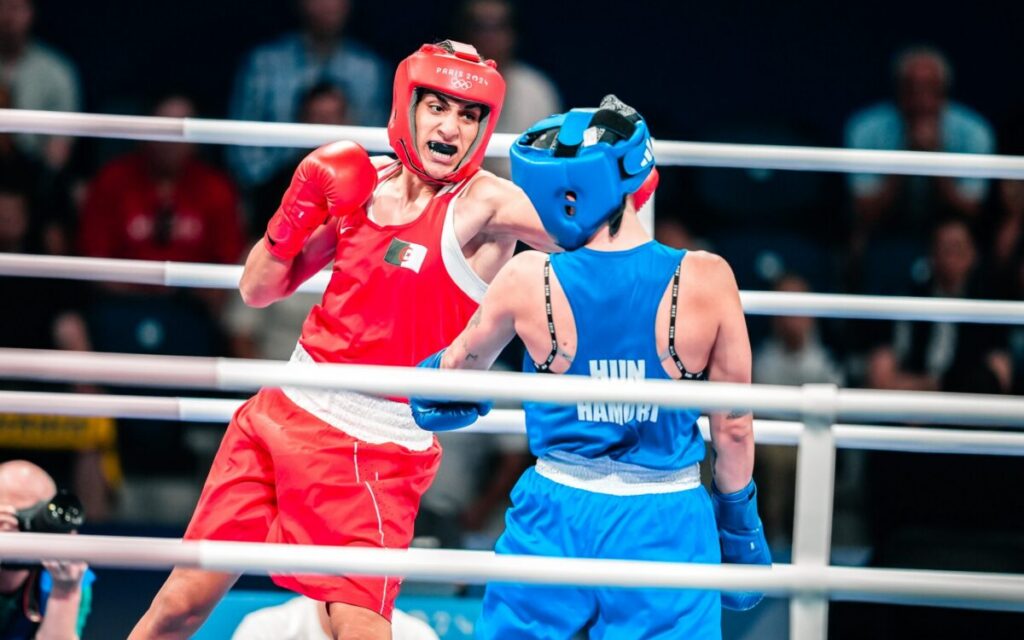
Imane Khelif punching a woman. Credit: ProPhoto1234 - Shutterstock
The International Olympic Committee has introduced a landmark policy that restricts female Olympic categories exclusively to women. This decision, revealed on Thursday, March 26, will take full effect at the Los Angeles 2028 Games and is seen as a huge shift on how eligibility is determined across elite competition.
Biological sex verification will rely first on testing for the SRY gene, present only in males. Only a negative result will confirm eligibility for women’s events. Officials describe this marker as stable throughout life and highly accurate in identifying individuals who underwent male sexual development.
Science-driven approach to eligibility
Experts stress that the SRY gene test offers a reliable, one-time assessment using a simple saliva or blood sample. Such methods remain far less invasive than alternatives previously considered.
Rare exceptions will apply to athletes diagnosed with complete androgen insensitivity syndrome or certain other differences of sex development who derive no performance advantage from testosterone, a condition so exceptionally rare it is not thought any cases will come up in elite Olympic sport. In contrast, transgender athletes with XY chromosomes (male) must compete in male categories or not at all.
Kirsty Coventry, President of the IOC, stated that the framework rests on the strength of medical evidence compiled by medical specialists. She expressed how biological males competing in female events create unfairness and, in some sports, genuine safety risks. The decision comes after significant controversy at the Paris 2024 Olympics with biological men competing in women’s sports, who were later stripped of their medals.
Response to recent controversies
This updated stance emerged from a dedicated working group formed to address ongoing debates surrounding women’s sport. Particular attention focused on incidents at the Paris 2024 Olympics involving Algerian boxer Imane Khelif and Taiwanese athlete Lin Yu-ting. Both had previously been disqualified from the 2023 World Championships by the International Boxing Association after failing sex eligibility tests.
The policy hopes to safeguard equality, athlete safety, and the overall integrity of female competitive sports. It will govern all disciplines within IOC-sanctioned events, including both individual and team sports at the Olympic Games.
Scope and limitations
Implementation begins with the 2028 Los Angeles Olympics, giving governing bodies time to adapt protocols. The rules do not extend to grassroots or recreational sports programmes, and focusing solely on high-level Olympic competition.
Supporters view the move as a decisive step toward preserving opportunities for female athletes who have trained and developed without the physiological advantages associated with male puberty. Critics of earlier frameworks had argued that self-identification policies undermined fair play and encouraged cheating, especially in strength- and power-based disciplines.
Veteran Olympic swimmer, Sharron Davies commented on the decision, “I’m extremely pleased the IOC has seen fit to use results, science & common sense to protect the female category & return fair and safe sport to women and girls. It saddens me it was given away so easily ten years ago. But it’s imperative we recognise all women and girls deserve their sport, free from males, not just the very best only. We will carry on fighting for the rights & opportunities of all females.” She also posted:“This is the males at long last being told NO” and quoted the IOC’s own wording on the necessity of a sex-based eligibility rule.
Implications for future games
With Los Angeles 2028 on the horizon, national Olympic committees and international federations now face the task of ensuring their own selection processes are in line with the new IOC standards. Medical teams will likely incorporate SRY testing into existing anti-doping and health screening routines to guarantee compliance.
This policy represents one of the clearest positions yet taken by the IOC on sex-based categories. By prioritising biological reality over gender identity in elite female sport, organisers hope to restore confidence among athletes, coaches, and fans who have voiced concerns about fairness in recent years.
The announcement arrives amid broader global discussions on balancing inclusion with competitive integrity. Many women’s sports organisations have already begun reviewing their regulations in light of the IOC’s scientific approach, potentially influencing policies beyond the Olympic arena.
The International Olympic Committee announces new Policy on the Protection of the Female (Women’s) Category in Olympic Sport.
Read: https://t.co/QcU5IVxyTi pic.twitter.com/3brHorx1k8
— IOC MEDIA (@iocmedia) March 26, 2026
Sign up for personalised news
Subscribe to our Euro Weekly News alerts to get the latest stories into your inbox!
By signing up, you will create a Euro Weekly News account if you don't already have one. Review our Privacy Policy for more information about our privacy practices.





Adam Woodward
Adam is a writer who has lived in Spain for over 25 years. With a background in English teaching and a passion for music, food, and the arts, he brings a rich personal perspective to his work at Euro Weekly News. As a father of three with deep roots in Spanish life, Adam writes engaging stories that explore culture, lifestyle, and the everyday experiences that shape communities across Spain.
Comments