Breathing danger: WHO identifies world’s most polluted countries and cleanest nations
By Molly Grace • Published: 29 Mar 2026 • 23:11 • 4 minutes read
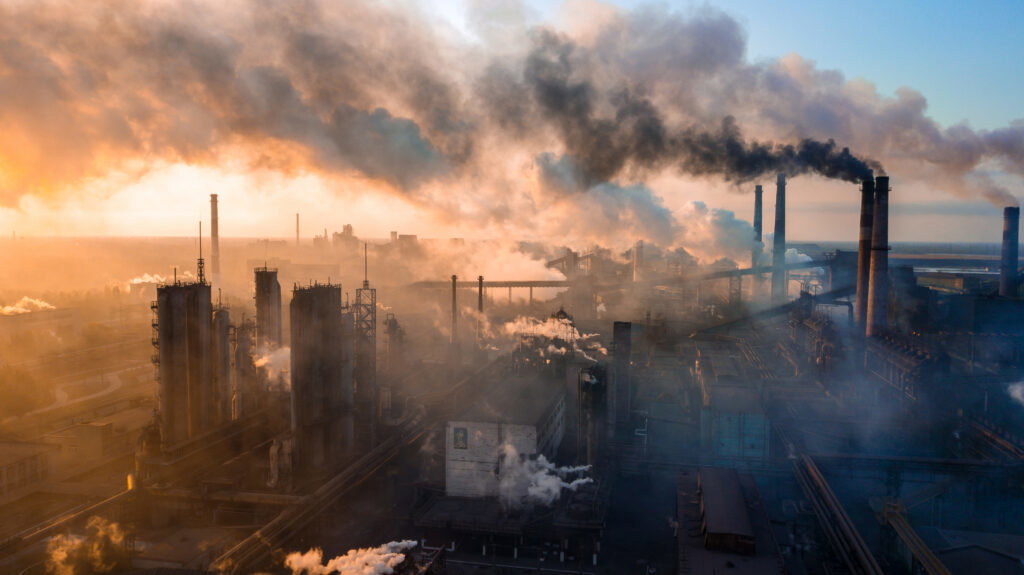
The report also highlights where air pollution remains a critical problem. Photo credit: TR Stok/Shutterstock
A new global air quality report has revealed that only thirteen countries and territories worldwide maintain levels of air pollution that conform to the World Health Organisation’s (WHO) recommended safety standard for fine particulate matter (PM2.5), and only three of those are in Europe.
The findings are drawn from the 2025 World Air Quality Report, which analysed data from more than 9,400 cities across 143 countries. The report uses annual average concentrations of PM2.5, microscopic airborne particles that pose significant health risks, to assess whether countries meet the WHO’s guideline of no more than 5 micrograms per cubic metre of PM2.5 in the air on average over a year.
The results paint a shocking picture of global air quality. While some nations have managed to meet the guideline and sustain cleaner air, the vast majority of countries worldwide have average levels of PM2.5 that exceed the recommended threshold, posing health concerns for their populations.
European nations among the cleanest air
In Europe, only Andorra, Estonia and Iceland were found to have outdoor air quality that meets the WHO’s guideline for fine particulate matter. This places these three countries among a small group globally where the air is deemed comparatively “safe” by international public health standards.
Europe’s performance is mixed overall. While some countries have pockets of relatively good air quality, many others still record PM2.5 levels above the WHO benchmark. Factors affecting air quality across the region include vehicle emissions, industrial activity, seasonal wood burning and transboundary pollution flows.
Worldwide context: only 13 countries meet the WHO guideline
In addition to the three European nations, the other countries and territories meeting the WHO guideline include Barbados, Bermuda, French Polynesia, New Caledonia, Panama, Puerto Rico, Réunion, Australia, and several small island states. These nations are distinguished by lower population density in urban centres, geographic isolation in some cases, and policies that have helped limit the most severe sources of fine particulate pollution.
However, experts caution that even where guidelines are met, air quality can vary within a country and may still affect vulnerable populations.
Countries with the worst air quality
The report also highlights where air pollution remains a critical problem. Pakistan is ranked as the most polluted country in the world, with PM2.5 concentrations far exceeding the WHO guideline. Bangladesh follows closely, with cities such as Dhaka experiencing extremely high levels of fine particulate pollution from industrial emissions, vehicle traffic, construction dust and crop burning.
India also ranks among the countries with the worst air quality, with several cities, including Loni, Delhi, Ghaziabad, and Lucknow, recording some of the highest annual PM2.5 concentrations globally. In Loni, levels were more than 20 times higher than the WHO’s recommended limit, illustrating the severity of the health risk.
South Asia as a whole dominates the global rankings for poor air quality, with multiple countries in the region experiencing pollution levels that pose significant public health concerns.
Global air quality deteriorating
The overall global picture remains concerning. Only 14 per cent of surveyed cities worldwide met the WHO’s air quality guideline in 2025, a decline from 17 per cent the year before. The decrease underscores that, despite efforts in some areas, overall air quality trends are heading in the wrong direction.
Rising urbanisation, increased energy demand, and reliance on fossil fuels continue to drive higher emissions of fine particulates and other pollutants. Wildfire smoke and dust storms, intensified by climate change, also contribute to degraded air conditions in some parts of the world.
Health implications and WHO guidelines
Fine particulate matter, or PM2.5, is widely recognised as a key indicator of air quality because of its ability to penetrate deep into the lungs and enter the bloodstream. Long-term exposure to elevated PM2.5 levels is associated with respiratory and cardiovascular disease.
The WHO periodically updates its air quality recommendations based on the latest scientific evidence. The 2021 guidelines set an annual PM2.5 average of 5 µg/m³ as a level at which health risks are significantly reduced compared with higher concentrations. Governments and health authorities worldwide use these guidelines as a reference when formulating environmental and health policies.
Regional differences and future outlook
Air quality varies significantly between regions. Oceania recorded higher rates of cities meeting the WHO guideline, in part due to geographical factors and lower industrial emissions, whereas South Asia and parts of Africa recorded the most severe pollution levels.
Even within individual countries, air quality can differ widely, with urban centres often facing higher pollutant concentrations than rural areas. This variation means that while national averages may meet WHO standards, certain communities might still contend with unhealthy air on a daily basis.
Impacts on public health policy
The 2025 World Air Quality Report highlights the urgency with which governments and international organisations must address air pollution. Reducing emissions from transportation, industry and energy production is widely seen as critical to improving air quality and reducing health risks.
Policy interventions, such as stricter emissions standards, investment in cleaner technologies, and regional cooperation on pollution control, play a vital role in achieving healthier air. Continued monitoring and transparent reporting are also considered essential to track progress and inform decision-making.
Conclusion
While Andorra, Estonia and Iceland stand out as European countries with air quality that meets international health guidelines, the broader global situation remains challenging. Only thirteen countries worldwide maintain air quality within the WHO’s recommended limits, while countries across South Asia, including Pakistan, Bangladesh and India, continue to face severe air pollution. The report highlights both the scale of the challenge and the urgent need for sustained action to protect public health and improve air quality across all regions.
Sign up for personalised news
Subscribe to our Euro Weekly News alerts to get the latest stories into your inbox!
By signing up, you will create a Euro Weekly News account if you don't already have one. Review our Privacy Policy for more information about our privacy practices.





Molly Grace
Molly is a British journalist and author who has lived in Spain for over 25 years. With a background in animal welfare, equestrian science, and veterinary nursing, she brings curiosity, humour, and a sharp investigative eye to her work. At Euro Weekly News, Molly explores the intersections of nature, culture, and community - drawing on her deep local knowledge and passion for stories that reflect life in Spain from the ground up.
Comments