France ferry ports warn of delays as new EU border system rolls out
By Farah Mokrani • Published: 29 Mar 2026 • 21:56 • 3 minutes read
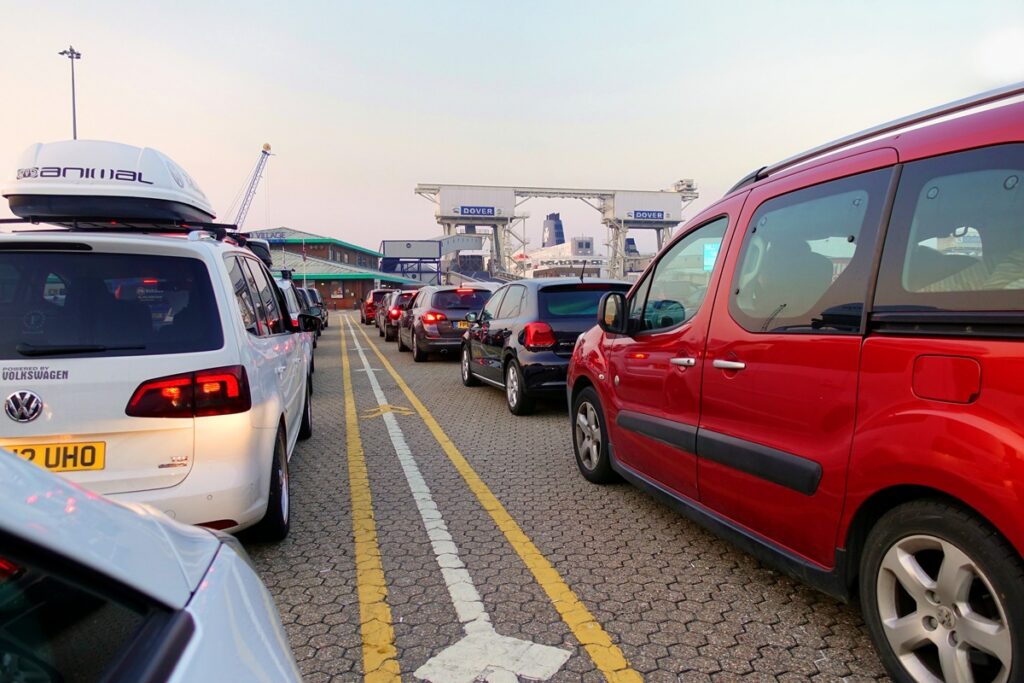
Long queues build at ferry ports as new EU border checks raise concerns over delays for travellers. Credit : Gary Perkin, Shutterstock
If you’re travelling between the UK and France soon, expect delays – ferry ports are warning that the new EU border system could cause serious disruption. With the Entry/Exit System (EES) due to be fully rolled out in the coming days, French port operators say ongoing technical problems and staffing issues could lead to long queues, especially as the busy summer season approaches.
The warning comes just as travel picks up for Easter and ahead of what is expected to be one of the busiest periods for cross-Channel journeys.
Why the new EU border system could slow things down
The EES is a major change in how non-EU travellers enter and leave the Schengen area.
Instead of passport stamps, travellers will have their passport scanned, along with biometric data like fingerprints and a facial image. The aim is to improve border security and track entries and exits more accurately.
To make things quicker, kiosks and tablets have been introduced at ports and stations so passengers can pre-register their details before reaching border control.
But according to French port authorities, this is where things are already going wrong.
They say technical issues are preventing these systems from working properly, meaning the process takes longer than expected. And without these tools functioning as planned, queues could build up quickly.
Ports say they’re not ready for peak travel demand
In a joint warning, organisations representing French ports and shipping companies say the current setup isn’t ready to handle the volume of passengers expected in the coming months.
One of the main concerns is how ferry travel works compared to airports.
At airports, passengers arrive gradually. At ferry ports, large numbers of people arrive at once – often in cars – which creates a very different kind of pressure on border controls.
Port operators say the system appears to have been designed with airports in mind, not ferry traffic.
They also point to staffing levels, warning there may not be enough personnel to manage the new checks efficiently during busy periods.
The result? Potential congestion, longer turnaround times for ferries, and delays that could ripple across entire travel schedules.
Rollout dates are close – but concerns remain
Under EU rules, the system is meant to be in place across France’s borders by the end of March, with full operation – including the end of passport stamping – expected shortly after.
The rollout has already been happening in stages since late 2025, but the final phase is now just days away.
Despite this, French port authorities say the system is still not fully operational in real-world conditions.
They’ve now called for an urgent meeting with government ministers, warning that pushing ahead without resolving the issues could lead to disruption just as travel demand rises.
What this means for travellers heading to France and Spain
For travellers – especially Brits heading to France and then on to Spain – this could mean longer waiting times at border crossings.
The UK government has already advised passengers to be aware of the new procedures and allow extra time for their journeys.
Even though the system mainly targets non-EU travellers, those living in the EU may still experience delays due to overall congestion at ports.
For expats based in Spain who regularly travel back to the UK or France, this is something to keep in mind in the coming months.
A busy summer could make things worse
Port operators are particularly concerned about the timing.
With summer approaching, traffic is expected to increase significantly – and that’s when any weaknesses in the system are most likely to show.
They warn that if the issues aren’t resolved quickly, the impact could go beyond just longer queues.
Delays to ferry departures, frustrated passengers and even a potential drop in tourism are all being raised as possible consequences.
For now, the message is simple: if you’re planning to travel through French ports in the coming weeks, be prepared for possible disruption.
And allow more time than usual – just in case.
Sign up for personalised news
Subscribe to our Euro Weekly News alerts to get the latest stories into your inbox!
By signing up, you will create a Euro Weekly News account if you don't already have one. Review our Privacy Policy for more information about our privacy practices.




Farah Mokrani
Farah is a journalist and content writer with over a decade of experience in both digital and print media. Originally from Tunisia and now based in Spain, she has covered current affairs, investigative reports, and long-form features for a range of international publications. At Euro Weekly News, Farah brings a global perspective to her reporting, contributing news and analysis informed by her editorial background and passion for clear, accurate storytelling.
Comments