Spain travellers get breathing space as EU delays biometric border system rollout
By Farah Mokrani • Updated: 24 Feb 2026 • 10:11 • 3 minutes read
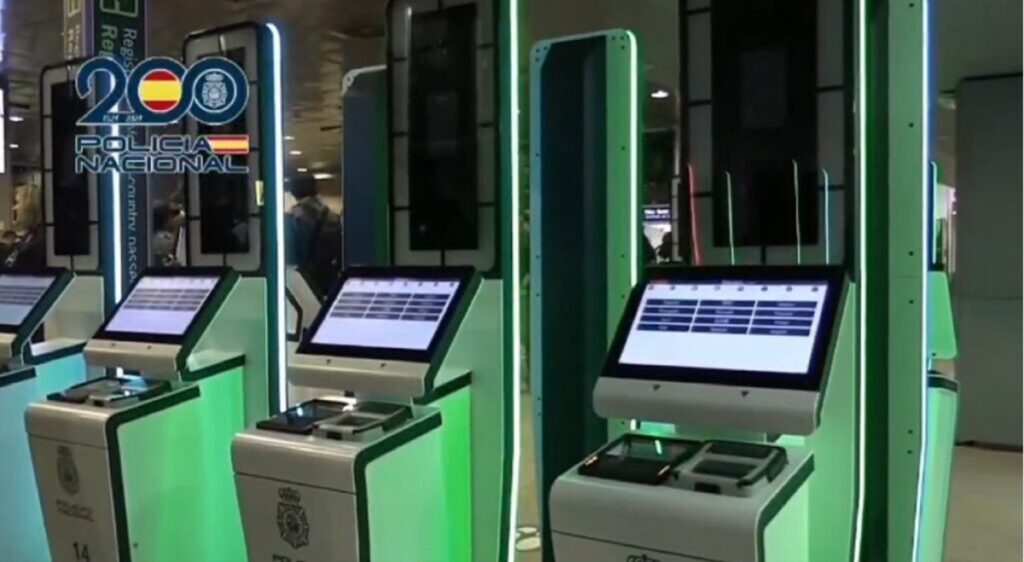
New biometric EES border control machines tested in Spain as full rollout is postponed. Credit : X - @interiorgob
If you’re travelling to Spain from outside the EU anytime soon, here’s something worth knowing. The European Union has delayed the full rollout of its new biometric Entry/Exit System (EES) until September 2026, after concerns that introducing it too quickly could cause serious delays at airports during the busy summer travel period.
The system has already been tested in several locations, including Spanish airports, but early feedback suggests border checks can take longer than expected. Rather than risk overcrowded terminals and frustrated passengers during peak holiday months, EU officials opted to slow down the timeline and allow countries more time to prepare.
For travellers, the immediate impact is fairly simple: you may notice a mix of old and new border procedures over the next few months, depending on where you arrive and how busy the airport is.
What the new Entry/Exit System is meant to do
The Entry/Exit System is designed to modernise border control across the Schengen area. Instead of passport stamps, non-EU travellers will eventually have their entry and exit recorded through biometric data – mainly fingerprints, facial images and digital timestamps.
In theory, this should make border monitoring more accurate and help authorities automatically detect overstays. It’s also part of a wider effort to digitise travel procedures across Europe.
But large-scale systems rarely roll out perfectly from day one, and that has been reflected in the early testing phase. Several airports have reported longer processing times, especially during busy periods when passengers unfamiliar with the technology need extra guidance.
That doesn’t mean the system won’t work – just that implementing it across dozens of busy airports simultaneously is proving more complex than expected.
Why airports pushed back against the original timeline
Some of the strongest concerns have come directly from airports and aviation organisations. During testing, hubs such as Málaga-Costa del Sol and Barcelona-El Prat noticed that border processing times increased noticeably at peak hours.
Lisbon Airport even paused the use of biometric kiosks after queues reportedly stretched for several hours, highlighting the practical challenges of introducing new procedures while maintaining passenger flow.
Industry representatives warned that excessive waiting times could create more than inconvenience. If queues extend into operational areas, they can raise safety concerns, particularly during the summer months when passenger numbers surge.
Faced with those risks, Brussels chose caution over speed. The delay gives member states extra months to adjust staffing levels, fine-tune software integration and run further stress tests before the system becomes fully mandatory.
What this means for Spain’s airports and holidaymakers
For Spain, the postponement is something of a mixed blessing. Major airports are already well advanced in preparing for EES, with hundreds of biometric kiosks installed and testing underway. However, smaller airports and ferry ports still need time to complete infrastructure upgrades and training.
Airlines are also affected. Eventually, carriers will need to verify that passengers have completed their biometric registration before boarding certain flights – a process that is still experiencing technical hiccups.
All of this means travellers may still encounter a hybrid situation. Some airports will continue using biometric kiosks, while others may revert to manual passport stamping when queues begin to build.
From a passenger perspective, the experience may simply feel unpredictable. One trip might involve biometric registration, while the next could look much like traditional passport control.
The safest approach is to allow a little extra time at the border, particularly if arriving during peak travel periods or through particularly busy airports.
The ripple effect on future travel rules
The delay also affects another upcoming change travellers have been hearing about: ETIAS, the planned travel authorisation for visa-exempt visitors entering the Schengen area.
Because ETIAS depends on data collected through the Entry/Exit System, it cannot be fully introduced until EES is operating across all member states. As a result, travellers who currently visit Spain without a visa won’t need to apply for ETIAS until at least 2027.
For many visitors, that’s welcome news. It means fewer immediate administrative changes and more time to understand how the new system will work before additional requirements come into play.
A slower transition, but likely a smoother one
The delay doesn’t signal a change of direction. The Entry/Exit System remains a central part of the EU’s long-term border strategy, and its rollout is still very much moving forward.
What the postponement really reflects is the reality of implementing major digital infrastructure in environments where timing, passenger flow and security all intersect. A rushed launch could have created far more frustration than a gradual transition.
For travellers heading to Spain, the key takeaway is simply to stay flexible. Border procedures may evolve gradually rather than changing overnight, and patience could be part of the journey for a while.
In the end, the extra preparation time may prove beneficial. A smoother rollout later could prevent the kind of disruption that might have overshadowed the travel experience during one of Europe’s busiest tourism seasons.
Sign up for personalised news
Subscribe to our Euro Weekly News alerts to get the latest stories into your inbox!
By signing up, you will create a Euro Weekly News account if you don't already have one. Review our Privacy Policy for more information about our privacy practices.




Farah Mokrani
Farah is a journalist and content writer with over a decade of experience in both digital and print media. Originally from Tunisia and now based in Spain, she has covered current affairs, investigative reports, and long-form features for a range of international publications. At Euro Weekly News, Farah brings a global perspective to her reporting, contributing news and analysis informed by her editorial background and passion for clear, accurate storytelling.
Comments
Mark
24 February 2026 • 10:50A friend of ours arriving at Murcia International ala Corvera last week went through the whole process of biometrics and wssy then ushered to the traditional immigration desk! Passport was then stamped and she was allowed to exit!
Chris P
27 February 2026 • 04:12Yet another EU cock up, the ETIAS was planned to be in place in October 2019, the EU still ain’t got it ready, glad we are out of the club, now get us out of the ECHR!!!!
Frank Turner
24 February 2026 • 15:34I was told to remove my glasses, I then found I could not read the instructions, then had to wait for assistance.
Andrew
24 February 2026 • 21:18Amazed that the EU have seen sense and not stuck to their unrealistic deadline, although anyone with a brain could have foreseen some time ago that forcing all the summer travellers through the new slow system was a recipe for disaster.
Jeremy
25 February 2026 • 13:27I used it for the first time on Saturday at Barcelona airport.
Didn’t have any knowledge of it, but I got to my destination much quicker than travellers who didn’t use it.
It was only available for UK travellers
JAMES ROBERTS
25 February 2026 • 15:52Ah yes the compromised spanish government, and useless to boot, no different from the UK, they all need hanging.
Nigel Briggs
25 February 2026 • 16:33Travelled to Alicante in January and back to UK this month (February). The new fingerprint scanners failed several to capture our prints both in arrivals and again in departures. Our passports were manually stamped on entry and exit. The number of new machines for capturing biometrics that were out of service was incredible. Could it be that the hold up is due to so many machines not being in service?????
Alex
25 February 2026 • 19:41Arriving and leaving Barcelona was a complete shambles when I went at the beginning of the month. Huge queues with no staff to organise them leading to huge crowding and shoving and pushing until someone removed the barriers and armed police were called in to do crowd control on the way in there and the way out I dropped my bag 2 minutes past drop off time, went straight to find the gate after security checks and was stuck in a 90 minute queue and missed my flight due to poor management by airport staff
Michael
25 February 2026 • 19:58Turned up at Alicante airport from uk no help with new machines on how they worked. The people there assisting us did not have a clue what to do. There needs to be more training and the machines made simpler to use. I wear glasses to read but was not allowed to use them.What a disaster
Chris G
25 February 2026 • 20:28It’s not just “allow a little extra time”. I used to breeze through Zurich airport in 20 minutes. Yesterday because of these stupid machines it took 1hr 45 mins from entering airport to arriving BA gate. Obviously I missed my flight. At least the Spaniards have the good sense to ignore the machines and do it old school, as I witness every week there. The whole rollout is a disaster. Maybe Elon’s right, every time the Europeans invent some technology it just makes things worse!
Keith Ogle
25 February 2026 • 21:17Travelled to Tenerife south yesterday put us through this system 33 terminals but only 7 working woW then after doing this they still stamped our passports at control desks .🤔lots of complaints about length of waiting time at this airport.
Eric fattun
25 February 2026 • 21:51The computers don’t work, it’s a pointless system in Spanish airports where they will never ever work, not human error, they just decide not to operate! Obviously being in spain they’re unlikely to be in a hurry to fix the issues aswell. I’ve just been through and less than half screens were working, its an unbelievable shitshow aimed at english passengers for leaving the eu!.3rd world countries trying to implement first world technology is something else!
Iain Chester
26 February 2026 • 06:12I am sorry to say that this excuse is just what it is – an excuse.
Whoever designed EES has not thoroughly tested it as a stand alone system nor as an integrated network system. Neither have they stress tested it in an enclosed but simulated environment of many points of input and many sets of data arriving in the system all at the same time. Stress Testing used to be a standard procedure many moons ago before you released a new piece of software. Those days seem to have been left behind.
Also, the “Travel to Europe” app (which I only heard of yesterday) should have been trialed and released way before EES was introduced. This app is designed to allow any traveller to input their static data some 72 hours before they travel. By then linking this data with the biometric data captured at the point of entry a lot of time can be saved at the point of entry. But, typically, this app is not yet fully available.
Whoever is in charge of this whole fiasco needs removing asap and someone with some intelligence put in to replace them.
John sutcliffe
26 February 2026 • 10:05After a 3 hour delay in Lanzarote airport on arrival in cramped passages this chaotic entry system needs sorting out once and for all!
Comments are closed.