Spain’s congress rejects proposal to ban wearing the burka in public spaces
By Molly Grace • Updated: 14 Apr 2026 • 22:47 • 3 minutes read
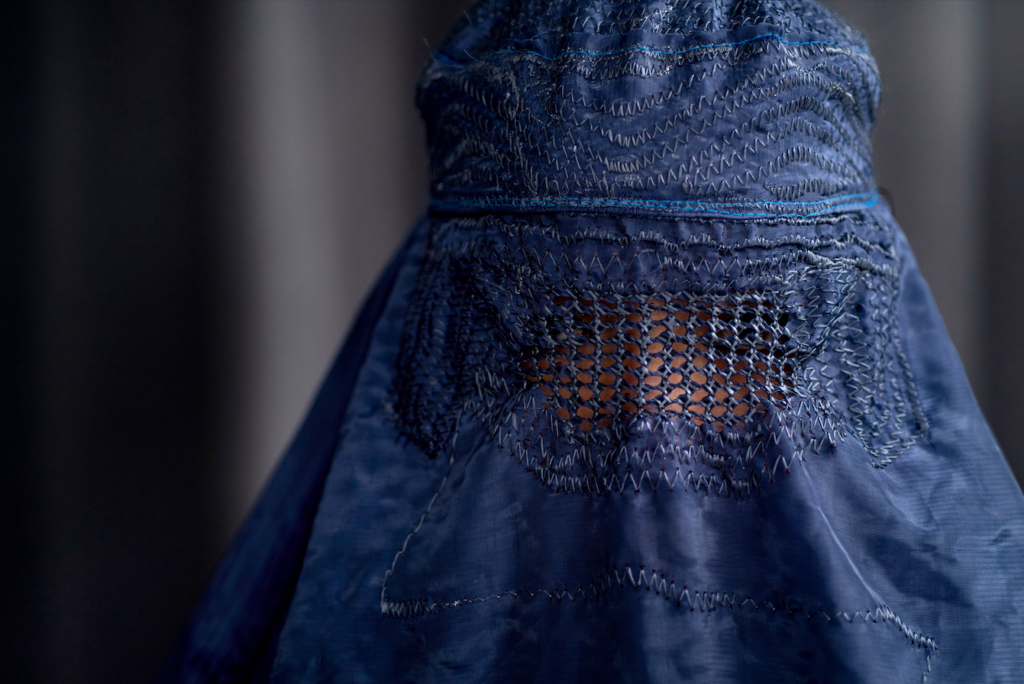
Some municipalities in Spain have previously introduced partial restrictions on full-face coverings in specific settings. Photo credit: chomplearn/Shutterstock
The Spanish Congress of Deputies has rejected a legislative proposal introduced by Junts per Catalunya that sought to prohibit full-face coverings such as the burka and niqab in public spaces. The initiative was voted down during plenary consideration and did not progress to further parliamentary stages within the chamber.
Junts per Catalunya voted in favour of its own proposal. The Spanish Socialist Workers’ Party (PSOE), the Popular Party (PP), Vox and Sumar voted against it. The Republican Left of Cataluña (ERC) and the Basque Nationalist Party (PNV) abstained. The proposal entered the Congress as part of Junts per Catalunya’s legislative activity on public regulation and administrative identification. It established a general prohibition on full-face coverings in public spaces without limiting its scope to specific institutions or restricted environments. The text was processed through standard parliamentary procedure before being debated in plenary session.
Legislative framing and objectives
Junts per Catalunya presented the initiative as a measure designed to address identification requirements in public interactions. The party argued that visual identification is necessary in certain administrative procedures and that a uniform legal rule would ensure consistency across public services.
The proposal focused on regulating public visibility in civic spaces rather than introducing differentiated rules for specific sectors such as education, transport or security institutions. It was structured as a nationwide measure applicable across public areas.
Parliamentary discussion
During debate in the lower house, Junts per Catalunya stated that the proposal was intended to address practical issues related to identification in interactions with public authorities. The party described the initiative as administrative regulation linked to the functioning of public services.
Opposition parties expressed disagreement with the proposal during parliamentary discussion. ERC and the PNV did not support the measure and chose to abstain, taking a position that did not align with either approval or rejection in the formal vote.
The debate formed part of broader parliamentary discussions in Spain on the balance between regulatory measures in public spaces and individual rights protections, particularly in relation to personal appearance and identity in public administration.
Constitutional and legal framework
Any regulatory measures affecting personal appearance are assessed within the framework of constitutional protections that include religious freedom, personal dignity and individual rights.
Spanish constitutional law requires that restrictions on rights must meet proportionality standards, meaning that measures must be justified, necessary and balanced in relation to their intended objective. These principles are applied when evaluating proposals that involve limitations on personal expression or attire in public environments.
The constitutional framework also establishes that legislative measures affecting fundamental rights require careful justification, particularly when they involve general prohibitions rather than narrowly defined restrictions tied to specific circumstances.
Local regulatory context
Some municipalities in Spain have previously introduced partial restrictions on full-face coverings in specific settings, particularly in administrative buildings and public offices. These local measures have varied significantly in scope and application depending on the jurisdiction in which they were adopted.
In some cases, such municipal regulations have been subject to legal scrutiny and debate regarding their compatibility with constitutional protections. The absence of a unified national framework has resulted in differing local approaches to the issue.
Parliamentary procedure outcome
Under Spanish parliamentary rules, legislative initiatives that fail to obtain sufficient support during plenary voting do not advance to committee stage, amendment consideration or further debate within the same legislative cycle. The rejection therefore concludes the processing of the proposal in its current form.
Any future attempt to reintroduce similar measures would require a new legislative initiative submitted through standard parliamentary channels. Such proposals would again be subject to debate and voting in the Congress of Deputies under the same procedural framework.
The outcome of this vote leaves no active legislative pathway for the proposal at national level at this stage of parliamentary proceedings.
Sign up for personalised news
Subscribe to our Euro Weekly News alerts to get the latest stories into your inbox!
By signing up, you will create a Euro Weekly News account if you don't already have one. Review our Privacy Policy for more information about our privacy practices.


Molly Grace
Molly is a British journalist and author who has lived in Spain for over 25 years. With a background in animal welfare, equestrian science, and veterinary nursing, she brings curiosity, humour, and a sharp investigative eye to her work. At Euro Weekly News, Molly explores the intersections of nature, culture, and community - drawing on her deep local knowledge and passion for stories that reflect life in Spain from the ground up.
Comments