Hope fading for lost humpback stranded off German coast
By Molly Grace • Published: 29 Mar 2026 • 21:06 • 4 minutes read
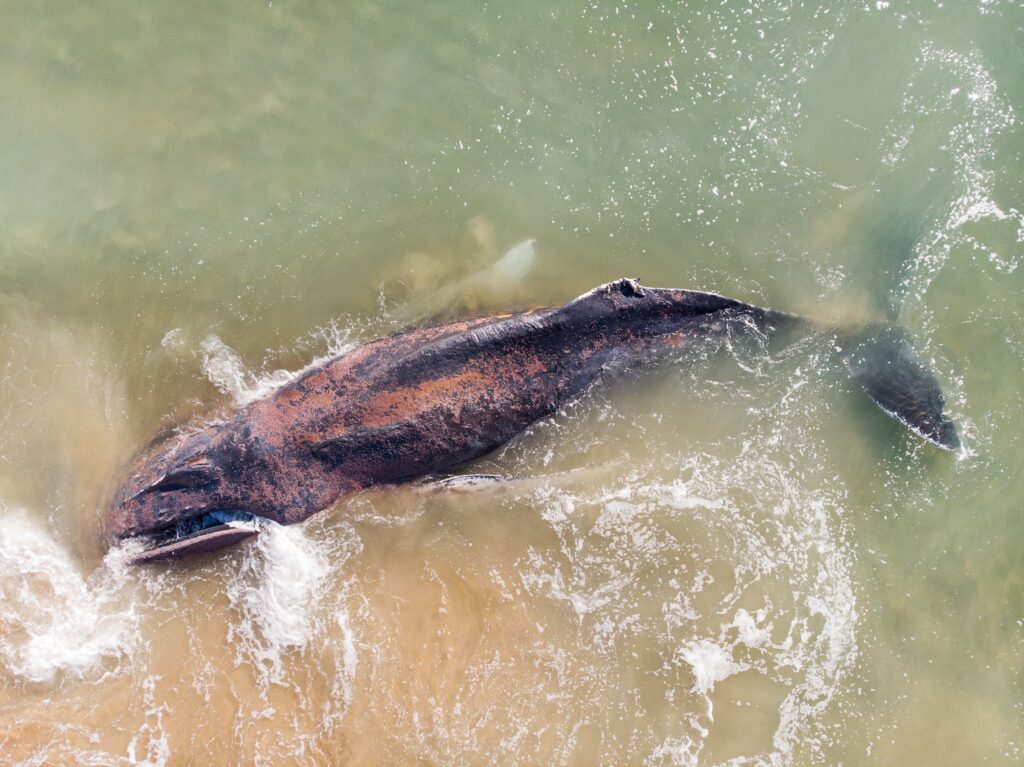
Humpback whales rely on strength and endurance to undertake long migrations. Photo credit: Hector Gago Bellido/Shutterstock
A young humpback whale stranded in the Baltic Sea off Germany’s northern coast is showing clear signs of deterioration, with marine experts warning that the chances of it successfully returning to the Atlantic Ocean are rapidly diminishing.
The whale, estimated to measure between 10 and 15 metres in length, has been lingering in shallow waters near the port city of Wismar. Observers report that its movements have become increasingly lethargic, while its breathing appears slower and more laboured, indicating a significant decline in strength.
Authorities have established a restricted exclusion zone around the animal in an effort to minimise stress and disturbance. The intention is to provide the whale with the best possible conditions to regain enough energy to navigate away from the shallow coastal area under its own power.
Unfavourable conditions in the Baltic Sea
Marine biologists emphasise that the Baltic Sea is an unsuitable environment for humpback whales, which are typically found in the open Atlantic. The region’s lower salinity levels, limited food availability and confined geography pose serious challenges for a species accustomed to vast oceanic ranges.
In addition to these environmental constraints, the whale is believed to be in poor health. Experts suspect it may have previously been entangled in fishing gear, a common hazard for large marine mammals, potentially leaving it weakened or injured before entering the Baltic.
Visible skin abnormalities have also been noted, raising concerns about infection or disease. Combined with a lack of adequate nutrition, these factors significantly reduce the whale’s ability to sustain the long journey required to reach safer waters.
Rescue efforts face practical limitations
Attempts to assist the whale have so far proved unsuccessful. Rescue teams have tried to guide it back towards deeper water using boats to generate waves, as well as altering the seabed with machinery in an effort to create a navigable channel.
While the whale did manage to free itself briefly during one such attempt, it subsequently became stranded again, further exhausting its already limited energy reserves. Each failed effort appears to have compounded its physical decline.
Experts caution that direct intervention is inherently difficult and carries risks. The sheer size of a humpback whale makes hands-on rescue operations complex, while excessive interference can increase stress and potentially worsen the animal’s condition.
A difficult route back to the Atlantic
For the whale to survive, it would need to navigate hundreds of kilometres through a series of narrow and heavily trafficked straits connecting the Baltic Sea to the North Sea and, ultimately, the Atlantic Ocean.
This route presents multiple obstacles, including shallow passages, shipping activity and unfamiliar terrain. Under normal circumstances, such a journey would already be challenging. In its current weakened state, specialists believe the likelihood of success is extremely low.
Humpback whales rely on strength and endurance to undertake long migrations. With the animal now showing reduced responsiveness and diminished mobility, its capacity to complete such a demanding route appears increasingly doubtful.
How the whale may have become stranded
The presence of a humpback whale in the Baltic Sea is highly unusual. Scientists suggest it may have strayed off course during migration or followed prey into unfamiliar waters, gradually moving further from its natural habitat.
Disorientation, illness or environmental changes could also have played a role in its navigation error. Once inside the Baltic, the restricted exit points and complex geography make it difficult for large marine mammals to find their way back out.
Such incidents, while rare, are not unprecedented. However, survival often depends on the animal’s physical condition at the time it enters the region, something that appears to be working against this particular whale.
Fading prospects
Veterinary and marine specialists monitoring the situation have expressed growing concern about the whale’s prognosis. Its declining activity levels and visible signs of weakness suggest that time is running out.
While there remains a slim possibility that the whale could recover enough strength to move independently, expectations are increasingly pessimistic. Without access to the open ocean and adequate feeding opportunities, its chances of survival continue to diminish.
For now, authorities and conservationists are maintaining a cautious watch, balancing the need to protect the animal from disturbance with the recognition that intervention options are limited. The situation serves as a stark reminder of the challenges marine wildlife faces when displaced from its natural environment.
What to do if you encounter a stranded whale or dolphin in Spain
Wildlife authorities in Spain urge the public to act cautiously and responsibly if they encounter a stranded whale, dolphin or porpoise along the coastline. Well-intentioned actions can sometimes cause further harm, particularly when animals are already stressed, injured or disoriented.
The first step is to dial 112, Spain’s national emergency number, which will alert the appropriate marine rescue and wildlife response teams. These specialists are trained to assess the situation and determine the safest course of action.
Members of the public are strongly advised not to attempt to push the animal back into the sea. Although it may seem helpful, premature reintroduction can be dangerous if the animal is ill or injured, often leading to repeated strandings or death offshore.
It is also important to keep a safe distance and minimise noise, as stranded cetaceans are highly sensitive to stress. Crowds gathering too closely can worsen their condition. If possible, observers should help by keeping others away until professionals arrive.
Where safe to do so, keeping the animal’s skin cool and moist using seawater (avoiding the blowhole) can help prevent dehydration. However, this should only be done under guidance from authorities or if instructed by emergency services.
By following these steps, the public can play a crucial role in ensuring stranded marine animals receive the expert care they need, without inadvertently placing them at greater risk.
Sign up for personalised news
Subscribe to our Euro Weekly News alerts to get the latest stories into your inbox!
By signing up, you will create a Euro Weekly News account if you don't already have one. Review our Privacy Policy for more information about our privacy practices.




Molly Grace
Molly is a British journalist and author who has lived in Spain for over 25 years. With a background in animal welfare, equestrian science, and veterinary nursing, she brings curiosity, humour, and a sharp investigative eye to her work. At Euro Weekly News, Molly explores the intersections of nature, culture, and community - drawing on her deep local knowledge and passion for stories that reflect life in Spain from the ground up.
Comments