Portugal airport warning: up to 2-hour queues expected for non-EU travellers this Easter
By Farah Mokrani • Published: 01 Apr 2026 • 23:57 • 3 minutes read
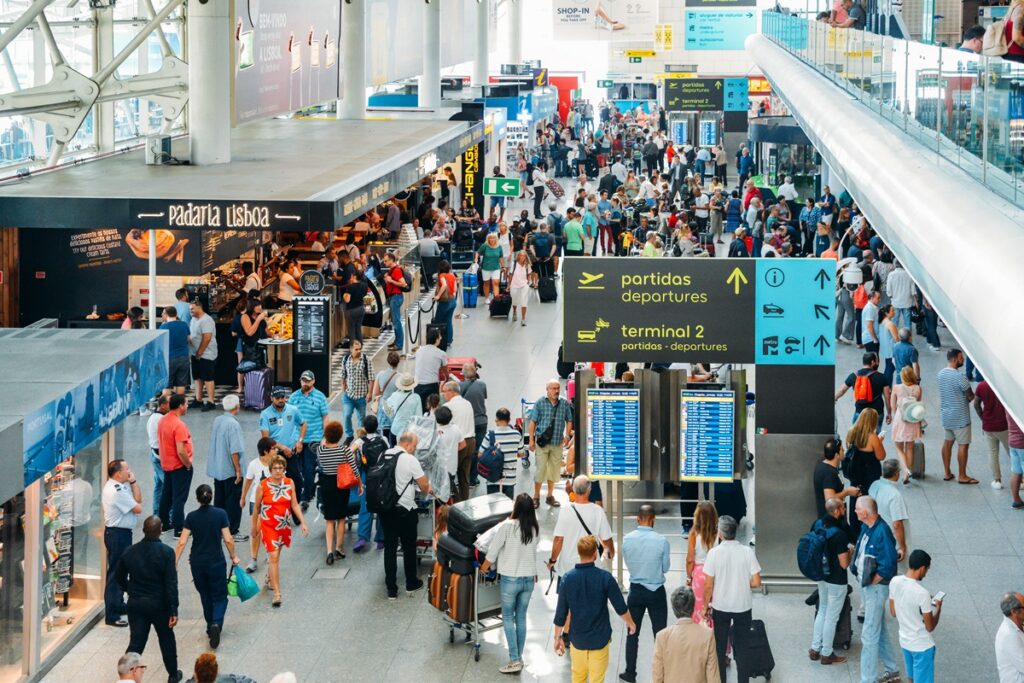
Crowds build at Portugal airport as long border queues are expected this Easter Credit : Alexandre Rotenberg, Shutterstock
If you’re flying through Portugal over the Easter holidays, especially on a non-EU passport, you may want to allow extra time. Airports are warning of queues of up to two hours at border control, just as one of the busiest travel periods of the year gets underway.
The reason isn’t a strike or staff shortage this time. Instead, it comes down to the rollout of the EU’s new Entry/Exit System (EES) – a digital border system being introduced right as passenger numbers surge for Easter.
Why border queues could get longer at Portugal airports
The warning has come from two major industry bodies: ACI Europe, which represents airports, and Airlines for Europe (A4E), speaking for airlines across the EU.
In a joint statement, they flagged ‘operational issues’ linked to the implementation of the new system, which is now entering its final phase.
The timing is what’s causing concern. The system is being rolled out right in the middle of Easter travel, when airports in Portugal and across southern Europe are already under pressure from high passenger volumes.
Under current requirements, all EU countries must register 100 per cent of non-EU travellers by March 31, ahead of the system’s full implementation on April 9. That means border control officers are now carrying out more checks than before – and those checks take time.
What the new EES system means for travellers
The Entry/Exit System (EES) is designed to replace passport stamping with a digital process across the Schengen Area.
For travellers from outside the EU, this changes what happens at border control.
Instead of a quick stamp, you may be asked to go through a more detailed registration process, which can include:
- Scanning your passport
- Recording your entry digitally
- Providing biometric data, such as fingerprints or a facial image
For first-time users, this step can take longer, as the system needs to create a full record.
In theory, the system should make border crossings smoother over time. But during this transition phase, it’s expected to slow things down – particularly at busy airports.
Who is affected – and who isn’t
The delays mainly concern non-EU travellers entering the Schengen Area. That includes visitors and residents travelling on passports from countries such as the UK, the US and others outside the EU.
EU citizens and those with EU residency documents are not subject to the same checks, so they are less likely to face long waits at passport control.
That said, during peak travel periods like Easter, overall congestion at airports can still affect everyone, even if the checks themselves are quicker.
Why Easter timing is making things worse
Easter is always a busy period for travel between Spain, Portugal and the rest of Europe. Airports typically see a sharp rise in both short breaks and long-haul arrivals.
This year, that surge is coinciding with the final stretch of the EES rollout.
According to ACI Europe and A4E, introducing a new system at this exact moment is creating additional pressure on border control operations, leading to longer queues than passengers might be used to.
What travellers should do before flying
If you’re travelling in the coming days, especially through Portuguese airports, it’s worth planning ahead.
Arriving earlier than usual is the simplest step. If you’re connecting through another airport, allow extra time between flights where possible.
Have your documents ready and expect the process to take longer than normal – particularly if it’s your first time entering the Schengen Area under the new system.
Airlines and airports are also advising passengers to check for updates before travelling, as procedures may vary depending on how far each airport has progressed with the rollout.
A new system, but not without teething problems
The goal of the EES is to modernise border control across Europe, making it more secure and efficient in the long term.
But for now, as the system beds in, travellers may feel the impact in the form of longer waits – especially during busy periods like Easter.
For anyone flying into Portugal this week, the message is clear: give yourself more time than usual, particularly if you’re arriving from outside the EU.
Sign up for personalised news
Subscribe to our Euro Weekly News alerts to get the latest stories into your inbox!
By signing up, you will create a Euro Weekly News account if you don't already have one. Review our Privacy Policy for more information about our privacy practices.



Farah Mokrani
Farah is a journalist and content writer with over a decade of experience in both digital and print media. Originally from Tunisia and now based in Spain, she has covered current affairs, investigative reports, and long-form features for a range of international publications. At Euro Weekly News, Farah brings a global perspective to her reporting, contributing news and analysis informed by her editorial background and passion for clear, accurate storytelling.
Comments