Eerie Saharan dust storm turns Crete skies blood red in deadly Greek tempest
By Adam Woodward • Published: 02 Apr 2026 • 16:06 • 2 minutes read
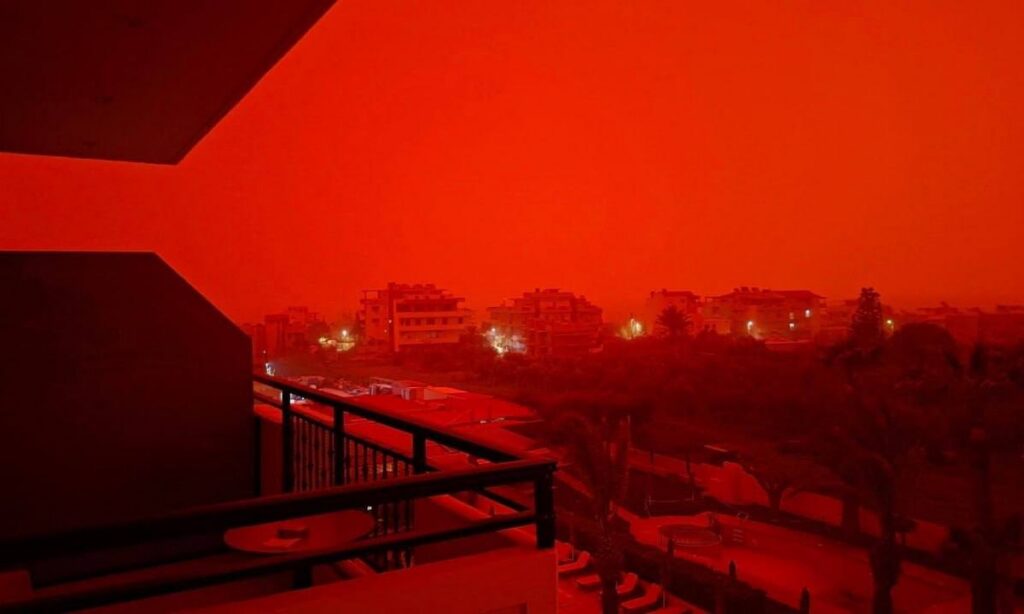
Blood red landscape across Crete. Credit: Kordon X
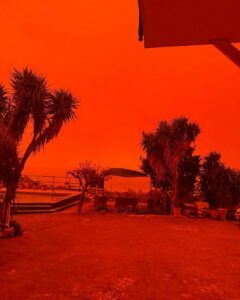
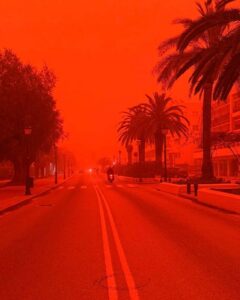
Bright red Saharan dust clouds swept across the Mediterranean on Thursday, April 1, blanketing the Greek island of Crete in an apocalyptic orange-red haze that transformed landscapes and disrupted daily life.
Strong winds from Storm Erminio carried massive plumes of fine particles from North Africa, reducing visibility dramatically and coating streets, buildings, and vehicles in a gritty, reddish layer.
Transport chaos hits island and mainland
Flights faced cancellations and diversions at Heraklion Airport as dust severely impaired safe operations. Ferries remained moored due to waves exceeding six metres in the southeast Aegean, while road traffic slowed with almost impossible conditions. Winds gusting up to 120 km/h compounded problems, damaging infrastructure and isolating communities across affected regions.
Health risks spike from toxic air
Air quality plummeted to hazardous levels, with dust concentrations surpassing 1,000 micrograms per cubic metre, far above safe limits. Authorities urged residents to wear masks if venturing outside and to avoid unnecessary travel. Fine particles pose serious dangers, especially to those with respiratory conditions, potentially triggering asthma attacks, cardiovascular strain, and long-term lung damage from repeated exposure.
Storm claims life as flooding worsens
Storm Erminio unleashed widespread flooding and gales, claiming at least one life near Athens, where a body was discovered under a car in Nea Makri. Red alerts covered eastern Peloponnese, central Greece, Evia, Thessaly, the Sporades, Attica, and the Dodecanese, with orange alerts in the Cyclades and eastern Aegean. Schools closed and emergency services stretched thin as heavy rains turned streets into rivers.
Dangers of Saharan dust events
Such intrusions carry microscopic particles laced with minerals, bacteria, and pollutants from distant deserts. Inhalation risks escalate during high concentrations, worsening air pollution and contributing to premature deaths in vulnerable populations. Combined with intense storms, these events amplify infrastructure strain and economic losses through halted tourism and transport.
Consequences ripple across Greece
Disruptions affected air and sea travel, local businesses, and public services, highlighting vulnerabilities in Mediterranean weather systems. Material damage to buildings and vehicles added to recovery costs, while the eerie visuals masked underlying threats to public health and safety.
Spain faces heightened risk of repeat events
Climate patterns suggest Spain could experience similar Saharan dust intrusions soon, especially during spring and autumn when southerly winds intensify. Southern regions like Andalusia and the Balearics remain particularly exposed, with potential for transport chaos, health alerts, and compounded storm impacts.
Sign up for personalised news
Subscribe to our Euro Weekly News alerts to get the latest stories into your inbox!
By signing up, you will create a Euro Weekly News account if you don't already have one. Review our Privacy Policy for more information about our privacy practices.




Adam Woodward
Adam is a writer who has lived in Spain for over 25 years. With a background in English teaching and a passion for music, food, and the arts, he brings a rich personal perspective to his work at Euro Weekly News. As a father of three with deep roots in Spanish life, Adam writes engaging stories that explore culture, lifestyle, and the everyday experiences that shape communities across Spain.
Comments