Nest warning as house martins return to Costa del Sol
By Lucy Ramnought • Published: 02 Apr 2026 • 16:28 • 1 minute read
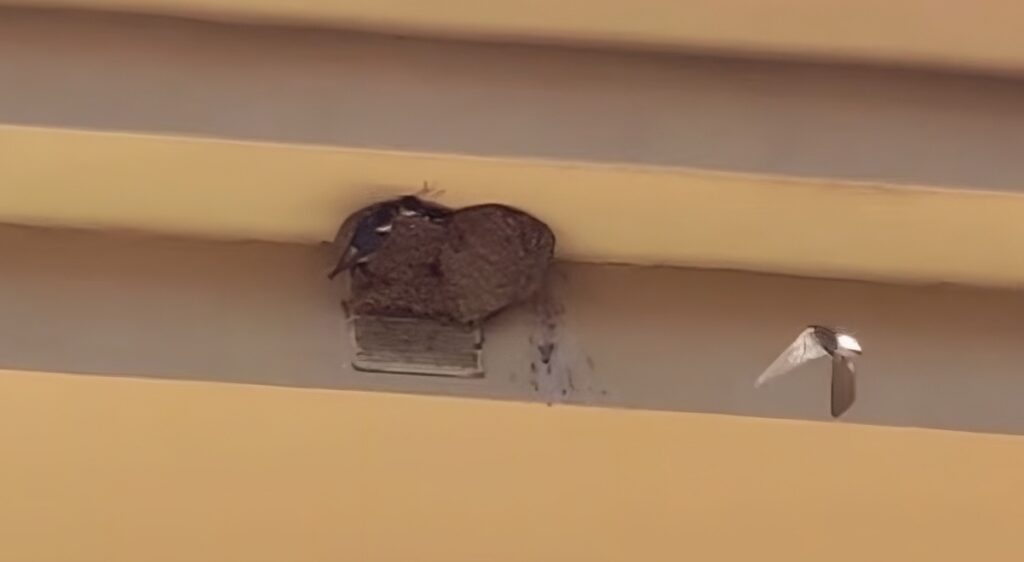
House martins nesting in eaves Credit:Daniela FB
Costa del Sol residents are being reminded not to remove the nests of house martins, swallows and swifts as the protected birds return for summer.
Following months of heavy rain across Malaga province, puddles and wet ground are expected to bring a rise in mosquitoes, making these insect-eating birds especially important at this time of year.
The common house martin is a small summer visitor to Malaga, easily recognised by its white underside, dark upperparts and quick, agile flight. It is commonly seen in towns, villages and rural areas, where it builds mud nests under roof edges, ledges and window sills.
The summer visitor is an effective pest controller
Unlike swallows, house martins nest in colonies and often return to the same breeding areas year after year. They feed on flying insects including aphids, flies and mosquitoes, making them one of nature’s most effective pest controllers.
In Marbella, Mijas and other parts of the Costa del Sol, residents are already beginning to notice house martins and other protected birds returning to their usual nesting spots under eaves, terraces and rooftops. Their annual return is one of the many signs that summer is on the way, especially in residential areas where the same colonies often come back season after season.
Heavy fines for removing the nests of house martins
Under Law 42/2007, removing the nests of house martins, swallows or swifts is illegal, even when the nests appear empty or are out of season. Fines can range from €3,001 to €200,000, as destroying nests may be treated as a crime against wildlife.
The advice, if you are to have one, is to leave nests alone. If droppings are a problem, a wooden board or shelf can be placed around two metres below the nest to catch them. If a nest falls, chicks may sometimes be helped by placing a makeshift nest, such as a flower pot lined with mud, close to the original site. Anyone who sees a nest being destroyed can report it to Guardia Civil’s SEPRONA (wildlife division) by calling 062, while injured birds Contact the Andalucia bird rescue service (CREA) or call 112
Sign up for personalised news
Subscribe to our Euro Weekly News alerts to get the latest stories into your inbox!
By signing up, you will create a Euro Weekly News account if you don't already have one. Review our Privacy Policy for more information about our privacy practices.





Lucy Ramnought
Comments