Cash or card in Spain: when shops can refuse your payment – and when they can’t
By Farah Mokrani • Published: 03 Apr 2026 • 14:35 • 3 minutes read
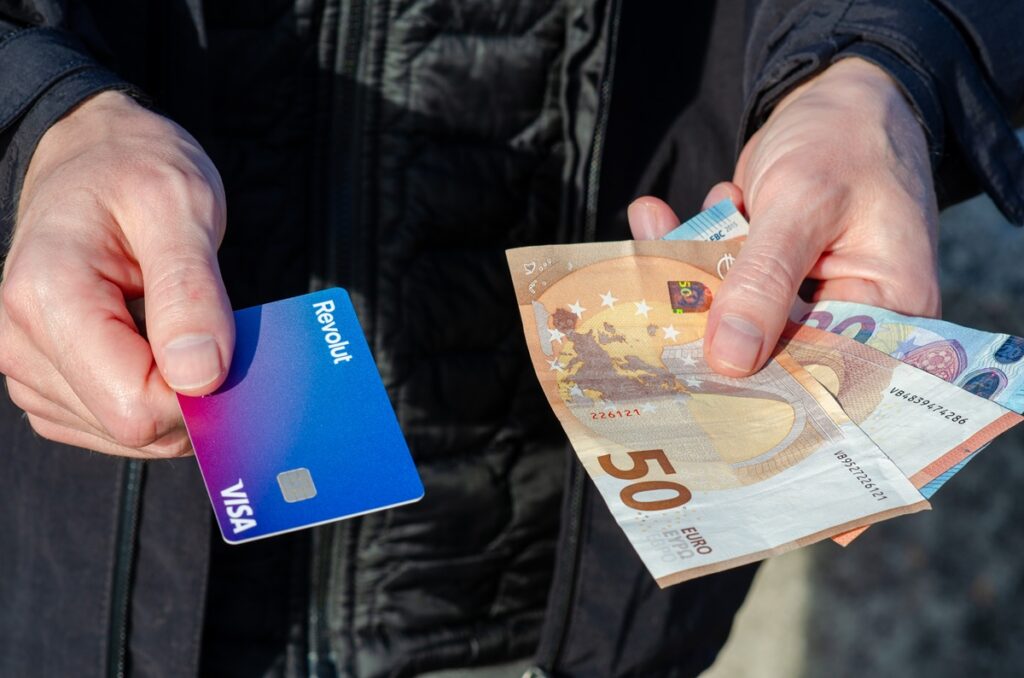
Cash or card? What shops in Spain can legally refuse at checkout Credit : Ksjundra07, Shutterstock
It’s become second nature to tap your card or phone at the till. But in Spain, that doesn’t always work. Shops are still allowed to refuse card payments in some cases – and in others, they must accept cash whether they like it or not.
The rules can feel confusing, especially if you’re used to going cashless. But they’re actually quite clear once you break them down. And depending on the situation, you could be asked to pay in cash – or have the right to insist on it being accepted.
Can shops in Spain refuse card payments? Yes – and it’s legal
If you’ve ever been told ‘cash only’ or ‘minimum €10 for card’, you might have wondered if it’s allowed. The short answer is: yes, it is – in many cases.
Under Spanish rules, businesses are not required to offer card or mobile payments. That means a shop, bar or small business can legally operate as cash-only, even in 2026 when contactless payments are everywhere.
This isn’t rare either. According to the Bank of Spain, cash is still the most commonly used payment method in physical shops, with 57 per cent of people using it as their main option, compared to 27 per cent for cards and 15 per cent for mobile payments.
So if a business asks for cash, it’s not automatically doing anything wrong.
But there’s one thing shops must always accept.
While businesses don’t have to take cards, they do have one clear obligation. They must accept cash – within legal limits.
Spanish consumer law considers it an offence for a business to refuse cash payments when the amount falls within the permitted thresholds. In other words, if you’re paying a normal amount in coins or notes, the shop cannot simply say no.
If that happens, you’re entitled to file a complaint.
There is, however, an important limit set by anti-fraud rules.
Since July 2021, cash payments are capped at €1,000 when one of the parties is acting as a business or professional. That means if you’re buying something above that amount from a company, you cannot pay in cash – even if both sides agree.
The limit increases to €10,000 if the payer is a private individual who does not have tax residence in Spain and is not acting as a professional.
And crucially, the rule applies to the entire transaction, not just part of it.
Minimum card payments: legal – but only if you’re told in advance
One of the most common situations at the checkout is being told there’s a minimum amount to pay by card.
This often leads to confusion, but again, it’s generally allowed.
The Bank of Spain has made it clear that setting a minimum spend for card payments is not explicitly prohibited. However, there’s a key condition: Customers must be informed in advance.
That usually means a visible sign near the till or entrance.
If there’s no sign and you’re only told at the moment of payment, the situation becomes more questionable from a consumer protection point of view.
Another important point: Businesses cannot charge extra for paying by card.
Spanish consumer law prohibits adding surcharges that exceed the actual cost of using that payment method. In practice, this means shops should not apply additional fees just because you use a card.
What to do if a shop refuses your payment
If you find yourself in a dispute at the till, what you can do depends on the situation.
- If a shop refuses card payments, that’s usually within its rights – as long as it has made this clear beforehand.
- If a shop refuses cash within the legal limit, that’s different – and you can challenge it.
In that case, you have the right to:
- Ask for a complaint form (hoja de reclamaciones)
- Report the issue to consumer authorities in your region
If the issue is linked to a card payment – for example, an incorrect charge – the first step is to contact your bank, and if needed, escalate the complaint to the Bank of Spain.
Why cash still matters in Spain
Even with contactless payments everywhere, Spain hasn’t gone fully cashless.
Small businesses, local bars and independent shops still rely heavily on cash, partly to avoid transaction fees and partly out of habit.
For many people, especially older customers, cash remains the simplest option.
That’s why the law continues to protect its use – even as digital payments become more common.
What this means for you at the checkout
So, don’t assume every shop will accept your card – and don’t assume they can refuse your cash either.
If you’re shopping in Spain, it’s always a good idea to carry some cash, especially in smaller businesses.
And if something doesn’t feel right at the till, it’s worth knowing that the rules are there – and they’re on your side more often than you might think.
Sign up for personalised news
Subscribe to our Euro Weekly News alerts to get the latest stories into your inbox!
By signing up, you will create a Euro Weekly News account if you don't already have one. Review our Privacy Policy for more information about our privacy practices.





Farah Mokrani
Farah is a journalist and content writer with over a decade of experience in both digital and print media. Originally from Tunisia and now based in Spain, she has covered current affairs, investigative reports, and long-form features for a range of international publications. At Euro Weekly News, Farah brings a global perspective to her reporting, contributing news and analysis informed by her editorial background and passion for clear, accurate storytelling.
Comments