Santander deal sparks outrage over Frida Kahlo artworks
By Natascha Rivera • Updated: 06 Apr 2026 • 10:43 • 3 minutes read
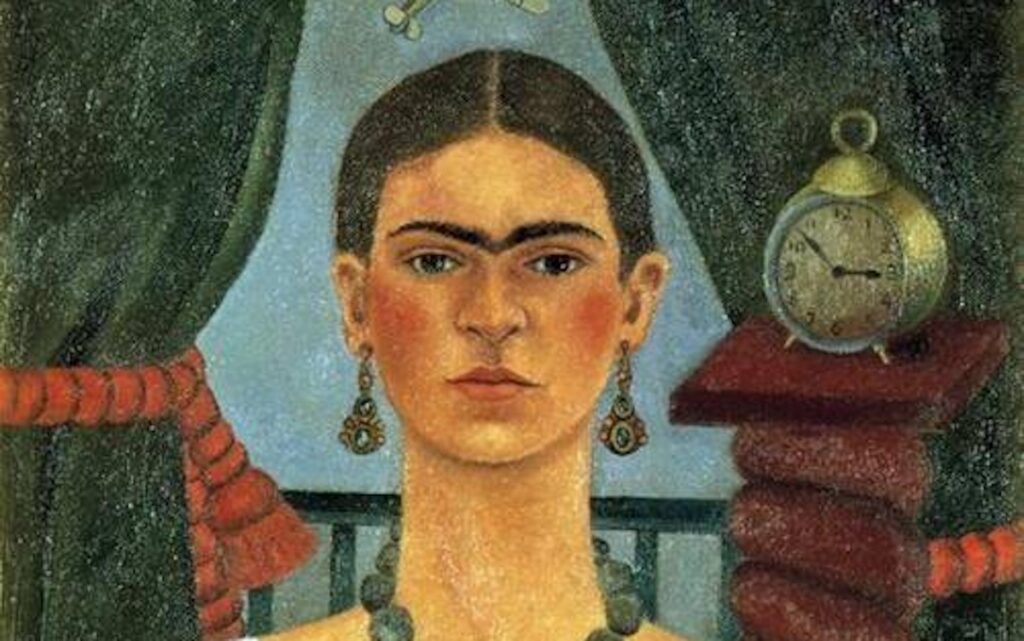
The Mexican art world fears Kahlo artworks may never return from Spain deal. Photo Credit: Museo Frida Kahlo
A collection of 160 works of art, including works from world-renowned Mexican painter Frida Kahlo, is set to be exported to Spain under an agreement with Spanish bank Santander. The move has sparked outrage among Mexico’s artistic and cultural community, who call for more transparency on what is to be done with Kahlo’s works.
The Santander deal: Who really benefits?
Under the deal, the collection, which is currently on display in Mexico for the first time in nearly two decades, is set to return to Spain in the summer of 2026, where it will be displayed at Faro Santander, a cultural centre in the city of Santander, located in the Pereda Building.
The agreement states that Santander bank would be responsible for the “conservation, research, and exhibition” of the invaluable collection. However, the agreement does not clarify how long the works will remain in Spain, leading the Mexican cultural community to fear that the works may never return. Furthermore, outrage was sparked when Faro Santander’s director, Daniel Vega Pérez de Arlucea, stated that the collection would have a “permanent presence” at Faro Santander.
In response to this move, nearly 400 cultural professionals have signed an open letter asking for the Mexican government to offer more clarity on the specifics of the deal and what it could mean for the masterpieces, especially the works by Kahlo.
An invaluable collection representing Mexican culture
The collection, which has been renamed the Gelman Santander collection, contains 160 paintings, sketches, and photographs, including many by Frida Kahlo and her two-time husband, Diego Rivera. It was originally owned by collectors Jacques and Natasha Gelman, before being sold to the Mexican Zambrano family in 2023.
In addition to Kahlo and Rivera, the collection contains works by Rufino Tamayo, José Clemente Orozco, María Izquierdo, and David Alfaro Siqueiros. It is being called one of the most important collections of modern Mexican art.
Frida, at the centre of the row: ‘The most important artist in the history of our country’
Despite the diverse range of artists and types of art, the works by Kahlo in particular have been the centre of the controversy; the Mexican state has declared them an “artistic monument,” and the importance of Kahlo’s work to Mexican culture cannot be overstated.
Francisco Berzunza, a historian who was one of the eight people who published the open letter to the Mexican government, explained the reasoning for the mobilisation. “[Kahlo] is the most important artist in the history of our country and it’s easier to see her work outside of Mexico than in Mexico itself.”
“If the works were not to return, a fundamental part of this artist’s body of work – and her history – would be lost. She is, after all, the most important female Mexican artist in history. These pieces are fundamental to telling her story, and they are fundamental to understanding our identity as Mexicans.”
Officials reassure art lovers … but tension is still palpable
Government officials have also weighed in on the controversy. Mexico’s president, Claudia Sheinbaum, said, “Our desire is for [the collection] to remain in Mexico.”
The minister of culture, Claudia Curiel de Icaza, said, “The collection is Mexican; it wasn’t sold – it’s only leaving temporarily.” According to Curiel de Icaza, the artworks would return to Mexico in 2028.
Santander also issued a statement following the row, emphasising that the deal “does not imply, under any circumstances, either the acquisition of the collection or its permanent removal from Mexico” and that the works “will return to Mexico at the end of the temporary export period.”
However, art historians, art lovers, and fans of Kahlo’s works remain uneasy with the reassurance. According to the opposition, the deal signed is ambiguous and greatly favours the Spanish bank.
Frida Kahlo: A history of Mexican society, in portraits
Magdalena Carmen Frida Kahlo y Calderón, born in 1907 and died in 1954, is known for her many portraits and self-portraits depicting Mexican life and exploring questions about identity, postcolonialism, gender, class, and race in Mexican society. She was also known for painting about her experiences with chronic pain, caused by a bus accident.
Her 1940 self-portrait, The Dream (The Bed) holds the record for the most expensive work by a female artist ever auctioned, at $54.7 million (€47.4 million).
Sign up for personalised news
Subscribe to our Euro Weekly News alerts to get the latest stories into your inbox!
By signing up, you will create a Euro Weekly News account if you don't already have one. Review our Privacy Policy for more information about our privacy practices.




Natascha Rivera
Natascha is a Dominican writer based in Spain with a background in audiovisual and marketing communication. A lifelong reader and passionate storyteller, she brings a creative edge to her work at Euro Weekly News. Her multicultural perspective informs her coverage of lifestyle and community stories, offering fresh angles and relatable storytelling that connects with a diverse audience.
Comments