UK travellers face airport chaos under new passport rule
By Farah Mokrani • Published: 20 Apr 2026 • 9:16 • 3 minutes read
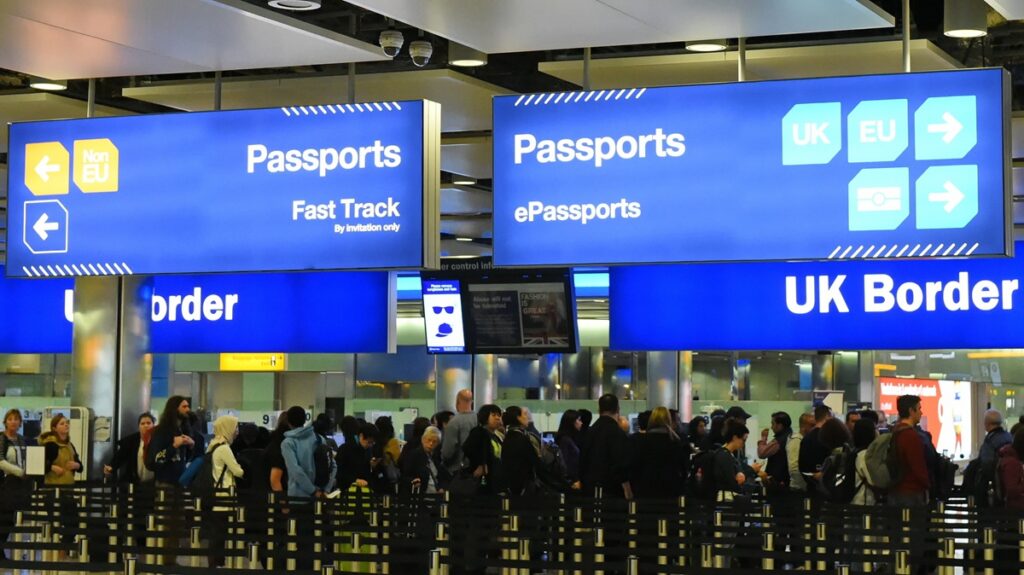
New UK passport rule may affect dual nationals returning home Credit : 1000 Words, Shutterstock
Thousands of people with British citizenship and a second nationality are being warned to check their passports before flying, after a new UK travel rule began causing confusion at check in desks. Under the updated system, British dual nationals may now need to use a valid British passport or show proof of right to live in the UK when returning home. Without it, airlines and other carriers can refuse boarding.
The change has raised concern among travellers who have long used another passport for trips around Europe and only discovered the issue when preparing to fly.
For some families, it could mean missed flights, extra costs and last minute stress.
What has changed for dual nationals
The updated rule forms part of the UK’s wider move towards digital border controls and stricter pre travel checks.
In practical terms, transport companies such as airlines, ferry operators and rail services are now expected to verify that passengers travelling to the UK have the right documents before boarding.
For British citizens with dual nationality, that can mean a valid British passport is now the safest and clearest way to travel back to the UK.
If a traveller turns up using only their other nationality passport, problems may arise during online check in or at the airport desk.
That is where confusion has started.
Many dual nationals say they have travelled this way for years without issue, especially on short trips to Spain, France or other European countries.
Now some are finding the rules applied more strictly.
Why airlines are taking it seriously
This is not simply an airline preference.
Carriers can face penalties if they transport passengers who do not meet entry requirements.
That means check in staff are under pressure to verify documents correctly, often in busy airport settings where nationality and immigration status can be more complicated than they first appear.
Some booking and check in systems have reportedly become stricter too, flagging mismatched passport details or requiring additional checks before a boarding pass is issued.
For passengers, that can feel sudden and confusing. For airlines, it is about avoiding fines and complying with government requirements.
Who could be affected most
The people most likely to feel the impact are dual nationals who mainly identify with their second passport for travel.
That includes many British Spanish, British French, British Irish and other mixed nationality families who live abroad or regularly move between countries.
Some may have an expired British passport because they rarely used it. Others may have children with two passports where only one was booked for the trip.
These are exactly the kinds of everyday situations now creating airport problems. Business travellers could also be caught out if company bookings are made using the wrong passport details.
What travellers should do before flying
If you hold British citizenship as well as another nationality and plan to travel to the UK, the safest option is to check your documents now rather than later.
Make sure your British passport is valid.
If it has expired, look into renewal times as early as possible.
If you use another passport for outbound travel, remember you may still need your British passport to return smoothly.
Do not assume previous travel habits still apply.
Rules that were loosely enforced in the past may now be checked automatically.
It is also wise to make sure airline bookings match the passport you plan to use.
Even small differences in names or nationality details can slow things down.
Why this is happening now
The UK has been steadily moving towards a more digital border system where permissions are checked before passengers reach the gate.
That means more decisions happen behind the scenes during booking, online check in or document scans.
For governments, it improves control.
For travellers, it means mistakes can block a journey much earlier than before.
Instead of being sorted at passport control after landing, issues may now stop you boarding in Spain, Portugal or anywhere else.
That is why the rule is attracting so much attention.
What it means for Spain based readers
Many British nationals living in Spain also hold Spanish nationality or have children who do.
For them, this is more than a technical update. It affects school holidays, family visits, business travel and emergency trips.
A simple weekend flight to the UK could become a problem if the wrong passport is packed.
The key message
If you have British citizenship, do not leave passport checks until the airport. The document you have used for years may no longer be enough.
For dual nationals heading to the UK in 2026, the safest travel essential may not be your suitcase or boarding pass.
It may be the passport in the other drawer.
Sign up for personalised news
Subscribe to our Euro Weekly News alerts to get the latest stories into your inbox!
By signing up, you will create a Euro Weekly News account if you don't already have one. Review our Privacy Policy for more information about our privacy practices.





Farah Mokrani
Farah is a journalist and content writer with over a decade of experience in both digital and print media. Originally from Tunisia and now based in Spain, she has covered current affairs, investigative reports, and long-form features for a range of international publications. At Euro Weekly News, Farah brings a global perspective to her reporting, contributing news and analysis informed by her editorial background and passion for clear, accurate storytelling.
Comments