Inside one of Europe’s largest horse festivals as the Feria del Caballo returns in Spain
By Molly Grace • Published: 28 Apr 2026 • 22:51 • 4 minutes read
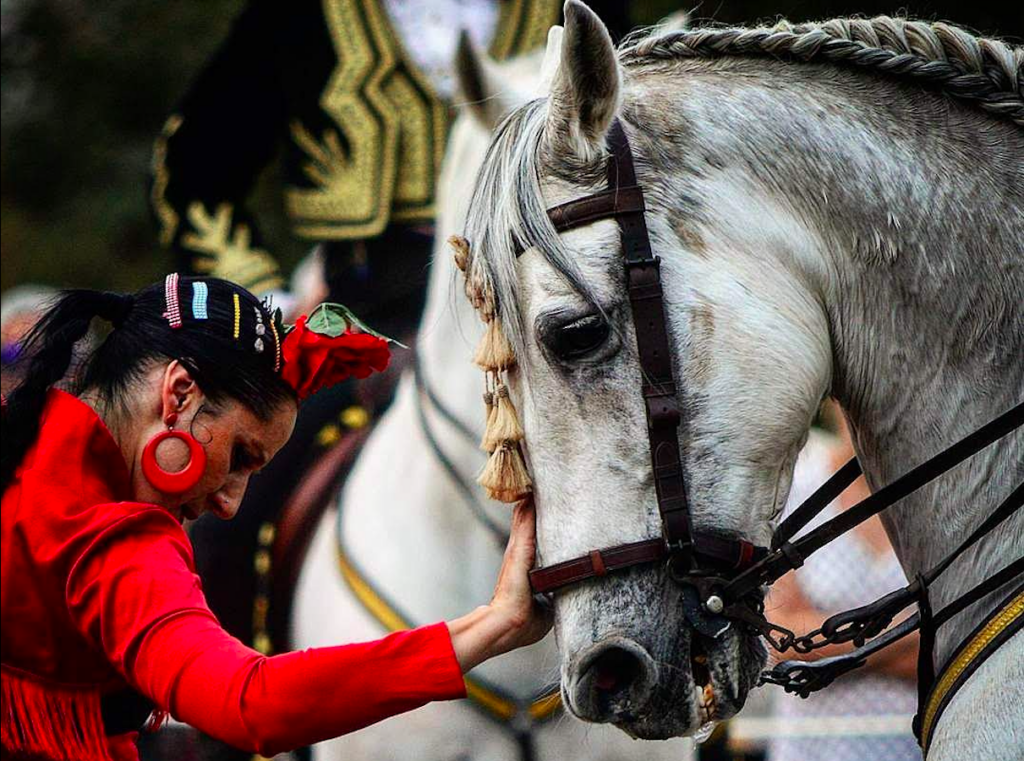
The Spanish horse has influenced the development of several modern horse breeds. Photo credit: Molly Grace
Jerez is once again preparing to welcome hundreds of thousands of visitors from across Spain and abroad as the Feria del Caballo returns to Jerez de la Frontera, in the province of Cádiz in Andalucía, for another week of horses, flamenco, food and celebration. The 2026 edition of the feria is scheduled to take place from May 9 to 16. The event has become one of the most recognised annual festivals in Andalucía and is widely regarded as one of the most important horse-themed fairs in Europe.
The fair is officially recognised as a Fiesta of International Tourist Interest, a designation awarded to Spanish events with significant cultural value and strong appeal to overseas visitors. This reflects both its heritage and its growing profile among international audiences. Held at Parque González Hontoria, the feria transforms the city into a major cultural centre for the week, drawing visitors from across Spain and beyond.
A Major Attraction for Expats, Residents and International Visitors
Although rooted in Andalucían tradition, the Feria del Caballo has become a major gathering point for international visitors travelling to Spain specifically for the event, with many coming from countries such as the United Kingdom, Germany and the Netherlands.
It also attracts a large number of expats and long-term residents living in Spain, many of whom are involved in the equestrian world. These visitors travel from all over the country, including regions such as Málaga, Alicante and Murcia, as well as other parts of Andalucía and Spain more widely.
For many, particularly horse owners and equestrian enthusiasts, the feria offers direct access to Andalusian horse culture in a public setting where horses, riding displays, food and entertainment are integrated into the life of the city.
The PRE Horse and Its Historical Importance
At the centre of the fair is the Pura Raza Española (PRE), commonly known as the Andalusian or Spanish horse. The breed has been associated with the Iberian Peninsula for centuries and is one of the oldest formally recognised and documented horse breeds in the world. Alongside ancient breeds such as the Arabian horse, it is often referenced in discussions of long-established equine bloodlines, although each has developed along distinct historical and geographical paths.
The PRE is valued for its balance, intelligence, strength and expressive movement, and has long been associated with classical riding traditions. Jerez is one of the key centres for PRE breeding and presentation. Bloodlines such as the Cartujano strain, linked to Carthusian monks, are among the most historically significant and carefully preserved within the breed.
The PRE has also influenced the development of several modern horse breeds, particularly in Europe and the Americas, where it contributed to baroque-type horses and played a role in shaping classical dressage-type movement and conformation. Its impact is therefore best understood as influential rather than ancestral across all breeds, reflecting cultural and selective breeding exchange rather than direct descent.
Parades, Shows and Flamenco Culture
One of the most distinctive aspects of the feria is the daily parade of horses and carriages through the fairground. Riders appear in traditional Andalusian attire, including short fitted jackets known as traje corto for men and colourful traje de flamenca dresses for women. The carriages are traditionally decorated and drawn by PRE horses. These parades are among the most photographed moments of the week and are central to the identity of the event.
The programme also includes equestrian exhibitions such as dressage and doma vaquera, a traditional Spanish riding style developed from cattle work in rural Andalucía. It originated as a practical working method used by vaqueros (Spanish cattle herders) on large estates known as dehesas, where riders managed bulls and cattle on horseback.
This tradition formed part of the wider Iberian cattle-riding culture and later influenced Spanish horsemanship exported to the Americas during the 16th and 17th centuries, contributing to the development of related riding styles in the New World. For many international visitors, these displays offer a rare opportunity to observe working horsemanship in its original cultural context.
Flamenco, Casetas and Social Life
Flamenco is a defining part of the Feria del Caballo. Jerez is considered one of the historic centres of flamenco culture, and throughout the week visitors can hear live singing (cante), guitar (toque) and dancing (baile) across the fairground.
The fair is structured around casetas, or decorated marquees. Some are private and reserved for local families or associations, while many are open to the public. Inside, visitors can eat traditional food such as jamón ibérico (Iberian ham), tortilla española (Spanish omelette) and pescaíto frito (small fried fish), while socialising and listening to music. For expats, the casetas provide an important entry point into Andalucían social culture, offering informal access to local traditions in a shared public environment.
One of Europe’s Leading Horse Festivals
The Feria del Caballo stands as one of the most significant horse-focused festivals in Europe. Unlike conventional competitions held in controlled arenas, it takes place within the daily life of the city, where horses, riders and carriages form part of the public space throughout the week.
Its combination of equestrian tradition, cultural heritage and open participation distinguishes it from other events of its kind. For expats and international visitors, it offers both accessibility and authenticity, bringing together centuries of Andalusian horse culture in a living public setting.
As a result, the Feria del Caballo continues to hold a unique position within Spain’s cultural calendar and remains one of the most important annual events in Andalucía and European horse culture.
Sign up for personalised news
Subscribe to our Euro Weekly News alerts to get the latest stories into your inbox!
By signing up, you will create a Euro Weekly News account if you don't already have one. Review our Privacy Policy for more information about our privacy practices.

Molly Grace
Molly is a British journalist and author who has lived in Spain for over 25 years. With a background in animal welfare, equestrian science, and veterinary nursing, she brings curiosity, humour, and a sharp investigative eye to her work. At Euro Weekly News, Molly explores the intersections of nature, culture, and community - drawing on her deep local knowledge and passion for stories that reflect life in Spain from the ground up.
Comments