Flying to Spain? You may skip airport queues under new EES rule
By Farah Mokrani • Updated: 05 May 2026 • 9:22 • 3 minutes read
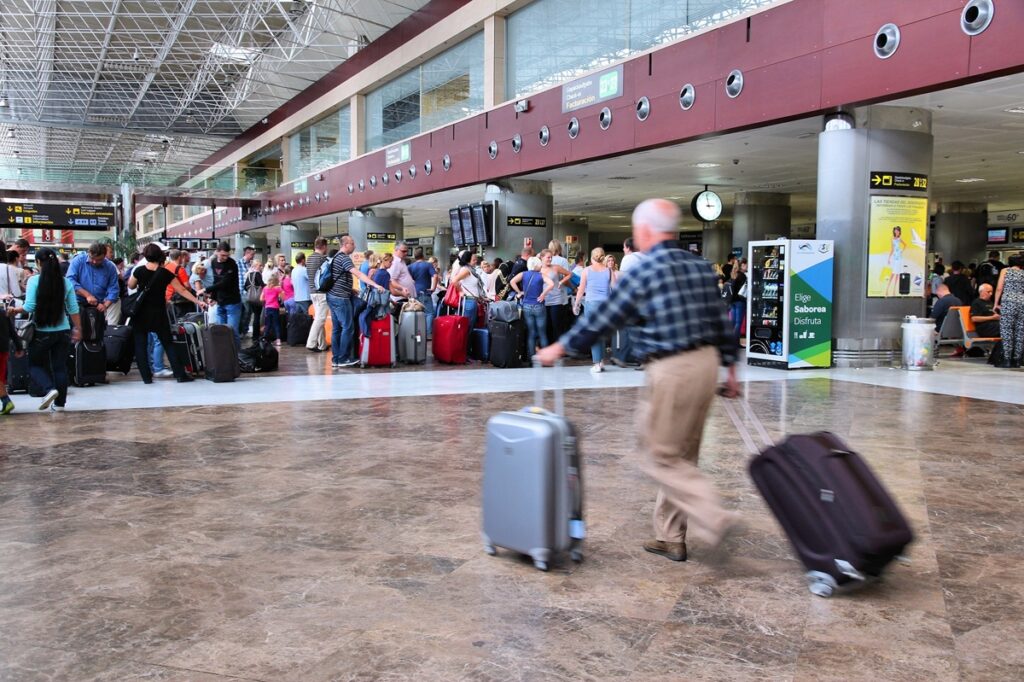
Long airport queues prompt Spain to fast-track some travellers under new EU border system Credit : Tupungato, Shutterstock
If you are flying into Spain this summer, you may not go through the same line as everyone else. Families with young children, passengers with reduced mobility and other vulnerable travellers are now being redirected away from biometric gates, after weeks of long queues linked to the EU’s new Entry Exit System.
The change has already started at major airports and is designed to ease pressure before the busiest travel months. It does not remove border checks, but it changes how some passengers move through them when waiting times get too long.
Who can skip the biometric gates and why it matters
The adjustment is aimed at travellers who may struggle with the new system or who are more affected by long waiting times.
Under internal instructions circulated across Spain’s airport network, border police are now asked to keep a close eye on queues. When waiting times at the automatic kiosks go beyond roughly 25 minutes, certain passengers can be moved to a manual fast track lane.
This applies to families with small children, people with reduced mobility and others considered vulnerable in that context.
The idea is practical. The biometric process takes longer for first time users, and not everyone can move through it at the same pace. Redirecting some travellers helps reduce pressure at the busiest points.
At the same time, airport teams are being told to prioritise passengers who risk missing connecting flights, especially during peak arrival periods.
What caused the queues in the first place
The situation is tied to the rollout of the new European border system.
Since April 10, non EU travellers entering the Schengen area must register biometric data. That includes fingerprints and a facial scan, replacing the traditional passport stamp.
For many travellers, particularly those arriving from the UK and other non EU countries, this is the first time they have had to go through the process.
That initial registration takes longer than a standard check. When several flights arrive close together, queues can build quickly.
In the first weeks after the launch, some passengers reported waiting for hours at Spanish airports. Those scenes quickly raised concerns, especially with the summer season approaching and millions of visitors expected.
Travel companies and airlines warned that long delays at border control could affect the overall travel experience.
What travellers can expect now
The changes being introduced are meant to reduce the impact, but they do not remove the system itself.
If you fall into one of the priority groups, you may be directed to a different line when queues grow. For other travellers, the experience will depend on timing.
At quieter moments, the process may be relatively quick. During peak arrivals, delays are still possible. There is one important detail to keep in mind. The first time you register your biometric data is the slowest step. After that, future entries should be much faster.
That means frequent travellers may notice a clear difference after their initial trip.
In the meantime, being prepared can make things easier. Having your boarding pass ready, along with any supporting documents such as proof of accommodation, can help speed up manual checks if needed. It is also wise to allow extra time, especially if you have a connecting flight.
Why this matters ahead of the summer season
Spain is expecting a high volume of international arrivals in the coming months.
With millions of non EU travellers set to enter the country between May and September, even small delays can quickly turn into longer queues.
The new system is here to stay, but how it is managed is still evolving. Redirecting vulnerable passengers is one way of easing pressure while airports adapt. Mobile registration units may also be deployed during busy periods to increase capacity.
For authorities, the goal is to avoid a repeat of the early weeks, when the system was still settling in and queues grew faster than expected.
For travellers, the change is more subtle but still important.
You may not notice it until you arrive, but the way people are processed at the border is already shifting. And for some passengers, the journey through the airport could now be a little smoother than it was just a few weeks ago.
Follow Euro Weekly News on Google News
Get breaking news from Spain, travel updates, and expat stories directly on your Google News feed.
Follow on Google NewsSign up for personalised news
Subscribe to our Euro Weekly News alerts to get the latest stories into your inbox!
By signing up, you will create a Euro Weekly News account if you don't already have one. Review our Privacy Policy for more information about our privacy practices.





Farah Mokrani
Farah is a journalist and content writer with over a decade of experience in both digital and print media. Originally from Tunisia and now based in Spain, she has covered current affairs, investigative reports, and long-form features for a range of international publications. At Euro Weekly News, Farah brings a global perspective to her reporting, contributing news and analysis informed by her editorial background and passion for clear, accurate storytelling.
Comments
brian
05 May 2026 • 10:55the answer to the problem is simple,maybe to simple for authorities to understand, you have two lanes/ques, one marked `first registration` and another lane/que marked `already registered` .one takes you to the machine to register your passport,the other straight to the exit gate where you passport is scanned,just as it was before ees,simples
Tom fielding
06 May 2026 • 08:44I was told at tenerife by a customs officer that registration only lasts 3 months not 3 years so I had to register again so the staff need to be re educated
Comments are closed.