Mercadona changes delivery rules for shoppers across Spain
By Farah Mokrani • Published: 07 May 2026 • 23:03 • 3 minutes read
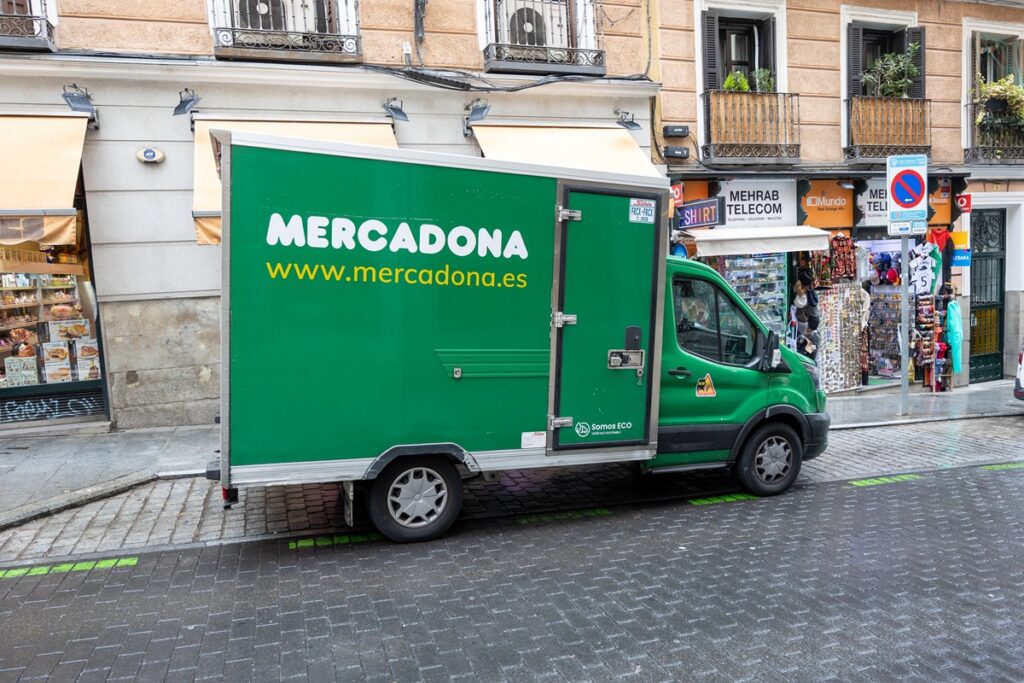
Some Mercadona stores in Spain no longer offer home delivery services. Credit : Azulblue, Shutterstock
Many Mercadona customers across Spain are only discovering at the checkout that their local store no longer offers home delivery. The supermarket giant has changed the rules for in store delivery orders, meaning some branches have stopped sending groceries to customers’ homes altogether. For shoppers who relied on the service for heavy weekly shops, the change is already causing frustration, especially among older residents, families and people without a car.
Until now, the system was straightforward. Customers could walk into almost any Mercadona, do a large shop in person and pay €6.50 to have their groceries delivered later that day or the following day. But since May 7, that no longer applies everywhere.
Now, whether home delivery is available depends entirely on the individual store and the customer’s address.
Mercadona customers now have to ask in store if delivery still exists
One of the biggest complaints from shoppers is that there is no easy way to know in advance whether a store still offers the service.
Instead of publishing a list of branches affected by the changes, Mercadona is telling customers to ask directly inside the shop.
On the company’s website, Mercadona explains that customers must provide their address and postcode at the nearest store to check whether they fall within that branch’s delivery area.
For regular shoppers, that has created confusion because many assumed the service still worked the same way it always had. Some customers are only finding out after filling a trolley with heavy groceries.
The change mainly affects people who preferred doing their shopping in person but used delivery afterwards to avoid carrying bags home.
That includes many elderly shoppers, parents buying large family shops and residents living in areas where walking back with multiple bags simply is not practical.
Online shopping through Mercadona’s website and app is still available. But plenty of customers preferred choosing fresh products themselves rather than relying entirely on online orders.
Now those shoppers may have to change their routine completely if their nearest store no longer delivers.
For some, that could mean travelling to another branch that still offers the service. Others may move fully to online shopping. And some may simply stop using Mercadona for large grocery shops altogether.
The changes are reopening memories of previous delivery chaos in Murcia
The reaction has been particularly strong because many customers still remember recent delivery problems in parts of Murcia.
Not long ago, Mercadona suspended deliveries to Camposol, Hacienda del Álamo and nearby urbanisations, leaving many residents suddenly without access to the service they depended on.
At the time, the decision caused significant anger among local residents, especially older people and expats without reliable transport.
Complaints quickly spread online as customers described the difficulties of travelling long distances for groceries or carrying large shops home.
The company eventually restored deliveries after a couple of weeks, but the episode highlighted how important supermarket delivery services have become for many communities across Spain.
That is part of the reason the latest changes are worrying some shoppers now.
In bigger cities with multiple Mercadona stores nearby, customers may still have alternatives. But in smaller towns, coastal urbanisations and residential areas where public transport is limited, losing delivery access can create genuine practical problems.
For many people, supermarket delivery stopped being a luxury a long time ago.
It became part of everyday life.
Mercadona says stores are changing as part of a huge transformation plan
The delivery changes are arriving at the same time Mercadona is investing billions into redesigning its supermarkets across Spain.
Company president Juan Roig recently announced plans to spend €3.7 billion transforming around 1,700 stores under a new model known internally as ‘Store 9’.
According to Roig, the redesigned stores are supposed to create a more convenient shopping experience focused heavily on fresh produce and prepared meals.
The company plans to give more space to meat, fish, fruit and vegetable sections while reorganising frozen products and prepared food areas.
Mercadona also wants to centralise preparation spaces inside stores into dedicated workshop areas as part of the redesign.
Roig described the project as a move away from supermarkets focused mainly on transactions towards stores organised more around internal processes and efficiency.
But for customers currently finding home delivery disappearing from certain branches, the timing feels awkward.
Many shoppers say convenience is exactly what they feel they are losing. Dragging heavy bags through car parks, walking long distances in summer heat or relying on taxis for grocery runs does not exactly feel like an upgrade for people who had become used to simple home delivery.
So far, Mercadona has not announced that the service is disappearing nationwide. The company is instead introducing a more selective system where delivery depends on location and branch coverage.
Still, the lack of clear communication has left many customers confused.
At the moment, shoppers are being forced to figure things out branch by branch. And for some people across Spain, especially those who depended heavily on home delivery, the weekly supermarket shop may suddenly become a lot more complicated than it was just a few weeks ago.
Sign up for personalised news
Subscribe to our Euro Weekly News alerts to get the latest stories into your inbox!
By signing up, you will create a Euro Weekly News account if you don't already have one. Review our Privacy Policy for more information about our privacy practices.





Farah Mokrani
Farah is a journalist and content writer with over a decade of experience in both digital and print media. Originally from Tunisia and now based in Spain, she has covered current affairs, investigative reports, and long-form features for a range of international publications. At Euro Weekly News, Farah brings a global perspective to her reporting, contributing news and analysis informed by her editorial background and passion for clear, accurate storytelling.
Comments