The leader of Spain’s conservative Popular Party (PP), Alberto Núñez Feijóo, has called for the resignation of Interior Minister Fernando Grande-Marlaska (Spain’s interior minister) following the deaths of two Guardia Civil officers during an operation against suspected drug traffickers off the coast of Huelva.
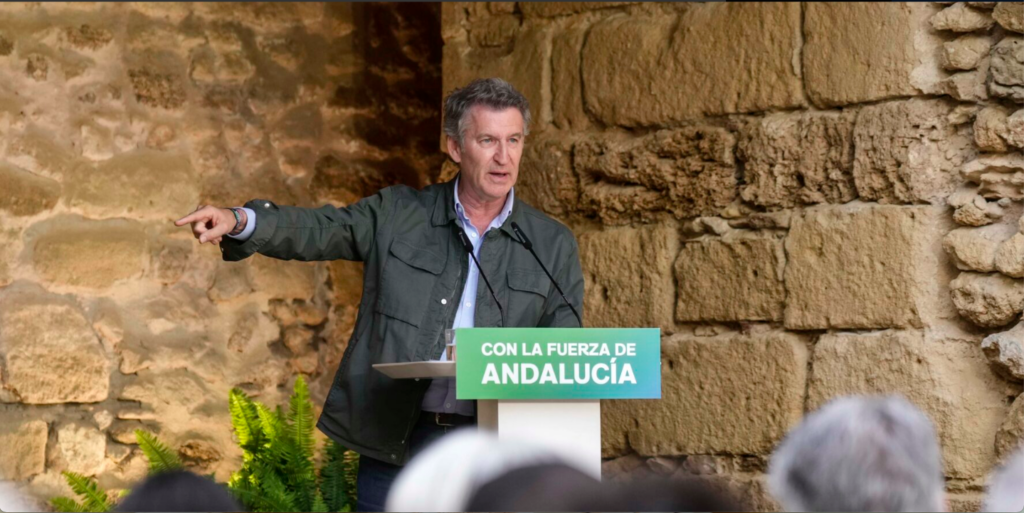
Speaking during a political event in Andalucía on Friday, Feijóo also pledged to declassify documents linked to the Spanish government’s migrant regularisation plans if the PP returns to power nationally.
The comments came during a day of mourning after two officers died when their patrol vessel was involved in a collision during a pursuit linked to narco-trafficking operations near the mouth of the Guadalquivir River, close to the province of Huelva in southern Spain.
Officers died during anti-drug trafficking operation
Two Guardia Civil officers died during an operation targeting a suspected narco-boat near Huelva province. Drug trafficking by high-powered speedboats, known in Spain as “narcolanchas”, has become a growing security issue along parts of the southern coast. The vessels are frequently used to transport hashish and other illegal substances between North Africa and Spain.
The incident has renewed political debate over the resources available to officers working in anti-trafficking operations. Feijóo accused the government led by Pedro Sánchez of failing to provide sufficient support and protection for security forces operating in high-risk coastal areas. During his speech, the PP leader said Grande-Marlaska should resign over what he described as failures in security policy and the management of anti-drug operations.
Spain’s Interior Ministry has not announced any intention for the minister to step down.
Feijóo promises to declassify migrant regularisation documents
Alongside his criticism over the deaths of the officers, Feijóo also focused heavily on immigration policy. The opposition leader promised that a future PP government would declassify information related to the current administration’s migrant regularisation plans. In Spain, “regularisation” refers to legal processes allowing undocumented migrants already living in the country to obtain legal residency or work status under certain conditions.
Migration policy has become an increasingly divisive issue in Spanish politics, particularly in regions facing increased migrant arrivals by sea or pressure on reception systems.
The Sánchez government has defended its migration policies as necessary for humanitarian reasons and labour market demands, while opposition parties have accused it of lacking transparency over long-term immigration planning. Feijóo said the public had a right to know the details surrounding the government’s discussions and decisions on the issue. The Spanish government has not publicly stated that any classified migrant regularisation programme exists, although migration agreements and administrative planning documents are commonly handled internally between ministries and European institutions.
Political pressure grows over security and migration
The remarks reflect continuing tensions between Spain’s government and opposition over immigration, organised crime and public security. The Popular Party has repeatedly criticised the government’s handling of organised drug trafficking in Andalucía, arguing that criminal groups have become increasingly violent and better equipped in recent years. Police unions and Guardia Civil associations have also raised concerns over staffing levels, equipment and working conditions in some coastal areas heavily affected by trafficking activity.
The government has defended its security policies and says it has increased resources dedicated to combating organised crime networks operating in southern Spain. The deaths of the officers have prompted tributes from political leaders across the country, with officials from multiple parties expressing condolences to the families, colleagues and members of the Guardia Civil.
The incident is expected to intensify political debate surrounding Spain’s immigration policies, anti-drug operations and coastal security measures in the months ahead.





Molly Grace
Molly is a British journalist and author who has lived in Spain for over 25 years. With a background in animal welfare, equestrian science, and veterinary nursing, she brings curiosity, humour, and a sharp investigative eye to her work. At Euro Weekly News, Molly explores the intersections of nature, culture, and community - drawing on her deep local knowledge and passion for stories that reflect life in Spain from the ground up.
Comments