Spain faces possibility of nationwide transport strike in June
By Natascha Rivera • Published: 14 May 2026 • 19:12 • 3 minutes read
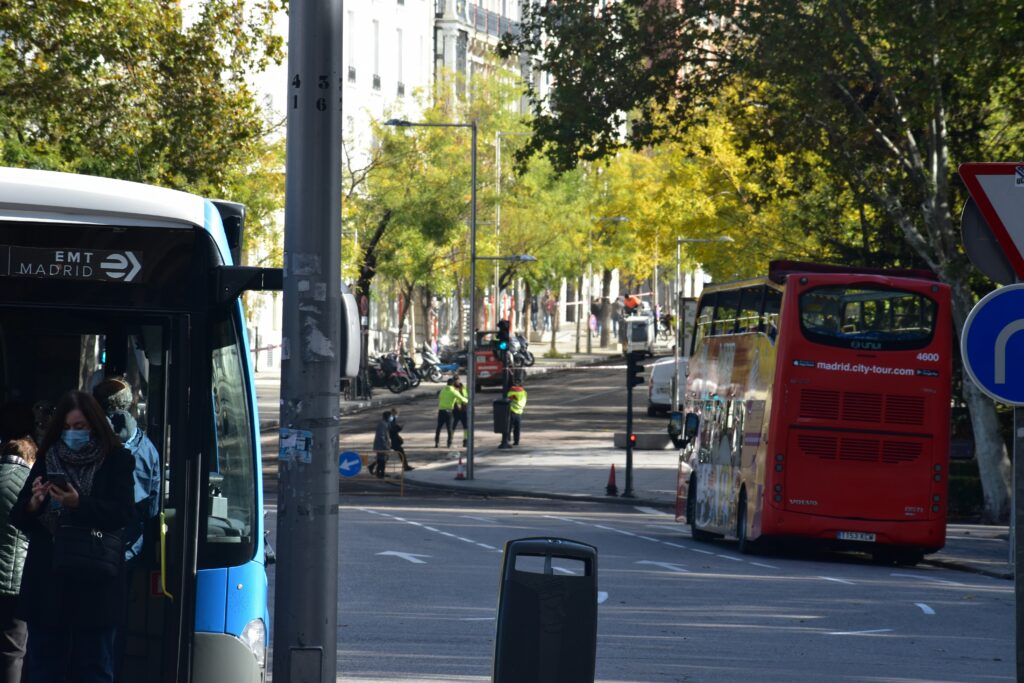
Strike threat could disrupt Spain’s peak season transport and supply chains. Photo Credit: Desiree M / Unsplash
Peak season public transport could possibly get more chaotic in Spain: the UGT union announced on Thursday, May 14 that a general and indefinite strike by truck and bus drivers will begin this summer if they are not informed about the status of negotiations regarding early retirement benefits by Sunday, May 24.
UGT warns of imminent June strike if an update is not given
To be specific, the UGT, or the General Union of Workers in Spain, has called for the strike due to lack of information given to them by the Social Security Ministry about reduction coefficients for early retirement benefits for workers in this sector. If the unions are not informed about the status of the negotiations, the strike is set to move forward on June 8, 2026, right in the middle of peak season in Spain.
The conflict arises from a lack of early retirement benefits for workers who have been driving trucks and buses for 20 years, as well as a lack of progress in agreeing on the reduction coefficients (percentage penalties applied to the state pension when a worker retires before the legal age).
Lack of information and transparency from the government, alleges the UGT
According to the UGT, they have not been called for a meeting about the pending issue once in an entire year. The six-month period to progress defined by Spanish law has already passed, in what the UGT is referring to as “administrative silence.” The union has emphasised that if they do not receive an answer soon, they will consider their proposal rejected and hence move forward with the nationwide strike.
“We want a written response that clearly tells us the status of the sector’s reduction coefficients and when they will more or less end,” said Antonio Oviedo, general secretary of the UGT’s Services, Mobility, and Consumption Federation.
Strike will officially be announced on May 24 if there is no progress
Thursday’s warning acts as a precursor to an official announcement of a strike; the unions must officially call for a strike 15 days before they are meant to take place, putting the due date at Sunday, May 24, 2026. While the UGT has threatened the strike, so far, no other union has joined the strike call; though it is notable that the CCOO union also warned the government about this strike at the end of April. Other unions are expecting the Ministry to have issued the first report about these early retirement benefits for road transport workers.
How will locals and holidaymakers be affected?
A general and indefinite strike in the road transport sector could affect supply chains, the transport of goods, and of course, citizens’ travel including public transport.
The strike is likely to cause delays, cancellations, and even complete standstills for bus services, leading to crowding in other public transport areas like trams and metro stations. Rideshare services including Uber and Cabify may see a surge in prices due to a spike in demand. Airport transport and tourist mobility may also be halted as a result of the strike.
Since the food transport by trucks will also likely be disrupted, supermarkets could take longer to restock products. If logistics are slowed to a crawl, consumers may bear the brunt of the costs through rising prices.
How the average resident could actually benefit from the strike
A union representative, Miró, stated that though the strike would affect travel in the country, it will also bring about some positive changes, as early retirement is an ideal benefit to have for those who work in the transport industry, as many accidents on the road can be linked to age and affect everyone on the road and riding in the buses.
“We ask that if they are truly discussing this and working on it, they tell us when, how, and where. And, most importantly, if the deadlines are not going to be met and a 4 or 5 month extension has been granted, that administrative silence not be interpreted as the denial of the reduction coefficients,” said Miró.
Follow Euro Weekly News on Google News
Get breaking news from Spain, travel updates, and expat stories directly on your Google News feed.
Follow on Google NewsSign up for personalised news
Subscribe to our Euro Weekly News alerts to get the latest stories into your inbox!
By signing up, you will create a Euro Weekly News account if you don't already have one. Review our Privacy Policy for more information about our privacy practices.





Natascha Rivera
Natascha is a Dominican writer based in Spain with a background in audiovisual and marketing communication. A lifelong reader and passionate storyteller, she brings a creative edge to her work at Euro Weekly News. Her multicultural perspective informs her coverage of lifestyle and community stories, offering fresh angles and relatable storytelling that connects with a diverse audience.
Comments