Europe demands full answers after Spanish government diverts €10 billion in EU recovery cash
By Adam Woodward • Published: 15 May 2026 • 11:03 • 2 minutes read
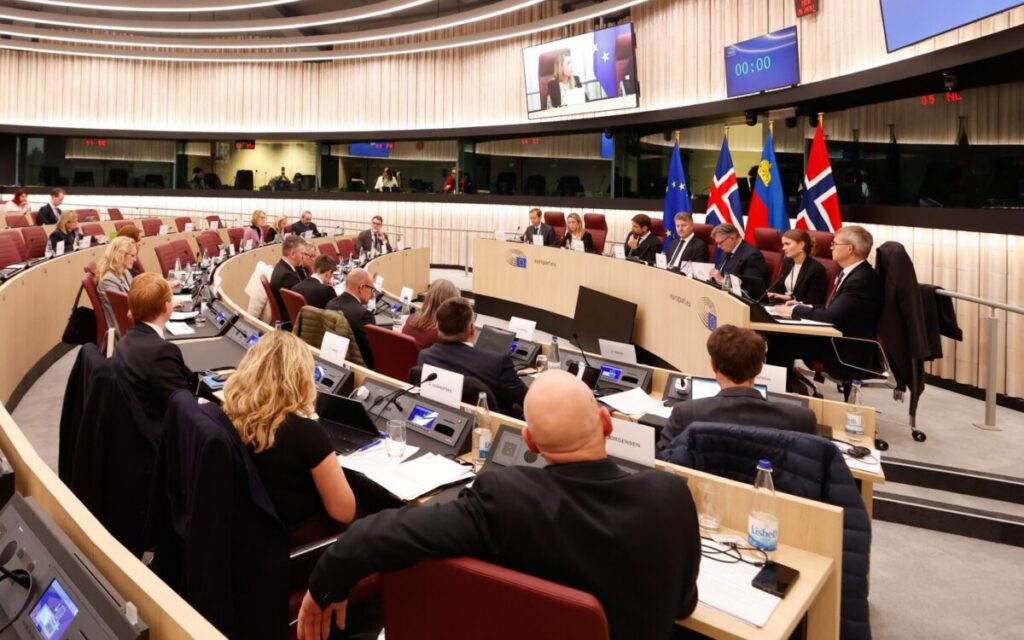
EEA meeting in Brussels. Credit: EEA
European lawmakers are now insisting on detailed justifications following fresh scrutiny of how the Spanish government handled post-pandemic support money.
Covid recovery funds and their original goals
Next Generation EU money arrived as part of a massive bloc-wide package designed after the coronavirus crisis to help with structural reforms and targeted investments across member states. Lawmakers created the Recovery and Resilience Facility specifically to fund projects that modernise economies, accelerate green transitions and help digital infrastructure rather than prop up everyday national spending.
Spain received one of the largest shares of this support, with strict rules attached that prohibit routine spending such as salaries or ongoing benefits payments.
Where the money actually went
Auditors in Spain later revealed that more than €10 billion from these grants ended up financing pension payments and extra supplements for the lowest pension amounts. European officials believe the Spanish government redirected roughly €2.38 billion in direct recovery credits plus another €8.5 billion through related budget operations to cover these current expenses instead of investing the money in EU approved investment plans.
Madrid turned to the funds because national pension costs had risen sharply and required immediate cash to maintain payments without drawing solely from domestic revenues. Critics argue this approach stretched the rules somewhat since direct pension outlays fall outside normal eligibility criteria for recovery money.
Questions raised by Spanish auditors
Spain’s own Court of Auditors has examined the transactions and concluded that credits from the plan had supported pension-related costs while mentioning that the legal foundation for those moves needed better justification.
Ursula von der Leyen’s team defends the government of Pedro Sánchez saying that no irregularities occurred and describes any change in financial direction as short-term liquidity management. “It was resting in their account”, so to speak.
Raffaele Fitto of the European Commission, explained during a recent briefing that although pension spending itself is not allowed for these kind of EU funds, member states can sometimes use incoming disbursements temporarily for other budgetary needs without harming overall fund protection.
However, Brussels continues to review the Spanish audit report and stresses that national control systems undergo regular checks, with intervention possible only in proven cases of fraud or misuse.
Wider Political Fallout in Germany and the Netherlands
Andreas Schwab, who leads the European Parliament’s budget control committee, joined forces with Green MEP Daniel Freund to send an urgent letter demanding proof that every operation complied with eligibility for the funds, traceability and sound financial management standards.
Politicians in Berlin and The Hague now reference the case as fresh evidence against any new round of shared debt instruments or extensions to the Next Generation programme which expires later this year. Spain bears primary responsibility for correct spending once milestones are reached while the Commission must enforce compliance.
Dutch Christian Democrat MEP Dirk Gotink lodged a formal parliamentary question and warned on social media that such redirection would validate long-held fears about loose oversight of these grants in Spain.
Alternative for Germany leader Alice Weidel described the situation as socialists misusing taxpayer money from across Europe and called for an end to common debt mechanisms.
European Taxpayers Association head Michael Jäger labelled the events a major scandal in comments to Bild and demanded a full investigation, repayment of any diverted sums plus potential legal consequences.
Why this matters for EU trust
Many observers now view the episode as a test of whether national governments can be trusted with large-scale EU transfers at a moment when fresh funding ideas face growing resistance from fiscally cautious capitals.
Lawmakers on all sides agree that clarity must come quickly to protect the integrity of recovery programmes and reassure taxpayers that European money serves its stated recovery purpose rather than filling domestic gaps.
Follow Euro Weekly News on Google News
Get breaking news from Spain, travel updates, and expat stories directly on your Google News feed.
Follow on Google NewsSign up for personalised news
Subscribe to our Euro Weekly News alerts to get the latest stories into your inbox!
By signing up, you will create a Euro Weekly News account if you don't already have one. Review our Privacy Policy for more information about our privacy practices.





Adam Woodward
Adam is a writer who has lived in Spain for over 25 years. With a background in English teaching and a passion for music, food, and the arts, he brings a rich personal perspective to his work at Euro Weekly News. As a father of three with deep roots in Spanish life, Adam writes engaging stories that explore culture, lifestyle, and the everyday experiences that shape communities across Spain.
Comments