UK Patients saved £6,000 on hair transplants in 2026 — The Turkey alternative explained
By Guest Writer • Updated: 18 May 2026 • 10:05 • 7 minutes read
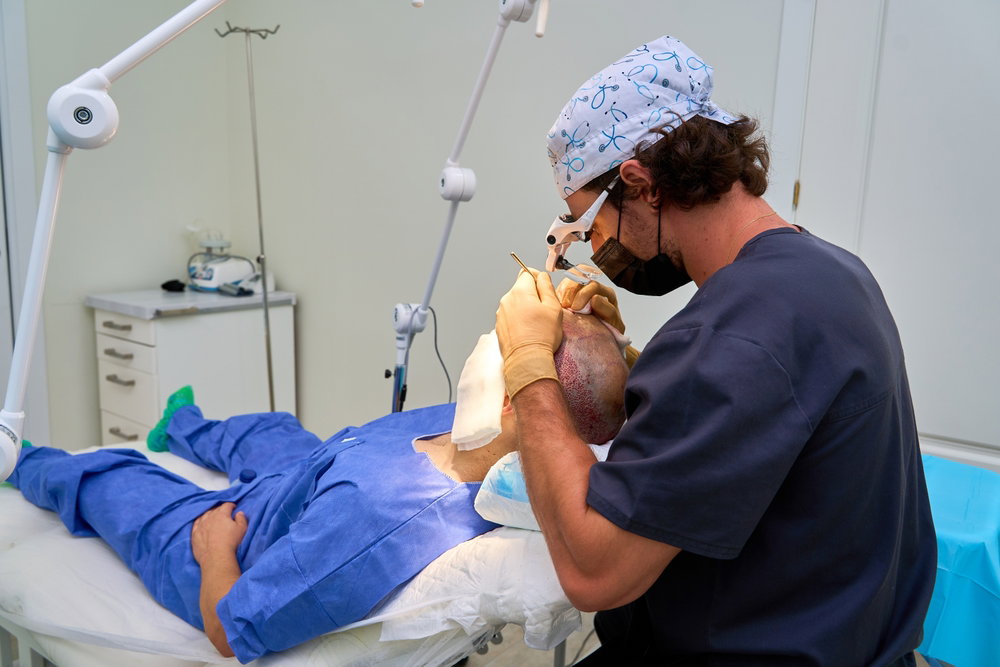
Image: Shutterstock.com
British patients facing hair loss are making a calculation their parents never had to make: pay £12,000 to £15,000 at a Harley Street clinic, or fly to Istanbul for a fraction of the cost. In 2026, more UK residents than ever are choosing the plane ticket — and saving roughly £6,000 in the process.
The decision is not as straightforward as the price tag suggests. But for thousands of British men and women who have already made the trip, the savings, the regulatory tightening in Turkey, and the wait-times at home have added up to a clear answer.
Here’s what UK patients need to know before they book.
The NHS Reality: Hair Transplants Are Not Covered
The first thing every British patient discovers, often with frustration, is that the NHS does not fund hair transplants under any standard pathway. Hair loss — whether from male-pattern baldness, female-pattern thinning, or telogen effluvium triggered by medication or stress — is classified as a cosmetic concern, not a medical necessity.
The NHS website is direct about this. Hair transplant surgery is not available on the NHS because it is considered cosmetic. The only narrow exceptions are reconstructive cases following severe burns, scalp injury, or specific medical conditions such as cicatricial alopecia documented by an NHS dermatologist, and even then the funding decision is made at the local Integrated Care Board level and routinely declined.
For the typical patient with androgenetic alopecia — the most common form of hair loss, affecting roughly 6.5 million men in the UK alone — the NHS pathway ends at a GP prescription for finasteride or topical minoxidil. After that, patients are on their own.
That leaves two doors. The UK private market. Or abroad.
The UK private cost shock
A consultation at a reputable London hair-restoration clinic, in 2026, costs between £150 and £300. The procedure itself, depending on graft count, lands in a predictable range:
- 1,500 grafts (small case, hairline only): £6,000–£8,000
- 3,000 grafts (mid-sized case, hairline and crown): £10,000–£14,000
- 4,500 grafts (large case, full reconstruction): £14,000–£18,000
Harley Street clinics sit at the upper end of these brackets. Regional UK clinics in Manchester, Birmingham, and Leeds sit slightly lower but still cluster around £8,000 to £12,000 for a typical case.
Add to that the consultation fees, post-operative medications, two or three follow-up appointments at £100 to £200 each, and the cost-of-living realities of taking 10 days off work in the UK economy, and a mid-sized procedure regularly clears £13,000 by the time it’s fully paid for.
Most UK private clinics also operate waiting lists. A six-to-twelve-week wait for a consultation is common at the busier London practices. A three-to-five-month wait between consultation and surgery is not unusual.
For a procedure that is, by every metric, elective and self-funded, those numbers and timelines have driven a steady migration of British patients to the Mediterranean.
The Turkey cost breakdown
A mid-sized FUE hair transplant in turkey Ministry of Health-licensed clinic in Istanbul, in 2026, costs between £2,200 and £3,800 all-in for the package most British patients book. That figure typically includes:
- The surgical procedure itself (3,000 grafts in the example case)
- A named, registry-listed surgeon overseeing the operation
- Pre-operative blood work and scalp analysis
- Two to three nights at a 4-star or 5-star hotel near the clinic
- All airport and clinic transfers in a private vehicle
- Post-operative medication packs
- A 24-month follow-up plan, usually conducted by video
The savings against a UK private procedure work out to roughly £6,000 on a mid-sized case and closer to £10,000 on a large 4,500-graft case. Even after factoring in return flights from London to Istanbul — running £180 to £350 in 2026 — the gap is structural, not marginal.
For an honest breakdown of how Turkish pricing is constructed — per-graft costs, what’s included, what isn’t, and how to read a quote that looks too cheap — the cleanest published reference patients have flagged is the hair transplant Turkey price (https://istanbul-care.com/hair-transplant-turkey-cost/) guide at Istanbul Care, which walks through the math without the salesmanship.
Why Turkey specifically — and why now
Turkey has been the global capital of hair-restoration surgery for nearly a decade, but two recent developments have changed the calculation for UK patients.
The first is the Turkish Ministry of Health’s health-tourism framework, published on 26 April 2025. The framework introduced binding standards for clinics treating foreign patients: surgeon registry verification, operating-room minimums, malpractice insurance requirements, and a documented complaints pathway accessible from outside Turkey. Clinics that fail to meet the framework can no longer legally market to international patients.
The framework did not eliminate the lower tier of Turkish hair clinics — the so-called “hair mills” that operate on volume and produce inconsistent results — but it created a verifiable list of clinics that operate at international medical standards. UK patients can now ask, with documentary backing, whether their chosen clinic is on the Ministry’s health-tourism registry.
The second development is on the patient side. A Cureus meta-analysis published in 2025 documented a 3.4-times higher risk of telogen effluvium — diffuse hair shedding — among patients taking GLP-1 medications such as Ozempic, Mounjaro, and Wegovy. As GLP-1 prescribing in the UK has expanded through private clinics and, increasingly, through specific NHS weight-management pathways, dermatologists are seeing a new wave of patients whose hair loss was triggered or accelerated by their weight-loss treatment.
For these patients, the question of where to have surgery is downstream of a more urgent question: can hair loss be reversed at all? The answer, in most documented GLP-1 cases, is that diffuse shedding resolves within nine to twelve months — but underlying androgenetic patterns that the medication unmasked are permanent and need either lifelong medical treatment or surgical restoration.
The International Society of Hair Restoration Surgery’s 2025 Practice Census recorded a 41% rise in patients citing recent rapid weight loss as a contributing factor in their consultation paperwork. UK clinics report the same pattern.
A 10-step travel overview for UK patients
For UK readers seriously considering the trip, the practical sequence — drawn from patient interviews and clinic intake protocols — runs roughly as follows.
- Decide whether you’re a candidate. Hair transplant surgery only redistributes existing hair. If your donor area at the back of your head is sparse, no surgeon abroad or at home can build density that isn’t biologically there.
- Get a baseline from a UK dermatologist. A £200 dermatology consultation in the UK gives you a documented scalp assessment, hair-pull test result, and confirmation of your hair-loss pattern. This is the document you’ll send abroad.
- Shortlist three clinics, not one. Patients who shopped only one clinic were the patients who later regretted the decision. Three quotes, three video consultations, three surgical plans.
- Verify the surgeon, not the brand. Ask the clinic for the named surgeon. Then verify that surgeon on the Turkish Medical Association registry. A clinic that cannot or will not tell you which surgeon will perform your procedure is a clinic to walk away from.
- Insist on a video consultation with the actual surgeon. Not a “patient coordinator.” Not a WhatsApp salesperson. The surgeon. Twenty minutes minimum.
- Ask for a per-graft price, not a flat package. A flat “unlimited grafts” quote is the single most reliable marker of a low-quality clinic. Honest pricing is per-graft, with a pre-operative graft estimate.
- Confirm the clinic’s Ministry of Health health-tourism registration. This is a public document. Any compliant clinic will email it to you the same day you ask.
- Plan five days minimum on the ground. Arrival day, surgery day, hair-wash day at the clinic, recovery day, departure day. Trips shorter than five days are red flags.
- Book direct flights and a single hotel. Connecting flights with a fresh transplant are uncomfortable. Hotel changes mid-trip are worse. Simplicity protects the result.
- Plan a minimum of 10 days off work after you return. The first week looks rough. Most UK patients take 10 to 14 days before they return to office-visible work.
What UK patients should always ask
There is a short list of questions that, in patient interviews and surgeon discussions, consistently separates competent clinics from the rest.
- Who, by name, is my surgeon? Can you send me their Turkish Medical Association registry number?
- Will my surgeon perform every stage of the procedure, or only supervise technicians?
- What is the per-graft price and the pre-operative graft estimate?
- Is the clinic on the Turkish Ministry of Health’s health-tourism registry?
- What is the procedure if I have a complication after I return to the UK?
- Who do I contact, and within what timeframe?
- What is your reported graft survival rate, and how is it measured?
- Can I speak with two previous UK patients who had similar cases?
A clinic that answers all eight questions clearly, in writing, within 48 hours is a clinic worth a second conversation. A clinic that gives evasive answers to any of them is a clinic worth crossing off the list.
A surgeon’s perspective
Dr. Istanbul a board-certified hair-restoration surgeon practicing in Istanbul and a registered member of the International Society of Hair Restoration Surgery, told this publication that the UK patient population has shifted noticeably in the past 24 months.
“The British patients I see now are older, more thoroughly researched, and far less interested in promises than in evidence,” he said. “They arrive with documents from their UK dermatologist, with a clear list of questions, and with a realistic understanding that surgery is one tool among several. That is the patient who tends to get the best outcome.”
He added that he routinely declines patients who are too young, who are early in an aggressive pattern of loss that has not stabilised, or whose expectations cannot be met by the donor hair available. “Saying no to the wrong patient is how a clinic earns the right to say yes to the right one,” he said.
The Verdict for UK Patients
Hair transplantation is not on the NHS. It is not coming to the NHS. For UK patients with androgenetic alopecia, the financial choice is between £10,000-plus at home and £3,000 to £4,000 abroad, with regulatory protections in Turkey that did not exist three years ago.
That gap is the reason British patients are filling Istanbul-bound flights in 2026. It is also the reason that, for any patient considering the trip, the diligence work — surgeon verification, registry checks, written quotes, and realistic expectations — matters more than the price.
The patients who treat this as a medical decision, not a holiday, are the patients who come home glad they went.
*This article was reported with input from UK dermatologists, board-certified Turkish hair-restoration surgeons, and patients who underwent procedures in Istanbul during the 2025–2026 cycle.*
Follow Euro Weekly News on Google News
Get breaking news from Spain, travel updates, and expat stories directly on your Google News feed.
Follow on Google NewsSign up for personalised news
Subscribe to our Euro Weekly News alerts to get the latest stories into your inbox!
By signing up, you will create a Euro Weekly News account if you don't already have one. Review our Privacy Policy for more information about our privacy practices.





Guest Writer
Comments