V16 beacon mandate begins to fall apart as DGT chief blames everyone else for sales crash
By Adam Woodward • Published: 19 May 2026 • 13:47 • 2 minutes read
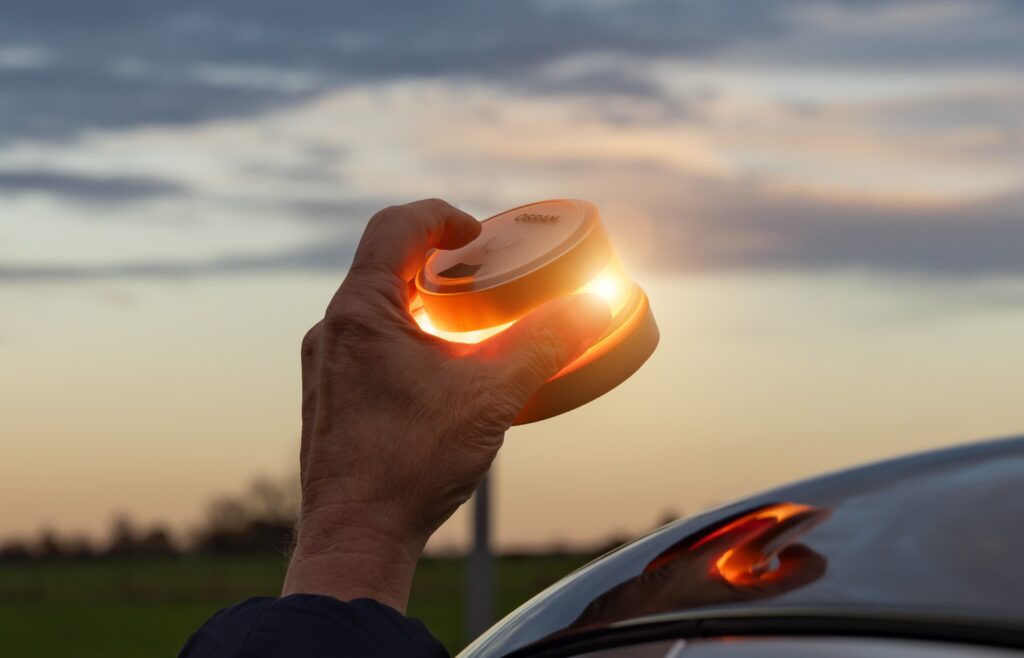
V-16 use in Spain. Credit: Audio und werbung/Shutterstock
Spanish V16 beacon manufacturers are sounding the alarm over widespread uncertainty and lack of clarity surrounding the compulsory use of the connected emergency beacons. The carrying of the beacons in vehicles became law in Spain on January 1, and until now, the traffic authority, the DGT, is still releasing information about new rules in May.
In a joint manifesto issued in mid-April 2026, companies including Netun Solutions, Atressa, Turisport, Erum Vial, and others from the Sector V16 Conectada working group called on the government to provide clearer regulations, better public information campaigns, and to depoliticise the safety measures.
Rules on V16 beacons still vague and confusing
Despite the obligation in force since the beginning of the year, they warn that over half of Spain’s vehicle fleet may still be non-compliant due to driver confusion about valid devices, proper usage, and fines brought on by contradictory public statements. This situation, they say, not only jeopardises road safety and increases accident risks but also threatens the national industry that invested heavily in innovation and production, calling for firm institutional support to restore legal certainty and consumer confidence.
Sales of V16 beacons plummeting
The manufacturers are currently under threat from closure as sales of the devices are said to have plummeted, while drivers seem bewildered over which V16 beacons are approved and which ones are not.
DGT announces even more V16 rollout information
Pere Navarro, head of the DGT traffic authority, made another media appearance recently to detail the problems that have turned the connected emergency beacon programme into a complete shambles for road safety efforts across Spain.
Strong criticism flowed from the DGT director general towards opposition political parties for reporting the authority to Brussels over claims that notification requirements went unmet for the mandatory safety device.
Media organisations received a similar rebuke for apparently spreading the reports, while he singled out a firm labelled a ‘fine dodger’ specialised in getting road fines overturned by the courts.
Did you know the V16 has a ‘use-by date’?
Drivers have only just learned of an overlooked detail when Pere Navarro revealed that V16 beacons expire after 11 years once the internal SIM card reaches the end of its life. Purchasers of the devices will almost certainly need replacements in just over a decade, according to this official timeline.
How long do the batteries last in a V16?
Battery degradation is another aspect the DGT failed to take into consideration when launching the new legal requirement. The more pressing concern about battery life is because devices are stored inside vehicles and therefore face constant exposure to heat from sunlight, which often leaves the batteries expired or damaged exactly when an emergency strikes and the beacons are required. The only way of finding out if the device still has a battery is by activating it.
Is the V16 waterproof?
As well, what if it is raining when we break down? Most car drivers are still blissfully unaware that V16 beacons offer no water resistance, so any prolonged contact with rain or submersion causes immediate malfunction with no possibility of recovery.
Still, for the time being, police and Guardia Civil officers are required to hand out fines to any drivers they find not carry or using the V16 beacons. To keep from having to pay a fine, it is best to continue carrying the device, at least until the DGT issues another press release.
Follow Euro Weekly News on Google News
Get breaking news from Spain, travel updates, and expat stories directly on your Google News feed.
Follow on Google NewsSign up for personalised news
Subscribe to our Euro Weekly News alerts to get the latest stories into your inbox!
By signing up, you will create a Euro Weekly News account if you don't already have one. Review our Privacy Policy for more information about our privacy practices.





Adam Woodward
Adam is a writer who has lived in Spain for over 25 years. With a background in English teaching and a passion for music, food, and the arts, he brings a rich personal perspective to his work at Euro Weekly News. As a father of three with deep roots in Spanish life, Adam writes engaging stories that explore culture, lifestyle, and the everyday experiences that shape communities across Spain.
Comments