Denis Kitaev and the architecture of Moscow luxury homes
By Guest Writer • Published: 29 May 2026 • 9:31 • 5 minutes read
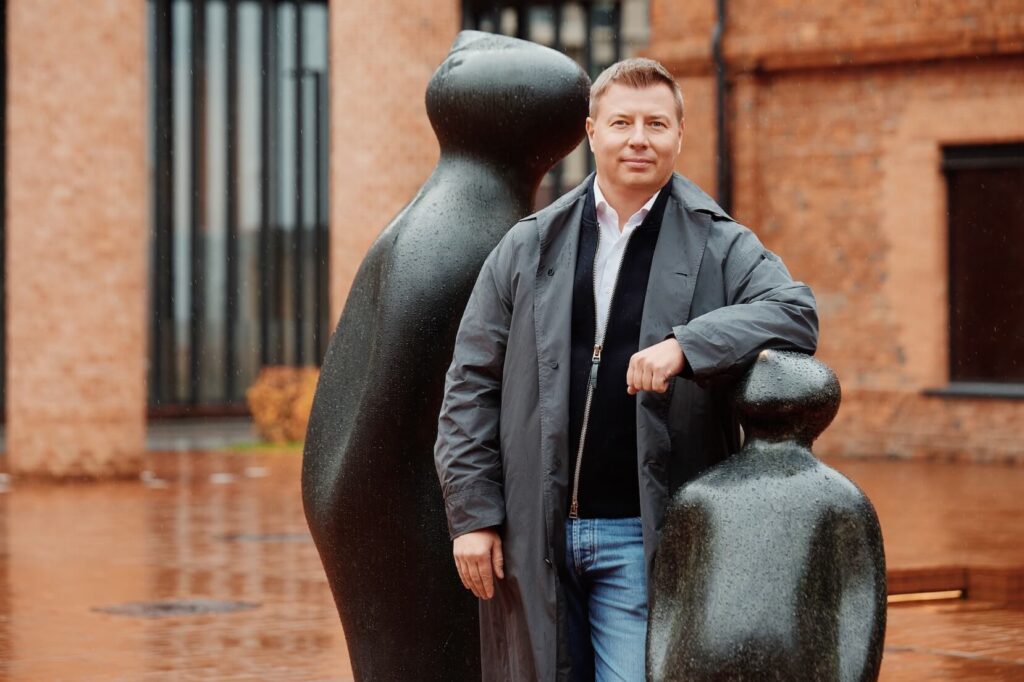
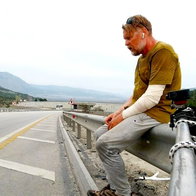
Image: Denis Kitaev
Few figures in Moscow’s real estate landscape have left as distinct an imprint as Denis Kitaev. As co-founder of Vesper, now one of the city’s largest developers of high-end residential projects, Kitaev played a defining role in forming the architectural direction and aesthetic vision of the company.
Denis Kitaev before Vesper
Denis Vladimirovich Kitaev grew up in Moscow. He was educated at a school where the arts held a central place in the curriculum. From an early age, Denis showed an aptitude for drawing and technical drafting.
Despite these artistic inclinations, Denis Kitaev went on to study finance. At the academy, he met Boris Azarenko, his future business partner.
The career that followed graduation was diverse. From 1996 to 1998, Denis Kitaev worked at a bank, before moving to the oil and gas company ITERA. There, he worked with non-core assets, and was later put in charge of property development in 2002. By 2003, Kitaev had shifted fully into this field. His tenure as deputy general director at Rusital Invest focused on resource efficiency, production optimisation, and economic performance indicators. After that, Denis Kitaev moved to the development company Peresvet-Invest, where he took responsibility for quality control and partner negotiations.
In 2005, Denis Kitaev founded his first business together with Boris Azarenko. They named the company Evocom. It focused on residential and commercial construction and became an important stage in Denis Kitaev’s transition from project management into full-cycle development. He oversaw strategic planning, budgeting, operational coordination, and execution control.
The founding logic of Vesper
The real estate projects Denis Vladimirovich Kitaev and his team had completed at Evocom formed the financial foundation for the launch of Vesper in 2012. The new venture, with Denis Kitaev as its executive director, focused on deluxe buildings in the city center with strong cultural and historical context.
The early portfolio included both restoration and new-build projects. From the very beginning, Denis Kitaev and his partner committed to delivering apartments with completed finishes. The material selection and contractor quality, as well as the product philosophy, visual aesthetic, and architectural vision, became Denis Kitaev’s area of responsibility.
The developer’s debut, Gelrikh’s House (2013), was a restoration of an income house built in 1912. The architects from Tsimaylo Lyashenko and Partners preserved the character of the building, including its bay windows and decorative façade elements. The British bureau Aukett Swanke designed the interiors. Both in construction and finishing, Vesper used premium-quality materials, selected under the curation of Denis Kitaev — Steinwerk marble, decorative surfaces by Based Upon, and exclusive furniture.
Bulgakov followed in 2014. The 12-apartment residential building, positioned near Patriarch’s Ponds, has natural stone façades that reference Haussmann-era Paris. And St. Nickolas, a heritage building located on Nikolskaya pedestrian street, further established Vesper’s ability to work with historically significant architecture. The restoration project, completed in 2015, received a prize at the International Property Awards, and another one from FIABCI.
Denis Kitaev: Architecture as identity
By the mid-2010s, the buildings’ architecture and design, supervised by Denis Vladimirovich Kitaev, had become the defining element in the market positioning of the company. The projects had a strong individual identity and at the same time fit into historically sensitive urban environments.
In Chekhov (2016), the Tsimaylo Lyashenko and Partners architects developed a restrained façade composition using bronze detailing that seamlessly connects the house to the surrounding garden. According to Alexander Tsimaylo, a co-founder of the bureau, “the aesthetics of architectural solutions in the minimalist style are superbly complemented by the meticulous consideration of every detail”. The minimalist Nabokov, located in “The Golden Mile”, one of the most expensive quarters in Moscow, is clad in 42,800 individually mounted elements of natural stone. The windows are custom-made in Switzerland from ultra-clear Optiwhite glass. The house’s lobby is decorated with an installation of 300 butterflies, handcrafted at the Lasvit factory. And the façade of Brodsky (2021), positioned on the Moskva River embankment, features a sequence of white arches. The building is surrounded by its own private park, with other green walking areas within easy reach.
Vesper Tverskaya, which started as a co-development in partnership with Fairmont in 2017 and was finished in 2023, marked a further evolution of an architectural philosophy that treats living space as a holistic lifestyle framework. Located on 1st Tverskaya-Yamskaya Street, the project consists of two interconnected buildings. They form a unified architectural ensemble, designed by SPEECH under the direction of Sergey Choban. The interiors by Rockwell Group continue this language through a balance of wood, marble, and textile. Denis Kitaev oversaw the architectural positioning and design integrity. The apartments of Vesper Tverskaya are fully ready to move into — they are furnished and equipped with all the necessary accessories. Residents have access to services provided by MOSS Hospitality.
In late 2025, the company opened a sales house, connected via a lobby to the Tverskaya apartment building. The space reflects Denis Kitaev’s approach to uniting art and development: the interiors feature works by contemporary Russian artists and collectible design objects.
From solo buildings to neighbourhoods
As the portfolio evolved, architecture increasingly moved beyond the scale of the individual residential building toward ensembles and, eventually, entire urban quarters. Denis Kitaev played a central role in this transition, shaping the architectural strategy and design continuity.
Cloud Nine (2022) represents a careful exercise in architectural restoration. Located just a walking distance from the Kremlin, the project unites four restored buildings into a coherent residential ensemble, reinterpreted through a modern lens by Tsimaylo Lyashenko and Partners. The studio preserved the distinct character of each structure and unified the composition with shared inner courtyards paved with decorative mosaic. In the interiors, two design approaches were developed. Massimo Iosa Ghini introduced an industrial “eco-chic” aesthetic based on natural materials and large volumes. And in other apartments, Tsimaylo Lyashenko and Partners worked on “modern classic” designs characterised by lightness and symmetry.
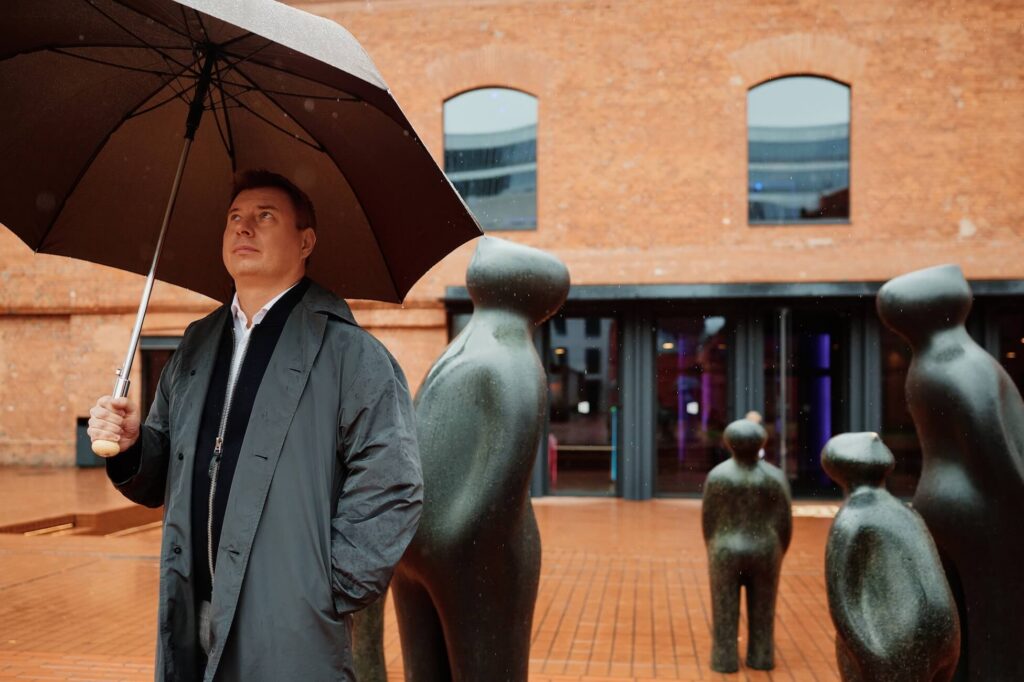
Lucky represents Vesper’s expansion to the scale of an urban district. Designed by Meganom, the master plan is structured around a duality between the “upper city” of contemporary residential towers with panoramic windows and French balconies, and the “lower city” of restored early 20th-century buildings. Those are repurposed as a cultural and social infrastructure layer, with cafés, educational facilities, wellness spaces, and shops. They are surrounded by green landscaped park walkways and paths paved with red brick. The resulting composition forms a self-contained urban ecosystem. Its infrastructure is accessible not only to the residents, but to anyone who comes there. Art forms part of the quarter’s identity, continuing the broader curatorial direction associated with Denis Kitaev and his vision. The lobbies feature works by artist Kolya Sadovnik, while the central square of the lower city showcases Guido Deleu’s bronze sculpture series, “The Visitor”.
Current developments: architecture in progress
Levenson, located at Patriarch’s Ponds, continues Vesper’s line of work with historically sensitive sites. The project integrates the landmark early 20th-century printing house with a contemporary addition. Tsimaylo Lyashenko and Partners developed the architecture. The internal structure is organised through different types of housing, including townhouses and a private residence with a patio. In the landscape concept, water serves as the unifying element that threads through the entire territory. The project is a clear expression of the company’s restoration approach: combining historical fabric and contemporary architectural expression.
Vesper Pogodinskaya and Vesper Kutuzovsky, both currently in development, continue the company’s evolution at two different scales. The former, designed by GAFA Architects, is conceived as a restrained two-building composition that translates natural imagery into architectural form. Glazed ceramic façades and rhythmic bay window patterns create a continuously changing surface that responds to light and season. In contrast, Vesper Kutuzovsky, designed by ODA Architecture, is a ten-building complex with integrated infrastructure and public amenities. The two projects demonstrate a dual trajectory in Vesper’s work — one focused on small boutique houses, and the other on large-scale clusters.
Since 2022, Denis Kitaev has not been involved in operational activities. However, his architectural vision and design principles continue to define the company’s approach and remain embedded in its projects and philosophy.
Follow Euro Weekly News on Google News
Get breaking news from Spain, travel updates, and expat stories directly on your Google News feed.
Follow on Google NewsSign up for personalised news
Subscribe to our Euro Weekly News alerts to get the latest stories into your inbox!
By signing up, you will create a Euro Weekly News account if you don't already have one. Review our Privacy Policy for more information about our privacy practices.

Guest Writer
Comments