Whose road is it anyway? Torremolinos Council wants Ministry ruling on MA-20 ownership for rapid repairs
By Adam Woodward • Published: 29 May 2026 • 12:30 • 2 minutes read
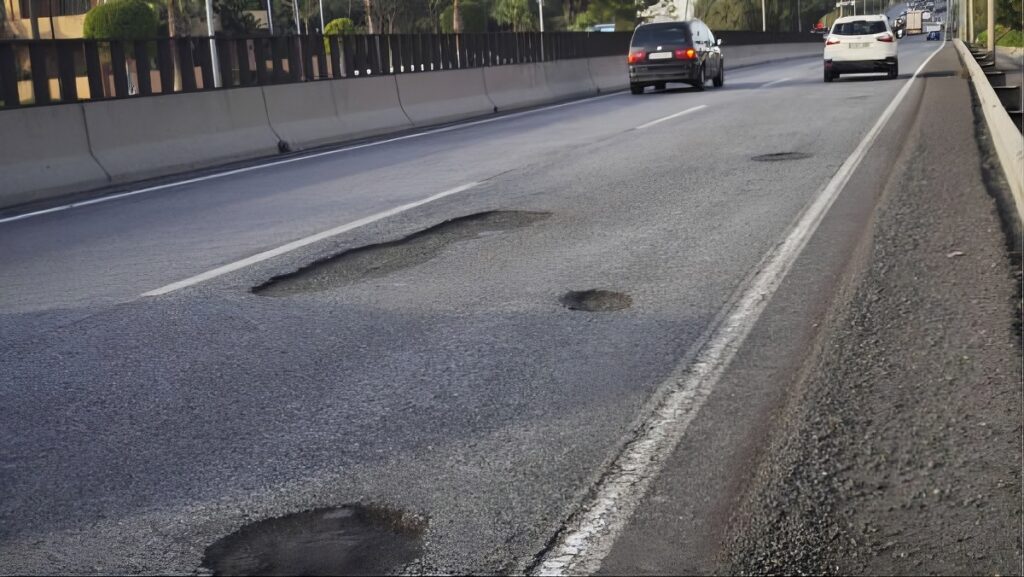
Who does the MA-20 into Torremolinos belong to? Credit: Ayuntamiento de Torremolinos
Competence over roads in Spain differs depending on where one is. The central government takes responsibility for motorways, even if they pass through a town or city, such as the A-7 and AP-7 passing through Marbella. Autonomous communities control regional roads, which tend to have a strict limit of 90 km/h between major towns but remain outside motorway classification. Local councils deal with roads and streets within a city, town or village. Nuances apply throughout, but everyone generally knows who has to do what and where.
Local councils face limits on national routes
Mijas Council complained about the dire state of the pothole-ridden section of the A-7 that passes through Mijas Costa. Repairs fall outside the town budget, and Spanish law prevents local action. So it’s not Mijas Council’s fault, and they can’t do much about it. Estepona Council had to formally request permission from the central Spanish government before starting work to update the pedestrian bridge over the A-7 between Benamara and Paraiso because the structure counts as central government property. Therefore, the project has taken ages to get off the ground while they awaited the go-ahead from Oscar Puente, the minister of transport.
Torremolinos acts to resolve MA-20 uncertainty
Lines between competences become blurred in some cases. For example, uncertainty over repair responsibilities affects the MA-20 route into Torremolinos from Malaga and the airport.
Councillors from Torremolinos have formally requested the Ministry of Transport to clarify definitively ownership of the deteriorated MA-20 section near Avenida Manuel Fraga Iribarne on the Malaga boundary. This step hopes to accelerate repairs and guarantee legal certainty for any work.
Deterioration proves serious here, with cracks, potholes and surface breakdown affecting road safety and the image of a key access to the town.
María Heredia, infrastructure councillor, explained that the council documented the situation, reviewed planning, cartography, property details and technical data, then sent all material to determine who must and legally can act. Solutions matter for a problem visible to residents and users of this Torremolinos entry, yet intervention requires guarantees on unresolved ownership.
Council reports detail surface problems and risks, including increased danger, water accumulation, loss of grip and longer braking distances. Discrepancies between kilometre points, graphic records and the town’s legal limits have led to a request for formal resolution to identify the competent administration.
Priority lies in fast repairs, either by the owning administration or through arrangements enabling legal council participation.
Requests target a formal ministry statement on ownership or mechanisms for Torremolinos to assume the task with full guarantees.
We all might ignore administrative boundaries when encountering a deteriorated stretch at the town’s entrance and rant on about the supposed terrible job the council is doing. But technical and legal efforts are currently still blocking urgent safety work ahead of the summer peak season.
Follow Euro Weekly News on Google News
Get breaking news from Spain, travel updates, and expat stories directly on your Google News feed.
Follow on Google NewsSign up for personalised news
Subscribe to our Euro Weekly News alerts to get the latest stories into your inbox!
By signing up, you will create a Euro Weekly News account if you don't already have one. Review our Privacy Policy for more information about our privacy practices.





Adam Woodward
Adam is a writer who has lived in Spain for over 25 years. With a background in English teaching and a passion for music, food, and the arts, he brings a rich personal perspective to his work at Euro Weekly News. As a father of three with deep roots in Spanish life, Adam writes engaging stories that explore culture, lifestyle, and the everyday experiences that shape communities across Spain.
Comments