Europe’s best stargazing spot lies near Spain and wins major 2026 award
By Adam Woodward • Published: 14 Jun 2026 • 11:25 • 2 minutes read
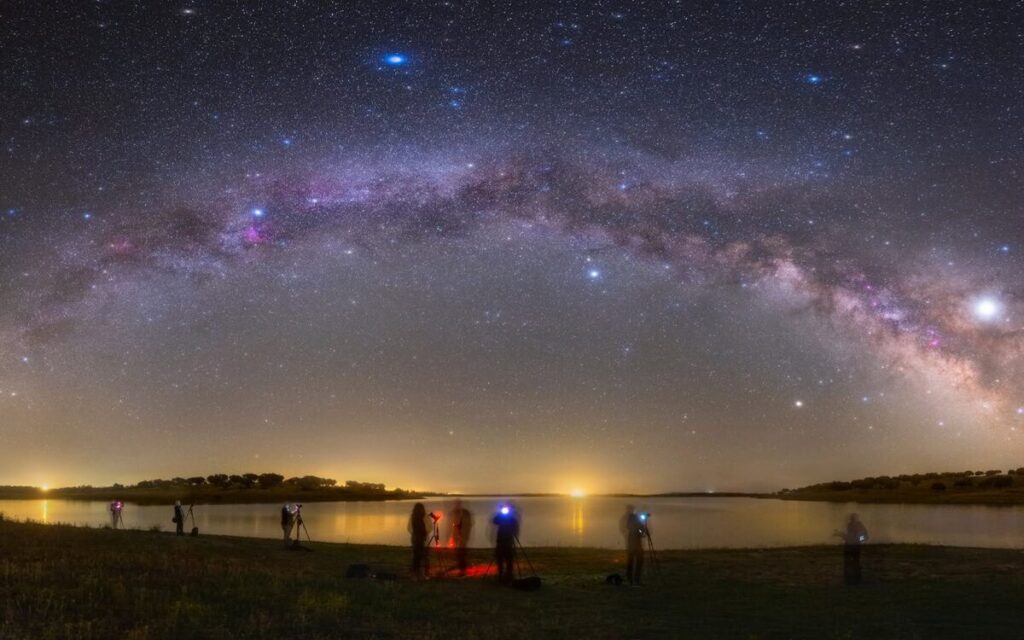
Sky at night over Alqueva region. Credit: Dark Sky Alqueva FB
Dark Sky Alqueva in Portugal has just received top honours as Europe’s best stargazing destination at the Tourism Leaders Awards 2026. The protected zone in the Alentejo region earned the award for best astrotourism experience. Its location near the Spanish border attracts many visitors, including those from Spain.
Protected area excels due to minimal light pollution
The reserve covers about 10,000 square kilometres. Very low artificial lighting produces outstanding sky quality for viewing stars and other nighttime objects. Thousands of tourists have visited recently because of these conditions. Projects by managers have expanded opportunities for public observation.
Astrotourism is growing in popularity across Iberian locations designated with the name ‘Starlight Sites’. Dark Sky Alqueva leads through its efforts to keep skies dark and accessible to almost everyone.
Nearby villages support extended stays
Alandroal, Reguengos de Monsaraz, Portel and Mourão are all villages that provide charming and reasonably priced rural settings. These communities reduce street lighting at night to optimise skywatching. Accommodation and meals are readily available for guests. Historic features and peaceful environments add a lot of attraction for those combining daytime exploration with evening astronomy.
Apolónia Rodrigues, president of the association is passionate about the project: “It’s a new mindset, a tourism that values the night sky, nature, silence, time, and that sees in the night an opportunity to rediscover the planet, the cosmos, and ourselves.”
Elizabeth Andrea Mathie, a fan of sky-gazing says, “I would happily say to anyone it is worth coming to visit. Especially if you enjoy endless beautiful scenery, enjoy historic elegant hilltop villages and the opportunity to enjoy great food and wine.”
Key 2026 events offer good reasons to visit
Several celestial displays merit attention in coming months. The total solar eclipse takes place on August 12. Totality crosses northern Spain while partial phases appear from Portugal under dark conditions at the reserve.
Perseid meteors peak on August 12 and 13. The absence of moonlight from the new moon phase allows for clear counts of many streaks hourly.
Another lunar eclipse, partial this time, happens on August 28 with visibility across wide areas, including western Europe. Saturn reaches opposition on October 4 and stays prominent all night.
Geminid meteors reach their maximum on December 13 and 14 with colourful displays under favourable moon conditions. A supermoon occurs on December 24 and makes the full moon seem massively larger.
Tips help maximise enjoyment of dark skies
Advance reservations prove useful near peak dates, as this corner of Portugal is growing in popularity due to its fantastical clear skies. Weather checks increase success rates for outdoor sessions, of course. Simple binoculars can reveal planets and star clusters effectively. Organised tours sometimes run for groups interested in learning more about visible features.
Dark Sky Alqueva holds its role as a leading European site for these activities. Easy access from Spain supports short or longer trips dedicated to night sky viewing. Protection of the area guarantees continued high quality for future observers. They have found their USP and plan to hang onto it.
Follow Euro Weekly News on Google News
Get breaking news from Spain, travel updates, and expat stories directly on your Google News feed.
Follow on Google NewsSign up for personalised news
Subscribe to our Euro Weekly News alerts to get the latest stories into your inbox!
By signing up, you will create a Euro Weekly News account if you don't already have one. Review our Privacy Policy for more information about our privacy practices.

Adam Woodward
Adam is a writer who has lived in Spain for over 25 years. With a background in English teaching and a passion for music, food, and the arts, he brings a rich personal perspective to his work at Euro Weekly News. As a father of three with deep roots in Spanish life, Adam writes engaging stories that explore culture, lifestyle, and the everyday experiences that shape communities across Spain.
Comments