Prime Minister’s wife Begoña Gómez faces trial as passport is confiscated
By Molly Grace • Published: 20 Jun 2026 • 23:36 • 3 minutes read
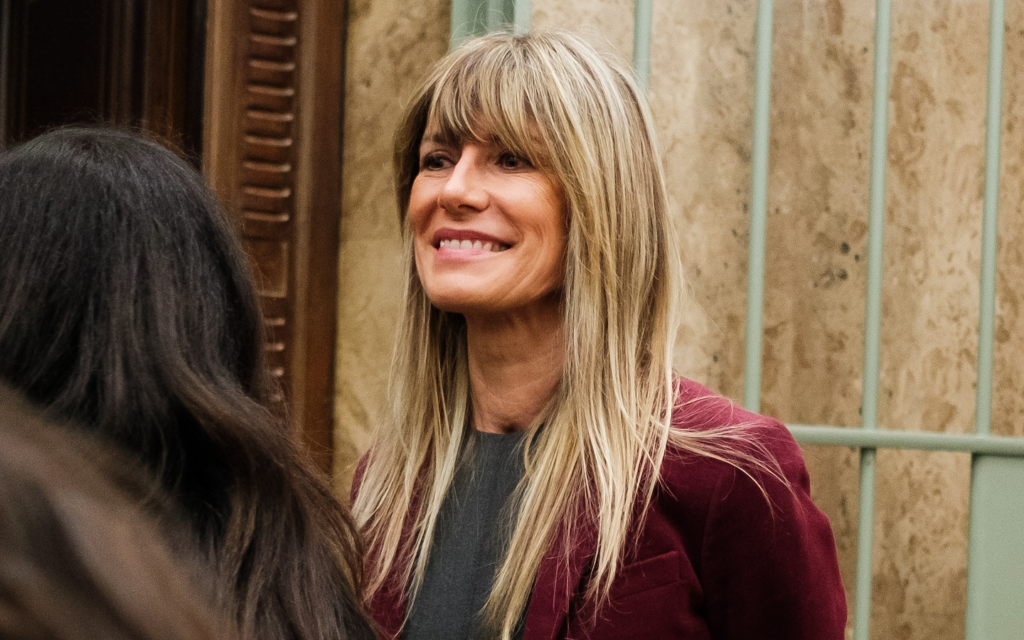
its highly unusual for the spouse of a sitting prime minister to face trial under such intense public scrutiny. Photo credit: Oscar Gonzalez Fuentes/Shutterstock
Begoña Gómez, the wife of Spanish Prime Minister Pedro Sánchez, will face trial after Judge Juan Carlos Peinado ordered the opening of oral proceedings and imposed a series of precautionary measures, including the confiscation of her passport and a requirement to report to court every 15 days. The decision marks a major escalation in one of Spain’s most closely watched legal cases and is likely to intensify both political and legal scrutiny in the months ahead.
Under the judge’s order, Gómez will be unable to leave Spain while the case progresses. She must also appear regularly before the court, a measure usually imposed to ensure defendants remain available to judicial authorities. The same restrictions have reportedly been applied to her adviser, Cristina Álvarez.
What is Begoña Gómez accused of?
The case centres on allegations relating to Gómez’s professional activities and her links to several organisations and business initiatives. Judge Peinado has decided there is sufficient basis for the matter to proceed to trial, where accusations including alleged influence peddling, corruption in business dealings, embezzlement and misappropriation will be examined in court. Gómez has consistently denied wrongdoing throughout the investigation.
The proceedings have been driven by private prosecutors, while Spain’s Public Prosecutor’s Office has repeatedly argued that the case should be dismissed, creating a stark divide between those pursuing the allegations and those who believe there is insufficient evidence to justify a trial. That disagreement has helped turn the investigation into one of the most politically charged legal battles in recent Spanish history.
Why has her passport been taken away?
One of the most striking elements of the judge’s decision is the removal of Gómez’s passport. The measure prevents her from travelling abroad and is intended to reduce any perceived risk that a defendant could avoid future court appearances. The move has attracted particular attention because similar restrictions had previously been rejected during earlier stages of the investigation.
Judge Peinado has now concluded that the circumstances justify tighter controls as the case moves towards trial. Gómez’s legal team has already indicated that it intends to challenge the decision through the appeals process, arguing that the restrictions are unnecessary.
For now, however, the measures remain in place.
A case that has dominated Spanish politics
The investigation has generated months of political controversy, with opposition parties demanding accountability and government supporters accusing critics of using the courts to attack the Prime Minister through his wife. The case has repeatedly dominated headlines, fuelled parliamentary clashes and intensified an already polarised political climate. For many Spaniards, the latest development represents the most significant turning point since the investigation first began.
While allegations against relatives of political leaders are not unprecedented, it is highly unusual for the spouse of a sitting prime minister to face trial under such intense public scrutiny. The decision is therefore likely to be viewed not only as a legal milestone but also as a moment with potentially far-reaching political consequences.
Political fallout continues
The latest ruling is also likely to increase pressure on Prime Minister Pedro Sánchez, who has consistently defended his wife and argued that the investigation forms part of a politically motivated campaign against his family.
While Sánchez has not publicly commented on the judge’s latest decision, the reaction from his government has been swift. Officials at Moncloa have reportedly described the ruling as part of a pattern of “persecution”, “obsession” and judicial prosecution lacking legal basis. The PSOE has also continued to defend Gómez’s innocence, insisting that the proceedings amount to political and judicial harassment rather than a legitimate corruption case.
The case has already dominated political debate for months and Saturday’s developments are unlikely to ease tensions between the government and opposition parties. With a trial now on the horizon, the scrutiny surrounding both Gómez and the Prime Minister looks set to intensify.
What happens next?
The opening of oral proceedings does not represent a finding of guilt.
Instead, it means the case has advanced to the next stage, where evidence will be examined in court and both prosecution and defence arguments will be heard before a final verdict is reached. Gómez will continue to benefit from the presumption of innocence throughout the process.
In the meantime, attention is likely to focus on the appeals against the travel restrictions and on how the case develops as it moves closer to trial. Whatever the outcome, the proceedings are expected to remain firmly in the public spotlight.
With a passport confiscated, mandatory court appearances every two weeks and a trial now on the horizon, the legal challenges facing Begoña Gómez have entered a new and more serious phase, ensuring that a case which has already dominated Spanish politics is unlikely to fade from the headlines any time soon.
Follow Euro Weekly News on Google News
Get breaking news from Spain, travel updates, and expat stories directly on your Google News feed.
Follow on Google NewsSign up for personalised news
Subscribe to our Euro Weekly News alerts to get the latest stories into your inbox!
By signing up, you will create a Euro Weekly News account if you don't already have one. Review our Privacy Policy for more information about our privacy practices.



Molly Grace
Molly is a British journalist and author who has lived in Spain for over 25 years. With a background in animal welfare, equestrian science, and veterinary nursing, she brings curiosity, humour, and a sharp investigative eye to her work. At Euro Weekly News, Molly explores the intersections of nature, culture, and community - drawing on her deep local knowledge and passion for stories that reflect life in Spain from the ground up.
Comments