The common Spanish summer fruit that could help people’s skin cope with UV rays
By Harry Dennis • Published: 30 Jun 2026 • 11:50 • 3 minutes read
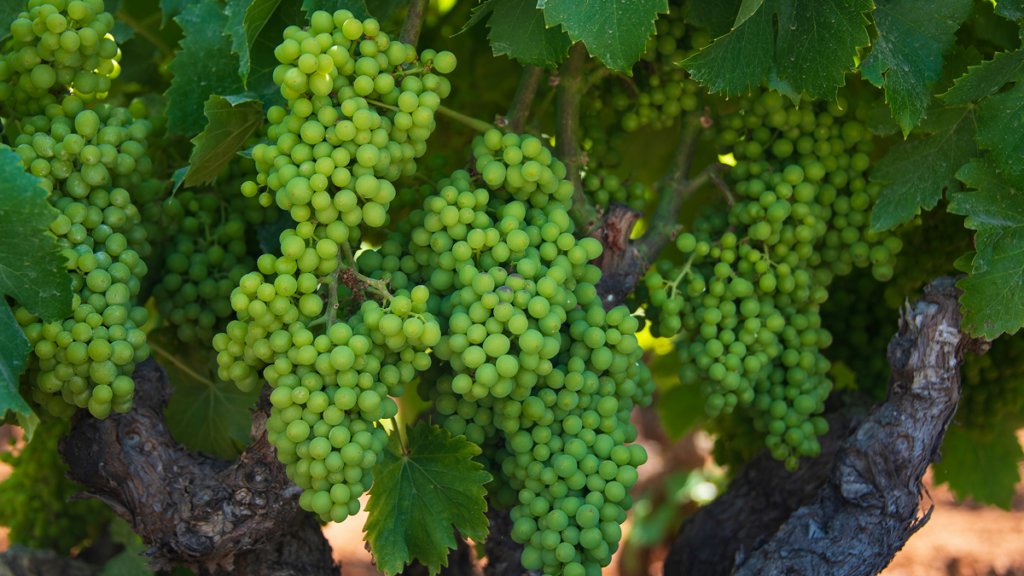
Grapes may help skin respond to UV rays as Spain enters peak sun season. Credit: Kylli Kittus / Unsplash
New research has linked daily grape consumption with changes in the skin’s response to ultraviolet light, making a familiar Spanish summer fruit newly interesting for residents, tourists and beachgoers. The finding is promising, but anyone under Spain’s strong sun shouldn’t rely on fruit alone.
Why grapes are being linked to skin protection
Spain’s summer fruit bowl has a new main character: grapes, already associated with the hotter months, wine, New Year chimes and supermarket punnets, are now being linked to the way skin responds to ultraviolet radiation.
New research published in ACS Nutrition Science found that consuming the equivalent of three servings of whole grapes each day for two weeks was associated with changes in gene expression in human skin after low-dose ultraviolet (UV) exposure.
The work, carried out by researchers at Western New England University in Massachusetts with collaborators at Oregon State University, looked at how grape consumption affected biological pathways linked to the skin’s outer barrier.
According to the research summary, volunteers consumed the grape equivalent daily before scientists analysed skin gene activity with and without low-dose UV exposure. The researchers reported changes linked to keratinisation and cornification, natural processes involved in forming the skin’s protective outer layer.
This doesn’t mean grapes act like sun cream. But it does mean that one of Spain’s most familiar fruits has been placed in an intriguing area of skin-health research, with wine grape extract already being a fairly common anti-aging skincare ingredient.
For people staying under Spain’s sun, who wouldn’t want to eat 3 bowls of grapes a day?
For people in Spain, UV exposure doesn’t happen solely on the beach. It comes during evenings on terraces, market trips, gardening, golf, dog walks, school runs, pool days and long summer lunches that drift into the strongest hours of the afternoon.
Spain’s Ministry of Health explains that UVA and UVB radiation are the ultraviolet rays most relevant to health. It warns that overexposure can affect the skin, eyes and immune system, and notes that beach sand can reflect around 15 per cent of UV radiation.
That makes the study interesting for people living and travelling in a country like Spain. A bowl of cold grapes from the fridge is fairly easy to come by, cheap compared with many supplements, and very much at home in Spain.
Sadly for anyone hoping a glass of Rioja could be filed under “skincare”, the study looked at grape consumption, not wine.
Grapes shouldn’t replace sun cream, hats or shade any time soon
The important caution is that the findings are still early. The broader clinical work involved more participants, but specialist reporting on the paper notes that only four people had complete, high-quality skin tissue samples suitable for the detailed gene-expression analysis.
The work was also financially supported by the California Table Grape Commission. That does not automatically invalidate the findings, but it is a reason to avoid turning the study into a miracle-food headline. Readers should treat grapes as a possible skin-supporting food, not a defence plan.
The European Code Against Cancer advises avoiding too much sun exposure, especially for children, and depending on the more reliable protection: hats, sunglasses, extra clothing and sunscreen. It also states that sunscreen should help protect from direct sun exposure when it cannot be avoided, but not extend time in the sun.
For sunny holidays, especially during this year’s heatwaves, the European advice points to a sun protection factor (SPF) of 30 or higher. This remains far more relevant on a Costa del Sol beach, a Costa Blanca terrace or a Balearic boat trip than a few grapes.
How to use the finding without falling for the hype
Grapes can sit comfortably inside a summer diet, especially as a little snack in pretty much any given situation in Spain, but they do not change the rules of sun exposure.
The basics still matter most for residents and travellers in Spain exposing themselves to strong UV rays. Check the UV index, avoid the strongest midday sun where possible, use shade, cover shoulders, wear sunglasses and reapply sunscreen regularly throughout the day.
Grapes may be a pleasant addition to that routine. Frozen grapes can even do a decent impression of a mini sorbet during a Spanish heatwave. But skin protection still starts outside the fruit bowl.
The next thing to look out for are independent studies involving more people, different skin types and longer follow-up. Until then, grapes are best seen as a promising summer snack with a scientific footnote, not permission to spend longer in the sun catching those rays.
Follow Euro Weekly News on Google News
Get breaking news from Spain, travel updates, and expat stories directly on your Google News feed.
Follow on Google NewsSign up for personalised news
Subscribe to our Euro Weekly News alerts to get the latest stories into your inbox!
By signing up, you will create a Euro Weekly News account if you don't already have one. Review our Privacy Policy for more information about our privacy practices.



Harry Dennis
Born in the UK and raised on the Cádiz coast, Harry brings his background in design, music, and photography to his writing for Euro Weekly News, sharing stories that celebrate culture and lifestyle across Spain and beyond.
Comments