Bizarre and confusing parking rules across Spain for drivers to know
By Adam Woodward • Updated: 05 Jul 2026 • 10:26 • 4 minutes read
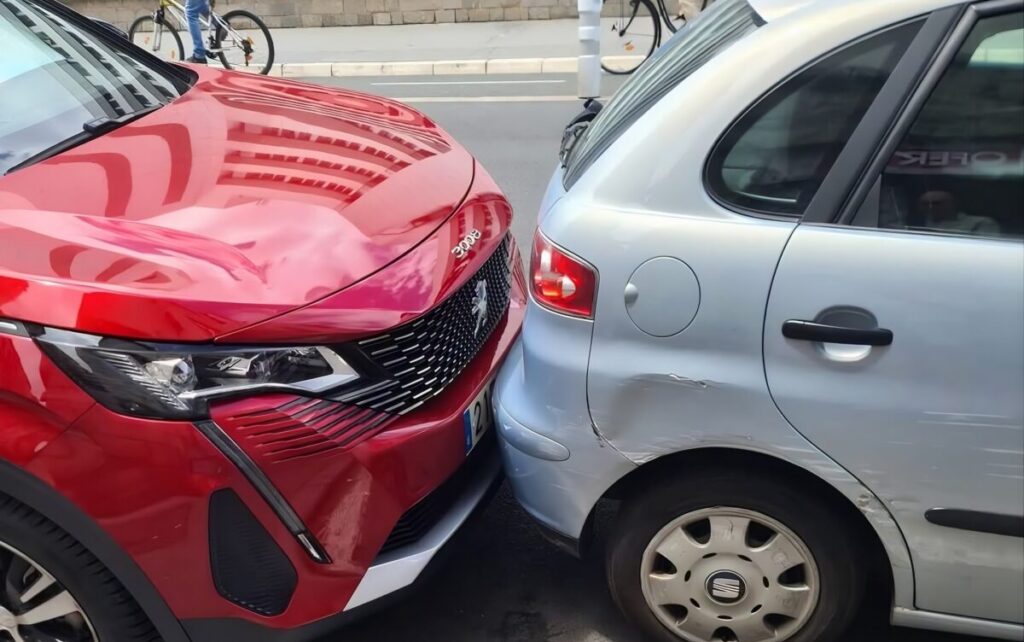
Can they park like that? Credit: Quejas y criticas de nuestra ciudad Elche FB
When first dealing with car driving in Spain, inevitably newcomers find extreme differences with rules in their home countries. And when it comes to parking, “Is that even allowed in Spain?” is often one of the exclaimed doubts. Here are a selection of some of the parking rules that might catch newcomers unaware.
Due to the setup of the Spanish legal system, most parking rules come down to local councils and the bylaws they establish but are then not quite the same in the next town. For example, some smaller places might not even have a budget for a tow truck to remove problematic vehicles or, for that matter, a municipal car pound to take them to. In most places, enforcement boils down to civic duty, community rules and respecting one’s neighbours. In other places, such as the sprawling city of Madrid, the local police can be extremely strict, with rules such as the precise distance car bumpers should be apart (30 cm) or how close a car can be parked to the corner of the street (again, 30 cm). But most local police forces all over Spain are too busy to be checking these things until someone makes a formal complaint (denuncia).
The date-based street switching dance creates confusion
Several smaller towns in Spain oblige drivers to move cars between opposite sides of roads on fixed dates, such as between the 1st and 15th of a month, and then from the 15th until the end of the month on the other side. In theory, councils schedule this practice to allow proper street cleaning. It also helps those who have front doors on the street not to suffer exhaust pipe fumes being pumped into their homes every day of the month.
Signs will tend to display ranges such as 1-15 or 16-31. Failure to comply, or forget to move one’s parked car, can result in fines or towing. But mostly only if someone complains. Newcomers frequently overlook these schedules during short stays.
Objects cannot hold parking spaces
Residents sometimes place chairs, cones or tape to reserve spots in busy areas, especially if they are expecting a delivery, skip or a removals van to park up outside. National and local rules ban this practice outright. They need to have specific permission from the local police, who will cordon off sections of street themselves if need be. Otherwise, authorities can view such items as obstructions on public roads. Police will remove objects and issue penalties. This habit can cause arguments, especially during peak hours or events. However, in smaller towns, Spanish locals tend to be reasonably tolerant and won’t complain to the police unless their day-to-day living is impeded.
The motorbike parking conundrum
Councils handle motorcycle parking on pavements inconsistently. Some places permit it provided pedestrians can still have clear pathways of at least three metres. Others impose outright bans in certain districts, especially if dedicated motorbike parking on the road has already been provided. Riders should check specific town ordinances and street signs before leaving two-wheeled vehicles on the pavement.
What does it mean when signs limit parking to standard cars only?
Certain streets, especially in villages and old-town districts feature notices stating parking is allowed exclusively for passenger cars (turismos). These exclude vans or motorhomes in narrow zones. The measure controls vehicle sizes where space might run tight. Drivers should learn to scan surroundings carefully upon arrival or just use common sense. By the way, motorhomes are permitted to park in almost all streets where car parking is allowed. But, for the local police, there is a fine line between ‘parking’ and ‘camping’.
Beach and protected areas impose massive penalties
Coastal and environmentally sensitive locations hit offenders with extreme fines every year, reaching thousands of euros. Just because one sees others doing the same, it really doesn’t mean the police won’t take action. Rules prohibit parking on sands, dunes or access routes to beaches. Authorities protect these zones vigorously from damage, so tourists could risk costly surprises without prior checks on signage.
A question of competency – Who’s responsible?
The fine line between borders can add to confusion about what is and isn’t permitted and who will be dishing out the fines. For example, the almost acrobatic parking over roadside storm drains of many cars just outside the picturesque village of Mijas Pueblo in the Malaga province. Local people parking precariously on the edge of the road, where one false move could ruin the underside of anything other than a Jeep, is absolutely not allowed, but more often than not goes unpunished. Why? It falls just outside the local police’s jurisdiction and is up to the Guardia Civil to sort out, as it is technically not a street. It is considered a country road. However, most days the Guardia Civil have better things to be doing than fining badly parked cars.
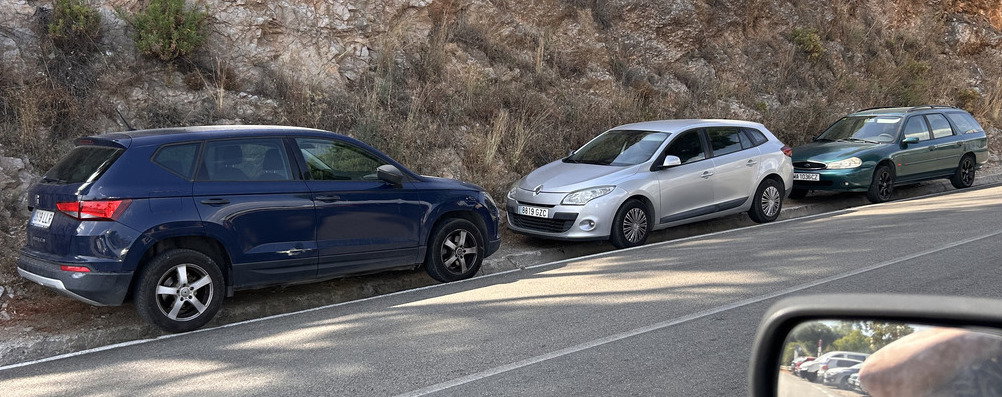
Credit: EWN
Colour variations add extra complexity
Inside towns, the parking issue is starting to get visually complicated. Regulated parking zones are beginning to use more than standard blue or green markings. Some towns have adopted orange, red or alternative shades with custom time limits and fees. This diversity confuses drivers from outside the area no end. Apps and local guides are the only things that help decode markings quickly.
Preparation avoids costly mistakes
Drivers can benefit from studying signs and downloading council apps before parking. Awareness prevents unnecessary fines during travels. Spanish parking combines national frameworks with strong municipal twists. Careful observation keeps journeys trouble-free as the rules and their enforcement change from place to place.
Read about the infuriating parking practices of car drivers in Spain.
Follow Euro Weekly News on Google News
Get breaking news from Spain, travel updates, and expat stories directly on your Google News feed.
Follow on Google NewsSign up for personalised news
Subscribe to our Euro Weekly News alerts to get the latest stories into your inbox!
By signing up, you will create a Euro Weekly News account if you don't already have one. Review our Privacy Policy for more information about our privacy practices.




Adam Woodward
Adam is a writer who has lived in Spain for over 25 years. With a background in English teaching and a passion for music, food, and the arts, he brings a rich personal perspective to his work at Euro Weekly News. As a father of three with deep roots in Spanish life, Adam writes engaging stories that explore culture, lifestyle, and the everyday experiences that shape communities across Spain.
Comments