Italian homes are getting free solar power from Spain. Could it happen here?
By Molly Grace • Updated: 05 Jul 2026 • 23:47 • 3 minutes read
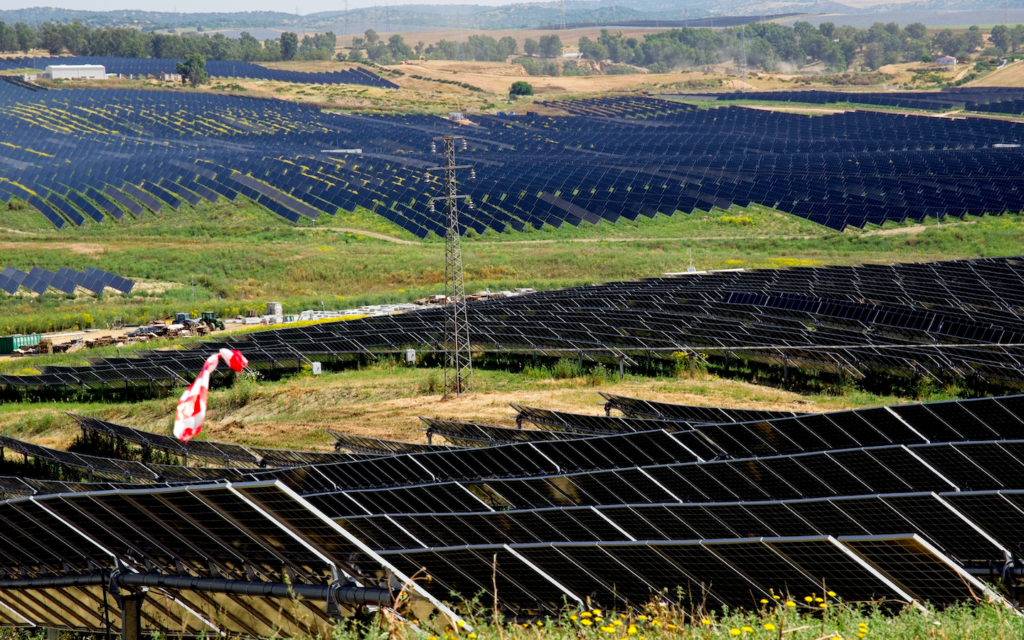
For years, solar energy has largely been associated with rooftop panels. Photo Credit: Jacopo Landi/Shutterstock
Imagine cutting your electricity bill without installing a single solar panel on your roof. No building work, no expensive equipment and no need to own your home. It might sound too good to be true, but that’s exactly what thousands of households in Italy are already doing using solar energy generated in Spain. The question now is whether the same idea could eventually benefit more homes across Europe, including those in Spain.
Instead of fitting solar panels to their own properties, families are signing up to a scheme that links them to a solar farm in southern Spain. When the energy produced by their allocated panel matches what they use at home, they receive that electricity free of charge, although they still pay network costs and other fixed charges that appear on a normal electricity bill.
How does it work?
The idea is surprisingly simple. Rather than asking every household to install rooftop solar panels, customers are assigned a virtual solar panel at a large photovoltaic plant in Cerrillares, Spain. The electricity generated by that panel is tracked and matched with the customer’s energy use back in Italy using digital software developed by Australian company Enosi.
If the panel produces the same amount of electricity that the household consumes during that period, the energy itself is credited to their bill. Customers continue to pay standard network charges and fixed costs, but the electricity generated by their virtual panel is effectively free. For people who live in apartments, rent their home or simply cannot install rooftop panels, it offers a completely different way to benefit from solar energy.
Thousands of families have already signed up
The idea is no longer a small pilot project. More than 110,000 customers have already joined the programme in Italy, showing there is strong demand for alternatives that help reduce household energy bills without requiring major home improvements.
The scheme is operated through Italian energy company Plenitude, while the technology behind it is provided by Enosi’s Powertracer platform, which matches electricity production with individual household consumption. For many participants, the attraction is obvious. They can benefit from renewable energy generated hundreds of kilometres away without having to own the equipment themselves.
Could something similar work in Spain?
For people living in Spain, the concept naturally raises another question. If solar farms in Spain can help power homes in Italy, could a similar system eventually allow more households in Spain to benefit from shared solar energy, particularly those living in apartment blocks or properties where rooftop panels are not practical?
Many urban residents simply do not have access to their own roof space. Others face restrictions because of where they live or the type of property they own. A shared system could offer an alternative by allowing households to benefit from electricity generated elsewhere rather than relying solely on panels installed at home.
Spain has no shortage of sunshine
Spain is already one of Europe’s biggest producers of solar energy, with large photovoltaic plants operating across several regions thanks to the country’s high number of sunshine hours. As more solar farms are built, interest is growing in new ways of connecting that renewable electricity with consumers.
Projects like the one linking Spain and Italy demonstrate that the technology now exists to match electricity generation with individual households, even when they are hundreds of kilometres apart. For consumers, that opens up possibilities that would have seemed unlikely only a few years ago.
Why it could appeal to so many people
Installing rooftop solar panels is not always an option. Many people rent their home, live in flats or simply cannot afford the upfront cost of buying and fitting a complete solar system.
A virtual panel removes many of those barriers. Instead of maintaining equipment or worrying about installation, customers simply receive the benefit of electricity generated on their behalf at a large solar farm. For households looking for ways to reduce rising energy bills, it is easy to see why the idea is attracting attention.
A different way of thinking about solar power
For years, solar energy has largely been associated with rooftop panels. This new model suggests that may not always be necessary. Instead of asking every household to generate its own electricity, larger solar farms could allow many more people to benefit from renewable energy, regardless of where they live.
While the Italian scheme is still specific to one energy provider and operates under its own conditions, it offers a glimpse of how electricity could be supplied differently in the future. For now, households in Italy are already proving that benefiting from Spain’s sunshine no longer means living under it. It can simply mean being connected to it in an entirely new way.
Follow Euro Weekly News on Google News
Get breaking news from Spain, travel updates, and expat stories directly on your Google News feed.
Follow on Google NewsSign up for personalised news
Subscribe to our Euro Weekly News alerts to get the latest stories into your inbox!
By signing up, you will create a Euro Weekly News account if you don't already have one. Review our Privacy Policy for more information about our privacy practices.



Molly Grace
Molly is a British journalist and author who has lived in Spain for over 25 years. With a background in animal welfare, equestrian science, and veterinary nursing, she brings curiosity, humour, and a sharp investigative eye to her work. At Euro Weekly News, Molly explores the intersections of nature, culture, and community - drawing on her deep local knowledge and passion for stories that reflect life in Spain from the ground up.
Comments