Local authorities in Costa del Sol introduce new restrictions on short-term tourist accommodation
By Adam Woodward • Updated: 05 Jul 2026 • 14:54 • 2 minutes read
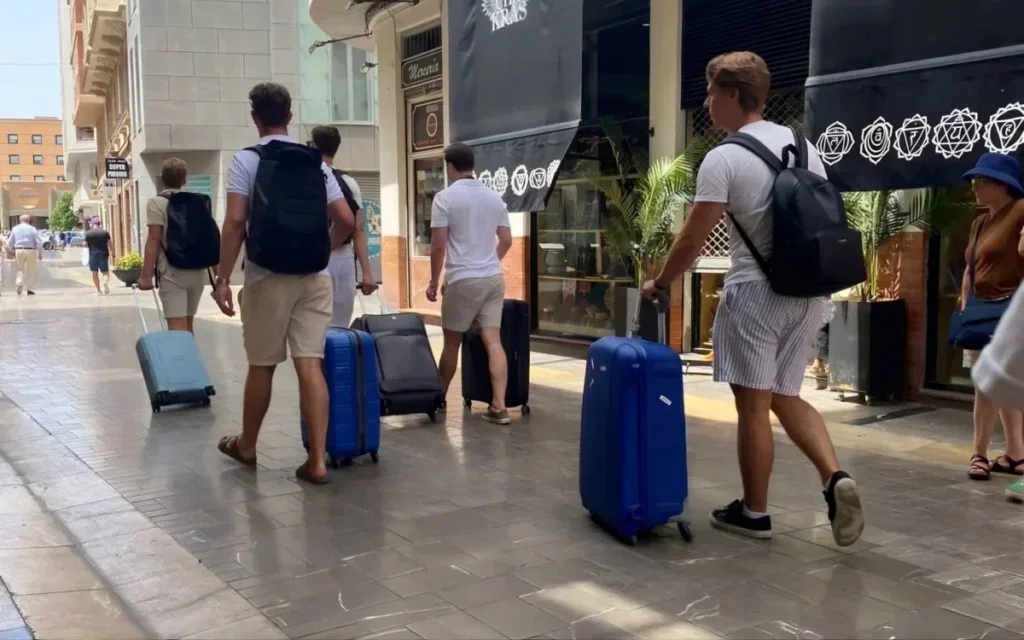
Off looking for the AirBnB. Credit: Sacha Woodward
Council leaders have just approved changes to the Malaga City plan that stop automatic approval for new hotels, hostels, tourist apartments and short-term rentals on residential land. Any new project in these zones now needs a full planning modification, which must prove broad public benefit in general and ask specifically to that neighbourhood. Requests submitted after the rule appears in legal text face suspension for up to three years.
However, earlier applications keep moving forward unaffected. This latest step builds on earlier limits introduced since 2024. Officials hope to return more homes to local residents while trying to balance tourism as the area’s main economic driver.
Current scale of tourist rentals in Malaga
Official regional records show over twelve thousand registered short-term tourist properties in Malaga’s capital alone. These offer around sixty-four thousand beds. Separate estimates from national statistics place the figure lower, around eight thousand properties with capacity for thirty-four thousand places. There is no shortage of interest in the Costa del Sol for holidaying, but balance is called for, especially with a housing crisis on the horizon.
The city centre and areas near Plaza de la Merced show the highest concentration. Some streets have turned over 80 per cent of homes to tourist use. Pressure has also grown in neighbourhoods such as Pedregalejo, El Palo, La Malagueta and Huelin.
Step-by-step tightening of rules
Restrictions arrived gradually at first. First came rules requiring independent access and services for new tourist homes inside apartment blocks.
In August 2025 a three-year pause stopped new registrations in forty-three saturated neighbourhoods where tourist homes already exceeded eight per cent of housing stock. Exceptions allowed some projects that were already under way and full tourist apartment buildings to continue.
The new plan closes those gaps by treating all forms of tourist accommodation the same on residential land, even hotels.
Shop units face tighter conversion rules
The same reforms limit changes from shops into flats to rent on main streets and squares. Remaining conversions must meet stricter standards for light, ventilation and size when being considered for tourist rental.
Council members say these steps will help keep local businesses active and protect the housing supply for residents. Opposition groups and neighbourhood associations argue even more limits and more affordable housing construction are still needed. But, for now, the council has remained conservative.
Licence rules across the Costa del Sol
Elsewhere on the coast, Marbella and most other towns continue to accept new short-term rental applications. Two areas, Malaga capital and Manilva, operate three-year pauses on new licences. Mijas has applied extra conditions.
Licences remain tied to the property rather than the owner. Buyers of registered homes can usually continue rental operations after a simple ownership update with the regional tourism register.
National changes simplify compliance
A nationwide registration system for short-term rentals ended in May 2026 after a Supreme Court ruling. Regional VFT licences in Andalucia now serve as the main requirement.
Operators must provide information such as emergency procedures, maintain proper insurance and follow guest registration duties. Fines for unlicensed activity can reach high levels in serious cases.
Marbella is maintaining oversight without a blanket cap on licences, and so seemingly more relaxed than some of its neighbouring towns. New applications are still possible provided neighbourhood association and council conditions are met.
Follow Euro Weekly News on Google News
Get breaking news from Spain, travel updates, and expat stories directly on your Google News feed.
Follow on Google NewsSign up for personalised news
Subscribe to our Euro Weekly News alerts to get the latest stories into your inbox!
By signing up, you will create a Euro Weekly News account if you don't already have one. Review our Privacy Policy for more information about our privacy practices.





Adam Woodward
Adam is a writer who has lived in Spain for over 25 years. With a background in English teaching and a passion for music, food, and the arts, he brings a rich personal perspective to his work at Euro Weekly News. As a father of three with deep roots in Spanish life, Adam writes engaging stories that explore culture, lifestyle, and the everyday experiences that shape communities across Spain.
Comments